San Diego Personal Property Appraisers
Our San Diego personal property appraisers research values for art, antiques, furnishings and collections. Prestige Estate Services prepares appraisals for estate, tax, insurance, donation and family needs.
Our in-house team handles your appraisal. The team reviews each formal report for quality and appropriate USPAP reporting before delivery.
Jump to Appraisal Services

Planning With San Diego Personal Property Appraisers
Our coverage includes San Diego’s La Jolla, Point Loma and Mission Hills neighborhoods, along with nearby Coronado, Del Mar and Chula Vista. Tell us where the belongings are and who will use the appraisal. Those details help us plan the right approach from the start. You can also explore our other appraisal locations when a project includes property in more than one city.
You do not need to know the name of the report before calling. Describe the items and the request from your attorney, tax adviser or insurer. If you simply want to learn about one object, mention that as well. Our team can explain which appraisal service fits and what details would help us assess the project.
We appraise personal property, including art, antiques, furnishings and collections. We do not provide real estate appraisals.
Meet Our Personal Property Appraisers
Meet Your Personal Property Appraisal Team for San Diego, California

A useful appraisal takes both property knowledge and a clear account of the work. We look at the types of items you have and the task at hand when planning who will appraise them. The appraisers you work with are in-house W-2 employees of Prestige Estate Services, not independent contractors.
Every formal report goes through our internal quality assurance and quality control process before it reaches the client. Our appraisal review department consists of appraisers who hold the ISA CAPP designation. They check the report and its supporting work for quality and appropriate USPAP reporting. This includes looking at how the research supports the values and how the report explains those findings.
USPAP stands for the Uniform Standards of Professional Appraisal Practice. Its ethical and performance standards cover personal property and other appraisal fields. The Appraisal Foundation explains USPAP in its public overview. Our team can discuss what your report needs to do without asking you to learn the standards before seeking help.
Flag changes since an earlier appraisal
If you have an older report, tell us what has changed since it was written. For example, a collection may now include new pieces, or an object may have undergone repairs. Those changes may affect how we use the earlier descriptions. However, you do not need to decide whether they raised or lowered the value before contacting us.
Keep the old report intact and send your update as a separate note. Add dates and supporting photos or records when you have them. This way, we can distinguish the earlier record from your current information. Then we can discuss which facts may help the new assignment and what needs further examination.
Understanding Personal Property Values in San Diego
Personal Property Appraisals in San Diego
What can a personal property appraisal help me decide?
A personal property appraisal helps you understand what your belongings are worth for a stated purpose. You may need it for an estate filing, an insurance review or a family division. We first ask what you need to do with the result. Our personal property appraisers then plan the inspection, research and report around that need.

For a guitar in San Diego, the appraisal begins with what the instrument is and the question its owner needs answered. We consider the maker, model, materials, condition and changes that affect its place in the market. These findings therefore guide the research. The same instrument may need different valuation work for estate reporting than for an insurance schedule, so its intended use belongs in the initial discussion.
Start with the property and the decision
Personal property valuation involves more than naming a figure. The appraiser identifies the covered belongings, the valuation date and the market that fits the assignment. The written report then brings those parts together so its readers know what the conclusion addresses. These choices also explain why an earlier document may not answer a new request.
You can ask about selected items or a whole household. We discuss which types of belongings need attention and what the report should give you. For example, if you do not know a collection well, start with an overview. You do not have to sort each piece by value before asking us to review the project.
Tangible Personal Property Appraisals in San Diego
Which belongings count as tangible personal property?
A tangible personal property appraisal covers physical belongings: things you can touch and examine. Art, furnishings, collectibles and equipment can fall within this scope. Our tangible personal property appraisal service defines which items are included. We call the agreed work and included items the scope. This gives the reader a clear starting point for understanding what the values cover.

A vintage suitcase is a physical possession, and its identifying details belong in the description of that item. Its fittings, covering, interior and overall condition help distinguish it from other luggage. If the assignment includes its contents, we identify those belongings separately in the agreed scope. As a result, the case and its contents remain clear in the record.
Keep the report’s physical scope clear
A household contents appraisal in San Diego may cover a whole home, selected rooms or certain types of items. We discuss those limits before the visit. Also point out borrowed belongings, items outside your request and work another appraiser is handling. The person in charge of the property can then confirm which items Prestige should include.
The report describes the items in enough detail for its use. Some may need their own entries, while others may fit into groups. A reader should be able to tell what is in each group and link it to the property examined. This gives the value opinion a clear basis in the actual belongings.
Fair Market Value Appraisals in San Diego
How does fair market value differ from a replacement price?
A fair market value appraisal considers a willing buyer and seller who know the relevant facts and are not forced to act. A replacement value asks what it would take to obtain comparable property in the right market. Our fair market value work for estates researches the first question. The report explains how the evidence relates to the items being valued.

A fishing reel in San Diego illustrates why the relevant market matters. Collectors may distinguish a particular model, size or production period from other reels that look much the same. We therefore assess those features and compare suitable market evidence. In other words, the research asks what informed buyers and sellers would consider for that reel, rather than treating the cost of a new replacement as its fair market value.
Match the evidence to the value question
Fair market valuation also considers the terms behind a price. An asking price shows what a seller hopes to get. A completed sale may show what a buyer paid under its terms. The appraiser then weighs that evidence and explains its use. Simply averaging unrelated figures from an online search would leave those differences unexplained.
The IRS discusses fair market value and replacement cost in Publication 561. Your reason for seeking an appraisal determines which value basis you need. Share what the adviser or insurer has asked for. We can then discuss the right basis before research begins.
For executors, trustees, attorneys and CPAs
Estate Tax, Form 706 and Date-of-Death Personal Property Appraisals in San Diego
Estate Tax Appraisers in San Diego
How do I arrange an appraisal of estate belongings for tax reporting?
For an estate tax appraisal, share the adviser’s request and the belongings to value. Prestige can examine the items, research values for the required date and prepare the estate-tax appraisal report. You do not need to estimate each item first. A broad view of the property and the adviser’s request helps us plan the work.

A painting in a San Diego estate may need more detailed study than the executor can provide from a room list. We assess the artist identification, medium, dimensions, condition and available history, then research evidence relevant to the instructed value date. The appraisal then connects that work to the identified painting. The estate’s adviser can then use the reported value in the larger tax-reporting process.
Defining the Estate Request
Explain the estate’s valuation request
We also need to know how far the work should extend. For example, an estate may have items in a home, in storage and at other addresses. Tell us which sites and belongings the adviser wants included. If another appraiser is handling a category, explain that too. This helps avoid gaps and overlapping work.
The estate adviser should state the date needed for the filing. Our estate tax appraisers research values as of that date and explain them in the report. The adviser handles the return, filing choices and tax treatment. Each part has its own role, with our work supplying the values for the included personal property.
Share an existing inventory if you have one. You do not need a finished list to begin; room photos and a few close views can help us assess the contents. Also include the estate contact, property addresses and deadline. We can then discuss the proposed work with the people who need the report.
Hypothetical example: coordinating separate appraisal assignments
An executor in Point Loma might engage a jewelry specialist while asking Prestige to appraise the remaining household contents. If the two requests used different value dates, their reports could be difficult for the tax preparer to use together. A shared estate address would not resolve that difference.
Before the estate-tax appraisal begins, the executor could provide the adviser’s date and identify each appraiser’s property scope. The reports could then state clearly what each assignment covers and when its values apply. This coordination would help the adviser assess the separate findings without silently combining incompatible instructions. Each appraiser would remain responsible for their own work.
IRS-Qualified Estate Tax Appraisers for Form 706 in San Diego
What does the Form 706 preparer need from the contents appraisal?
A Form 706 appraisal helps the preparer connect values to the estate’s items. Our IRS-qualified estate tax appraisers prepare USPAP-compliant reports with clear descriptions, dates and researched values. Each entry should show what it covers. That link is useful when the preparer brings together records from several people and sources.

A pair of cufflinks in a San Diego estate needs a description that lets the preparer distinguish it from other small personal effects. For example, relevant details may include materials, design, maker information and condition. Prestige connects the description and photograph to the appraisal entry and value. That link helps the preparer match the opinion to the correct property instead of relying on an unexplained jewelry total.
Connecting the Report to the Return
Plan the work with the preparer’s instructions
The IRS instructions for Form 706 address household goods and personal effects in estate reporting. We discuss the needed detail with the executor and adviser before writing the report. Share any instructions tied to the filing at intake. They can then guide the proposed work.
Descriptions and value analysis do different jobs. One identifies the item, while the other explains how the appraiser reached the value. A preparer asking about an entry can use both parts. The appraiser’s qualifications and signed certification statement also help explain who did the work and the standards they followed.
IRS-qualified estate tax appraisers consider the property knowledge and qualifications the estate assignment needs. Tell us who is preparing the return and what they have asked for. That adviser decides how to use the appraisal information in the filing. You can also ask the appraiser about the value findings after delivery.
Date-of-Death Personal Property Appraisals in San Diego
Can you determine value as of a date before the inspection?
Yes. A date-of-death appraisal gives a value as of the death date, even when we inspect the items later. We examine the available records and research the market for that time. However, the inspection date and the date we sign the report are separate. The report states which date the value applies to.

For a barometer in San Diego, its condition at the death date is part of the question. We consider dated photographs, earlier descriptions and other useful records alongside any current examination. The appraiser then researches market evidence for the relevant period. Therefore, a later repair or a present-day market shift belongs in that analysis only as it helps explain the past-date opinion.
Use records from the relevant time
A retrospective appraisal considers how the market looked at the death date. Research therefore considers evidence from that period, including which versions or features buyers sought then. A current price list may help identify a model without showing its earlier market value. The report explains how the selected evidence bears on the date requested.
If heirs now hold items that were part of the estate, tell us where those items are. The appraisal can still address the same earlier date across the included belongings. We then assess which items we can examine and which records support each one. A clear property list helps keep the past-date assignment together even when the objects are no longer in one home.
Probate and Estate Inventory in San Diego
Probate Appraisals in San Diego
How can an appraisal support a probate matter?
Before commissioning a probate appraisal, ask estate counsel which personal property work the task requires. California formal probate usually involves a probate referee for noncash assets. Prestige can discuss a separate appraisal or supporting work within the role counsel identifies. We agree on that role and the included belongings before beginning, so the private engagement fits the estate’s actual task.

An inherited phonograph in San Diego may appear on a family list with only a brief label. We then examine its identifying features and condition, research its market, and prepare the valuation information requested for the probate assignment. The report gives counsel and the personal representative a specific object and value to refer to, rather than asking them to interpret a broad household estimate.
Support the agreed estate task
The California Courts guide to formal probate describes the Inventory and Appraisal and probate referee process. Therefore, send counsel’s specific request when you inquire. It may concern further detail about selected contents rather than replacing the estate’s required filing. The value date and report detail follow that defined request.
For probate valuation, an existing inventory can serve as a starting list. We discuss how the appraisal entries should relate to it and clear up any differences in the items included. Those steps therefore make the final report easier to compare with the estate records. It also helps the representative answer questions about a specific belonging without treating the earlier list as the final appraisal.
Estate Inventory and Valuation Reports in San Diego
Do I need an inventory, values, or both?
An estate inventory lists the belongings in the agreed record. An appraisal adds research into what those items are worth for a stated use. Prestige can create this record for a San Diego estate and discuss whether you also need values. The choice depends on your next task. A family list and a formal report for an adviser serve different needs.

A doll collection can be easier to manage when each agreed entry has a clear reference and photograph. Clothing, materials, dimensions and distinguishing features help the family tell the entries apart. A contents inventory can record those facts without adding a researched value. When you need valuation too, the appraiser adds market research to the item records rather than attaching guesses to the list.
Make the entries useful for later review
The way we organize the record should fit how you plan to use it. For example, a room list helps locate things in a home. By contrast, a list by category may work better for a collection. We discuss that choice and the needed detail first. Clear item references let you move from a description to its photo or note.
If the family later needs values for some listed items, the inventory can help define the request. The appraiser still needs to assess the facts and do the research for that use. Tell us about likely formal needs at the start. We can then discuss whether the first project should include appraisal work as well as the list.
Charitable Donation, Insurance and Loss Appraisals in San Diego
Charitable Donation Appraisals in San Diego
What appraisal documentation may support a charitable gift?
A charitable donation appraisal gives a supported fair market value opinion for the belongings you plan to give. When a San Diego donor needs a qualified appraisal, Prestige discusses the items and prepares the written report. However, the donor’s tax adviser decides the gift’s tax treatment. Our role is to supply the value opinion for that process, rather than calculate the deduction.

If a donor plans to give a ship model to a charity, we identify the model and examine its materials, workmanship, scale and condition. Available maker records or history may also help establish what it is. Our charitable donation appraisers then research its fair market value for the gift. The written appraisal describes the donated object and explains the supported opinion for the donor’s reporting needs.
Connect the appraisal to the actual gift
Form 8283 and the written appraisal have separate jobs. The form records facts about noncash gifts and includes declarations or acknowledgments when required. For this reason, it does not replace the appraisal report. The IRS instructions for Form 8283 explain those roles. Share your adviser’s instructions and planned gift date so we can discuss the timing of our work.
Make clear which items you plan to give. If the gift is part of a collection, identify that part instead of sending a total for everything you own. The appraiser can then research the actual gift and describe it in the report. This keeps the reported property aligned with the gift you are planning.
Insurance Appraisals in San Diego
What should an insurance appraisal document before a loss?
An insurance appraisal records your belongings and develops values for the coverage request. Prestige examines your San Diego belongings, researches the right market and writes the agreed report. You and your insurance professional can use it to discuss the property and proposed values. Clear descriptions and photos help show which item each figure covers.

The appraisal record should help readers recognize a bracelet before a claim ever arises. We document the relevant materials, construction, measurements and condition, with photographs suited to the assignment. The insurance replacement valuation draws on the appropriate market. The owner and insurance professional can use that record to discuss the particular bracelet and the value proposed for coverage or scheduling.
Describe what the report values
Is the report for a new policy, items you want to schedule, or an update? Tell us when you inquire. Send any insurer instructions about inspection, descriptions or the type of value required. Those details help us plan the work. They also give you a shared basis for discussing the report with your insurance professional.
For example, a new purchase or a change to a collection may be a reason to review an earlier record. An update should show which items and facts remain useful and which need more work. We can discuss that scope with you. This matters because an old total alone may no longer describe what you now own or need to cover.
Damage and Loss Appraisals in San Diego
How can you appraise property that has been damaged or lost?
A damage and loss appraisal starts with the value question in the claim. It may concern an item’s value before the event, in its damaged state, or under another stated basis. For San Diego belongings, Prestige reviews the evidence and researches the relevant market and date. The report explains the value opinion and the facts that support it.

If a rug suffers damage, earlier photographs and records may help show its size, design and condition before the event. We examine what remains when available and consider the evidence relevant to the agreed value question. The report explains the property characteristics and sources used. As a result, the claim participants have a documented value opinion to consider alongside the other claim information.
Follow the facts about condition
If an item is gone, an earlier appraisal, invoice or photograph may provide useful evidence. We assess what each source shows. A room photo may place an object in the home, while a close view may show its construction or condition. The damage appraiser explains which facts the evidence establishes and any assumptions behind the opinion.
Share the adjuster’s or attorney’s written request and any deadline. Our report provides value evidence for that stated use. Meanwhile, the other parties address coverage and payment under the policy or claim process. A clear request lets the appraiser focus on the research that helps answer the value question at issue.
Hypothetical example: checking what two different figures measure
A La Jolla owner might seek an opinion about the change in value of a damaged desk. The owner could provide a retailer’s replacement quote and a dealer’s offer for the damaged piece, then subtract one from the other. However, those amounts might describe different markets and transaction conditions.
A damage and loss appraisal would begin by clarifying the exact value question with the authorized contact. The appraiser could assess the desk, its supported earlier condition and the relevance of both figures. The research would need to use value bases and dates appropriate to the agreed question.
If enough evidence supported the assignment, the report could explain the resulting analysis and its limits. It would not assume that subtracting any two available prices measures the requested loss. The owner and advisers could then distinguish the valuation findings from separate decisions about repairs, insurance coverage and the amount of any payment.
Family Property, Appraisal Review and Reports in San Diego
Divorce & Marital Asset Appraisals in San Diego
How do independent values help with a division during divorce?
An impartial divorce appraisal gives spouses and counsel a common set of values for the included belongings. Prestige identifies the San Diego belongings and researches the required value basis and date. The report can support negotiation, mediation or litigation by explaining those figures. The parties and their advisers address the legal category of the property and how to divide it.

A camera can become difficult to compare when one figure reflects its original purchase and another reflects the current used market. We identify the included camera, assess its condition and research the instructed value basis and date. The marital asset appraisal therefore gives both parties a common description and supported figure. Counsel can then use that information within the marital-property discussion.
Use a clear basis for comparisons
Agreeing on the list of items helps before comparing proposed divisions. For example, two totals may cover different things, which can explain part of a gap between them. We discuss the contents of the assignment and describe those items in the report. Counsel can then see whether the disagreement is about the included property, the values, or both.
Some requests involve a few disputed pieces; others concern a whole home’s contents. The work should fit the issue the parties need to resolve. Send any earlier lists or reports and tell us who will use the findings. Those facts help define our value work while leaving the legal decisions with counsel and the parties.
Equitable Distribution Appraisers in San Diego
How can heirs compare different groups of inherited belongings?
An equitable distribution appraisal uses values on a common basis to help heirs compare proposed groups of belongings. Prestige records the agreed San Diego belongings and researches their values for the requested date. The family receives item references and figures to use in discussing its choices. The heirs or their advisers decide the final shares; the appraisal supplies financial information for those talks.

However, a quilt may already appear in an estate appraisal prepared for an earlier date. If the family is dividing belongings later, its adviser should identify the date and value basis needed for that decision. Prestige can assess the quilt’s identification, condition and relevant market for the requested assignment. As a result, the comparison addresses the planned division instead of carrying an earlier figure into a new purpose without review.
Help readers understand the group values
Suppose one proposed selection has several items and another has just one. Clear report entries let the family compare the groups’ financial totals. The inheritance appraisal provides and explains the underlying values. The family can weigh those figures alongside its preferences and any directions that govern the division.
Discuss with the responsible adviser whether to value the whole collection or only the items still at issue. That choice sets the extent of the work. Also explain if the family plans to keep a group together. Knowing what the family wants to compare helps the appraiser understand the decision the figures need to support.
Litigation Appraisal Review in San Diego
Can you assess the reasoning in an existing appraisal?
Appraisal review examines work that another appraiser has already done. For San Diego clients and counsel, Prestige can review a report, competing reports or specific questions within them. We consider the methods, research, reasoning and reporting that bear on the request. The client receives our findings, and we explain what we reviewed and why.

In reviewing an appraisal of a telescope, we would consider whether the report’s descriptions and research support the identified instrument. For example, a comparison to a different model or condition may need an explanation. The review examines that reasoning and its effect on the work under review. Findings can help counsel understand a technical disagreement instead of choosing between reports on the size of their totals alone.
Examine the support for the conclusions
Two reports may use different dates, cover different items or answer different value questions. A review can separate those starting points from differences in research. As a result, the review helps explain why the figures may not be directly comparable. The review appraiser then examines the relevant work under the terms of the assignment.
However, a new value opinion needs its own agreed scope. Asking for a critique does not define all the work needed to value the property again. Counsel should send the reports and explain the issues the review needs to address. We can then discuss what the review should provide and whether further value work is needed.
Hypothetical example: deciding whether a new value opinion is needed
Counsel in Coronado might commission a review of an appraisal for a collection of antique locks. The review could identify a material weakness in the market support. Counsel might then ask what value should replace the disputed figure, although that question was not part of the original request.
An appraisal review could explain the weakness without automatically establishing another value. Prestige would need to discuss the additional evidence and scope required for a new opinion. Therefore, counsel could choose whether to commission that further work. A criticism of one conclusion would not, by itself, prove that a competing amount was correct.
Restricted Appraisal Reports in San Diego
When might a Restricted Appraisal Report be appropriate?
A Restricted Appraisal Report is a concise way to report a formal appraisal when it fits the task. For San Diego assignments, Prestige considers the intended use, property and intended users—the people we prepare the report for—before recommending that form. However, the research still needs to support the opinion. This choice concerns how to report the work; it is not an informal estimate.

An owner seeking a concise report on a snuff box still needs the appraiser to identify the object and research an appropriate value. The purpose and intended users determine whether restricted reporting fits the request. A restricted personal property appraisal report must make sense in that setting. Its suitability comes from the agreed use and reader needs, not simply from the object being small.
Decide what explanation the users need
Tell us who will read the report and what they need to learn from it. Someone with useful background may need a different explanation from a reader seeing the items for the first time. We therefore assess those needs when considering the report format. The client should know what a concise report will communicate before agreeing to it.
A brief report also needs to make its property, date and value basis clear. Those facts tell the reader what the conclusion means. If your adviser has requested a format or certain content, send the instructions. We can review them with you before agreeing on the written result.
Government and Business Asset Appraisals in San Diego
Government & Seized Asset Appraisals in San Diego
Can you appraise movable property held by a public agency?
A government property appraisal can address a public agency’s stated task. These may be seized items, surplus equipment or a managed collection. For a San Diego assignment, we identify the property, examine relevant condition and research the right markets. The report then connects the values to the assets covered and the agency’s planned use of the findings.

For a government asset appraisal, both agency numbers and the equipment’s own marks help identify a mechanical scale. We connect the agreed identifiers, condition information and photographs to the valuation entry. Research considers the type of scale and the market relevant to the agency’s stated purpose. As a result, staff can match the appraisal results to the assets covered by their records.
Address the requested asset questions
Explain the decision the agency needs to make, since one value measure does not fit every task. Send its asset list and any required report fields. We can discuss how our entries should connect to those records. Staff can then follow the values without having to build a second list to identify the assets.
Also name the authorized project contact and any access limits when planning the work. The appraiser can identify the evidence we need and describe the scope. The agency handles procurement and its authority over the assets. Prestige supplies the personal property value work within that agreed assignment.
Furniture, Fixtures and Equipment Appraisals in San Diego
How do you value equipment and furnishings used by a business?
An FF&E appraisal values the furniture, fixtures and equipment in a defined business or institutional project. For a San Diego project, Prestige documents the physical assets and researches values for their stated use. The report can support a transfer or another planning need. Its scope names the removable fixtures and equipment included. The work does not value the operating business itself.

For a commercial waffle iron, a useful equipment description includes the maker, model, configuration and relevant condition. For the equipment appraisal, we then examine available specifications and research the appropriate market. The report links its conclusion to that unit on the asset schedule. A business can then distinguish the appraised equipment value from an accounting balance that follows a different method.
Check the equipment’s actual features
An equipment list is useful, but it may show old purchases rather than what is now on site. We discuss how the appraised units should connect to that list. Point out items your business has replaced or changed. Specifications and upkeep records may also help explain features that matter to value.
Tell us if the requested opinion concerns equipment in its current use or under another premise. Those terms therefore guide the choice of market and value basis. The appraiser researches the assets within that context and states it in the report. You can then read the figures as physical asset values, separate from book depreciation or the value of the business.
Hypothetical example: defining the equipment sale premise
A Chula Vista business owner might request values for commercial embroidery machines that a buyer could retain in their current setup. Available sales listings might instead concern disconnected machines that buyers must collect and install elsewhere. Identical model numbers would not make those transaction terms equivalent.
An FF&E appraisal could establish whether the assignment concerns continued use in place or equipment offered for removal. The appraiser could then assess sales within that stated premise and explain material differences. Consequently, the report would give the owner a value tied to the actual question, rather than mix installed and removal-based evidence without explanation.
Art, Antiques and Furniture Appraisals in San Diego
Art Appraisals in San Diego
What information helps establish the value of artwork?
An art appraisal studies the specific work and the market that fits your purpose. For a San Diego request, Prestige considers its artist, medium, size, condition and known history before researching value. The formal report relates the findings to the estate, insurance or other stated need. The work’s features guide the research, rather than a broad label such as modern art.

A fine art appraisal of a photograph calls for more than identifying the subject shown. The photographer, printing process, print date, size, edition information and condition may all affect the relevant market. We therefore review available records and examine the work’s characteristics, then research suitable evidence. The report ties the value conclusion to the particular print, rather than treating every image of that subject as the same work.
Link identification to market research
Records may explain how a work was made or who owned it later. An invoice, catalogue entry or studio record can help clarify what was acquired. We assess each source in context. However, if an artist attribution needs further expertise, we address that question in the work plan before treating it as a settled fact.
Condition matters to the specific work. Fading, repairs or surface changes may affect which sales make useful comparisons. For that reason, the appraiser describes relevant features and considers them in the research. That account helps the owner see why a similar-looking work may not provide a directly comparable price.
Antique Appraisals in San Diego
How do you identify and value an unfamiliar antique?
An antique appraisal studies an object’s identifying features before researching its value. Materials, construction, marks, condition and known history can help establish what it is. The report describes those findings and a supported value for the agreed use. This can help when an inherited object has long been known by only a vague family label.

An antique corkscrew can reveal useful clues through its mechanism, materials and construction. Together, those features, any available maker information and its condition guide our choice of market comparisons. Wear, replacement parts or a distinctive design may affect the analysis. We explain the features we identify in the written description, giving the owner a clearer basis for understanding value.
Study the details behind an age claim
Features may come from different stages in an object’s life. An older body might have a later repair or replacement part. An antique appraiser studies how those parts fit together instead of giving every piece the same age. The description then explains relevant changes, and the research considers the object in that state.
For a San Diego request, send an overall photo and useful views of marks or construction details. An old description or purchase record may also help, even if it leaves questions. We then review the evidence and discuss any further examination needed. You do not need to restore an item before asking about an appraisal. Its current condition is part of the assessment.
Furniture Appraisals in San Diego
Do you appraise contemporary furnishings as well as older furniture?
Yes. A furniture appraisal can cover antique, vintage, designer, custom and contemporary residential furnishings. Prestige studies the pieces, their materials, construction and condition, then researches the market for the agreed use. The report identifies the furniture covered and explains its values. We can therefore appraise a home with pieces from several periods without calling all of them antiques.

A cabinet may look familiar while differing greatly in construction from another piece of the same general style. We consider its materials, joinery, dimensions, finish and maker information when available. Research then focuses on furnishings that provide a meaningful comparison. Together, these observations help explain the cabinet’s value without assuming that appearance alone establishes its period or maker.
Compare construction, condition and use
Labels, purchase records and design details may help identify pieces from different sources. For custom work, specifications can also clarify materials and size. The appraiser weighs those records along with what an inspection shows. This directs furniture valuation research toward the actual piece, rather than its general function.
For a San Diego request, you may need values for one piece, a room or a whole home. Describe that extent and the reason for the report during intake. We can then discuss which items need separate entries and which may fit in groups. The written record should make those choices clear to the reader.
Online Photo Guidance and Appraisal Fees in San Diego
Online Photo Appraisal Guidance in San Diego
When is an informal Online Photo Appraisal the right choice?
An Online Photo Appraisal helps San Diego owners learn about an item from the photos and details they send. An appraiser reviews them and emails a written result. It includes identification when supportable, an estimated value or range, and useful context. This service suits a general question about what you own rather than a formal reporting need.

For an older tennis racket, clear photographs of the whole object and its identifying details can support a first understanding of what you own. Include the dimensions, visible markings and any history you know. An appraiser then reviews that information and provides informal guidance when the evidence supports it. The result can help you decide whether you need further research or a formal appraisal for a specific purpose.
Understand the initial answer
Show the whole object and details that set it apart. A clear view of the back, underside or a mark can help more than several matching front views. Describe known damage or changes. These facts therefore help the appraiser interpret the images and explain the informal result.
This informal photo appraisal guidance is separate from a formal report for tax, probate, court, insurance or donation use. Instead, contact us about a formal assignment for those needs. A formal remote appraisal may work when the evidence is adequate, but it has its own scope and report process. You do not need to buy the informal product first.
Personal Property Appraisal Fees in San Diego
What determines the estimate for my appraisal project?
Personal property appraisal fees in San Diego reflect the time needed to examine the items, research values and write the agreed report. The property’s volume, complexity and available records affect that work. Time on site is only one part; research and writing continue afterward. Our central Fee Schedule explains the fees, while intake helps us assess the effort your project is likely to need.

For example, a hat submitted for general identification calls for a different service from a hat included in a formal donation appraisal. In the formal assignment, Prestige considers the evidence, research and reporting needed for the stated purpose. The proposed scope explains that work before we estimate it. Describing who needs the result and why helps us plan the appropriate service, rather than pricing an undefined request for an appraisal.
Describe the work behind the estimate
A detailed intake form and photos help us build an appraisal estimate around the amount of property. Floor area can provide context, but it does not tell us how full the rooms and storage areas are. For instance, a few large pieces can involve different work from shelves of small objects. These facts help us plan the estimate around the actual contents.
If new facts take the project beyond its original scope, we pause and discuss the change with you. Prestige needs written client approval before doing the changed work. You can then consider the proposal with a clear account of what has changed. Include known access needs, unusual categories and reporting instructions at intake to help us estimate the initial work.
Documentation Trusted by Attorneys, CPAs and Insurers
Tell us what is at the property, where it is, why you need an appraisal and when you need the result. The intake form, photos and records help us assess the work. We discuss the scope and estimate before moving ahead. As a result, you can understand what the work includes and ask questions about the proposed project.
Formal reports typically take two to four weeks after intake, depending on the project. Therefore, share a court, filing or insurance deadline at the start and ask us to confirm the start date. We can consider expedited work when the appraiser’s schedule allows it. Prestige must confirm an expedited deadline in writing before it becomes a commitment.
Your assigned appraiser is the main contact for appraisal questions. The Head of Appraisals and office staff also support the process. Research may raise a question about an item’s history after the inspection. Tell us who can help with those records or facts so we can follow up as the work develops.
What Your Formal Report Explains
We deliver formal reports as digital PDFs. What goes into yours depends on its use, the property and the report type. Photos and descriptions show the included items. Value conclusions give the appraiser’s opinion for the relevant date. The stated value definition explains what those figures mean, whether the task calls for fair market value or another basis.
Research and the approaches used support the value conclusions. The report may explain relevant sales, differences between items and assumptions that affect the analysis. The appraiser’s qualifications or CV set out their background. A bibliography, required signatures and a signed appraiser certification statement supply further context. That statement is part of the report; it does not mean USPAP certifies the document.
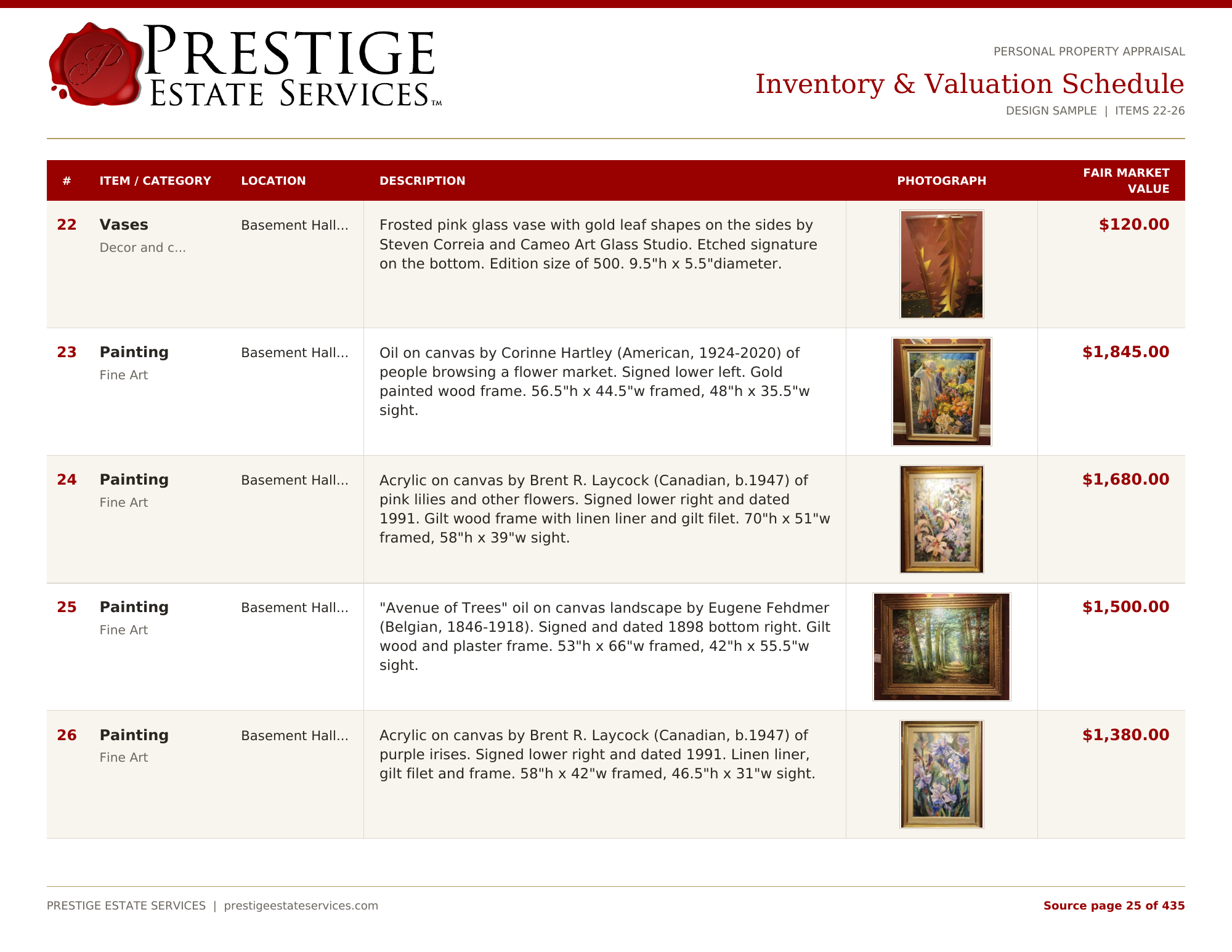
This sample schedule links numbered items to photos, descriptions and fair market values. Its figures are hypothetical examples, not client results. A full report also gives the purpose and explains the supporting work. Your report uses the value basis agreed for your needs. The fair market values shown here do not set insurance values for your belongings.
Reading Entries and Asking Questions
Some objects need their own research and entries, while others may fit into suitable groups. The report explains that treatment. A total by itself would not show what it covers. Therefore, item references help a reader check the group’s contents or find the photo that belongs with a particular entry.
Routine questions about the delivered report are included. Your appraiser can explain a finding or show you where the report addresses it. If you later need a report for a different use, we can discuss that separate work. The appraiser assesses what you need, and we discuss the related fees before proceeding.
Preparing for Examination of Your Property
Arrange access for the inspection, even if you will not attend. Also tell us which rooms, storage spaces and objects the work includes. Keep useful records at hand and mention locked cases or items that are hard to see. The appraiser can then plan the visit around those access needs.
Readily accessible items can reduce billable handling time. Unpacking, unwrapping, documenting, rewrapping and repacking take time when the appraiser must do them. Do not clean or restore an object just for its appraisal. Appraisers cannot lift or move heavy or overly large items. Discuss those needs in advance and arrange suitable help when needed.
If part of an item is hidden, the appraiser assesses what photos, records or further access can show. Relevant assumptions and limits belong in the report. For example, a photo of the overall piece may not show the construction or condition needed to value it. Sometimes we need more evidence before we can include an item.
Choosing How Your Property Is Examined
An in-person visit lets the appraiser see details directly. Formal remote appraisal may fit when photos and records adequately show identity, dimensions, markings and condition. We assess that option through intake and the formal project estimate. Share any inspection or record requirements from the intended recipient so we can consider them at the same time.
Our remote and in-person appraisal guide explains these ways of gathering evidence. Both may support formal work when suitable. The informal Online Photo Appraisal is a separate product for general guidance. You do not have to buy it to request a formal estimate. Tell us your purpose and we can discuss the right route.
Choosing an Appraiser for Property in San Diego
Start your search for an appraiser with the decision you need to make. Property knowledge matters, but so do the value date and the report’s readers. Tell us who asked for the appraisal and how they plan to use it. That gives the first conversation a practical starting point.
Personal Property Appraisers Near Me in San Diego
For a home or collection, ask how the appraiser will identify the items and decide what needs separate research. The answer should connect the work to your goal. Our personal property appraisal services cover a range of formal needs. A few photos and a short account of the items help us assess the types of property involved.
IRS-Qualified Form 706 and Estate Tax Appraisers Near Me in San Diego
For an estate-tax matter, share the return preparer’s request and the value date. The appraiser’s qualifications must fit the property and the work. Our estate-tax appraisal service provides personal property values for that purpose. Knowing what the preparer needs helps us discuss the report in terms of the estate’s actual filing task.
Areas Served Around San Diego
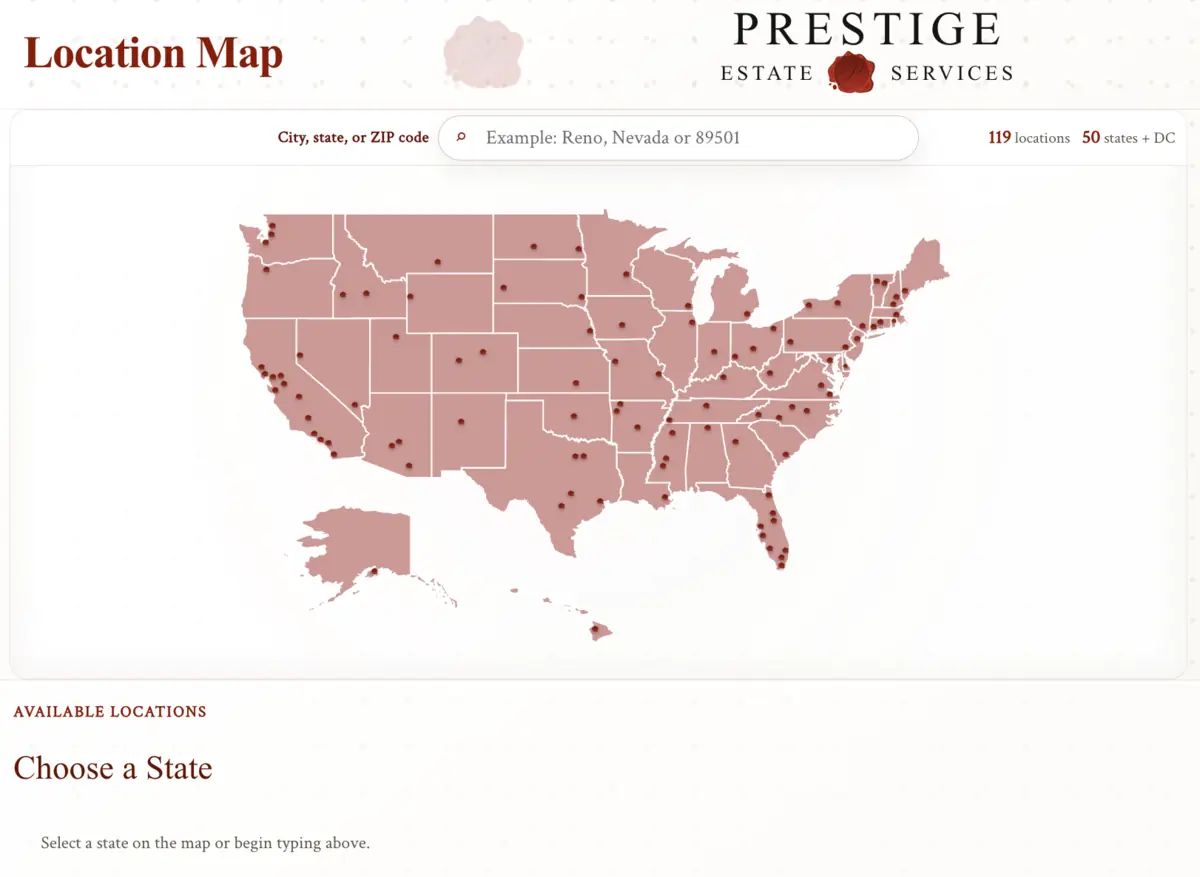
We serve clients with property in San Diego, Coronado, Del Mar, Chula Vista, La Mesa and El Cajon. Within San Diego, coverage includes La Jolla, Point Loma and Mission Hills. The right approach still depends on the items and your reason for seeking an appraisal. Tell us both when you get in touch.
If items are at more than one address, tell us what is at each site. We can discuss whether to examine them together or plan separate steps under the agreed scope. The Locations directory is also useful when part of the property is outside the San Diego area.
San Diego Personal Property Appraisal Questions
Getting Started With Your Appraisal
Do you appraise homes or land in San Diego?
We do not provide real estate appraisals. Our work concerns personal property, such as art, antiques, furnishings and collections. If your adviser needs both the value of a residence and the value of its contents, explain which belongings need our attention so the two assignments can be kept clear.
Can you help if I do not know what type of appraisal I need?
Yes. Tell us what decision you face and who requested the information. An executor, an insurer and an owner seeking general knowledge may need different services. We can explain the options after reviewing your purpose, photographs and property details.
Can a family member arrange the inspection if I live elsewhere?
Yes, provided access is arranged and we have the information needed for the assignment. You do not have to attend in person. Identify the person who can provide access and the person who can answer questions about the included belongings or their records.
Property Records and Access
Does an old appraisal still help with a new request?
It can provide descriptions, photographs and other information worth reviewing. The appraiser considers what the earlier assignment covered and whether its facts remain useful. A new purpose or value date requires its own assessment, so send the complete earlier report when available rather than only its final total.
How soon should I mention a filing or court deadline?
Mention it in your first inquiry. Formal reports typically take two to four weeks after intake, with timing affected by the project. Expedited work may be possible, but Prestige must confirm the expedited deadline in writing after considering the appraiser’s availability and other projects.
Can you provide a formal report without an on-site visit?
Formal remote work can be suitable when photographs and records provide adequate evidence and fit the assignment’s requirements. We assess that through intake. Share any inspection requirements from the intended recipient. The informal Online Photo Appraisal is separate and does not have to be purchased before a formal estimate.
Reports, Changes and Timing
Can you explain a finding after the report arrives?
Yes. Routine questions about the delivered report are included, and your assigned appraiser is the main contact for appraisal questions. If a new request involves another purpose or additional property, we can discuss the further work and related fees before proceeding.
What should I send to request a project estimate?
Send the reason for the appraisal, the property locations, useful photographs and any existing lists or records. Note the amount of property in the rooms or storage areas and any access limits. Include the intended report recipient and deadline so the estimate can reflect the actual assignment.
Discuss Your San Diego Appraisal
Tell us what you need to learn about your belongings and who will use the report. We will review the details and discuss the right service for your San Diego project. Include any written request from your adviser and any deadline you already know. Our team can then explain the next steps.
501 W Broadway Ste A, San Diego, CA 92101(909) 966-5545