Personal property values for shared decisions
Equitable Distribution Appraisals for Heirs and Families
Equitable distribution appraisals help heirs, families and co-owners compare belongings before deciding how to divide them. Prestige Estate Services appraises art, antiques, furnishings and collections, then provides a written record of the items and their researched values. That shared record can support choices about keeping an object, exchanging items or setting a group aside. We start with your property list, the date the values should reflect and who needs the report.
Your in-house appraiser develops the report, and our ISA CAPP appraisal review department checks it before delivery. Routine questions about the finished report are included.
Meet Prestige Estate Services
We do not provide real estate appraisals.
The people behind the appraisal
Meet Our Personal Property Appraisers
Our equitable distribution appraisers turn a varied group of belongings into a clear record for family decisions. Your assigned appraiser guides the work and answers questions during intake, research and report writing. Our Head of Appraisals and office staff provide support throughout the project. Explore our personal property appraisal services.
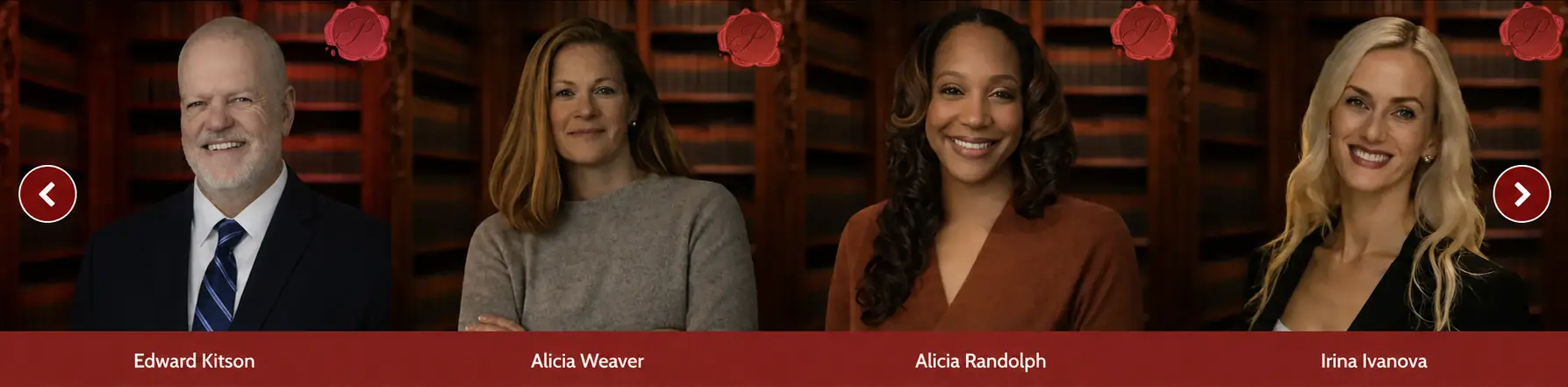
All Prestige Estate Services appraisers are in-house W-2 employees. We do not use contract appraisers as members of our appraisal staff.
Independent Values and Professional Standards
We develop values from the property and relevant market evidence. We apply the Uniform Standards of Professional Appraisal Practice (USPAP) in our appraisal work and reports. The aim is a clear, supported opinion that the named users can examine.
When Is an Equitable Distribution Appraisal Useful?
An appraisal helps when several people need values for the same belongings. This may be part of dividing an inheritance, making a trust distribution or planning how to separate a shared collection. A consistent record gives the discussion a common starting point.

Heirs and Families
Heirs may choose different pieces from a home or collection. An inheritance appraisal can help them compare the items they want using the same value basis and date.
Trust Property Plans
A trustee may need to value belongings before handing them to named beneficiaries. The trustee and attorney provide the relevant instructions; our report supplies the researched personal property values.
Shared Collection Plans
Co-owners may want to keep different objects or discuss an exchange. We identify and value the agreed items so each person can see what is included.
Fiduciary Record Needs
Executors and trustees can use photographs, descriptions and item numbers to track the belongings under review. That record also helps connect later choices to the correct objects.
This page covers heirs, beneficiaries and other co-owners. For marital property, visit our divorce appraisal service. Your attorney explains the legal shares and instructions that apply; the appraisal provides values for the agreed belongings.
An estate may also need a probate appraisal or an estate tax appraisal. Tell us about those needs at intake. Different purposes can require different dates, research or reports.
What Personal Property Can Be Included?
We can appraise a few important objects, a collection or the contents of a home. The scope is the list of items and work included in your project. Tell us which belongings are elsewhere, already divided or subject to a question about ownership.

Art and Sculpture
Paintings, prints, drawings and sculpture need clear descriptions. Artist records, labels, past ownership and condition help us distinguish similar works. For example, two prints of the same image may differ in edition, size or signature.
Antiques and Furniture
Chairs, tables, cabinets, clocks and decorative pieces may be included. Maker marks, construction, repairs and condition help identify the item and the market in which it belongs.
Jewelry and Watches
Jewelry, watches and silver may need detailed measurements, marks and supporting records. We review the expertise and any testing needed before agreeing to include them.
Books and Collections
Books, coins, stamps and memorabilia can need specialist research. Tell us about rare editions, complete sets, missing pieces or questions about authenticity when you send the first photos.
Vehicles and Recreation
Vehicles and recreational items may be included when suitable expertise and records are available. Share identification numbers, ownership records and condition details so we can assess that part of the project.
Household Contents
Everyday belongings can sometimes be grouped. Group values work best when the report clearly identifies what belongs together. An important or unusual piece may need its own entry.
Our fine art and antique appraisal work draws on the market for the actual object. If family members will choose items one at a time, tell us early. A single value for a mixed group may not help with those choices.
Which Value and Date Should Be Used?
Before research begins, we agree on the type of value and the date it should reflect. A current family division may need different figures from an older insurance or estate tax report. Your attorney or trustee can help clarify the instructions for the decision.
An older appraisal can help identify belongings and describe their past condition. We still review its purpose, date and research before using it as background for a new assignment. Changes in the items or market may call for new work.
A family keepsake can matter more to one person than its market value suggests. For example, a well-used recipe box may be someone’s first choice even when other objects have higher values. The appraisal records market evidence; family members decide how memories shape their preferences.
What Does the Written Appraisal Include?
You receive a digital PDF with item records and researched values for the agreed purpose. The intended users are the people the report is prepared for. We confirm them before work begins so the document has the detail they need to compare the belongings.

Property Item List
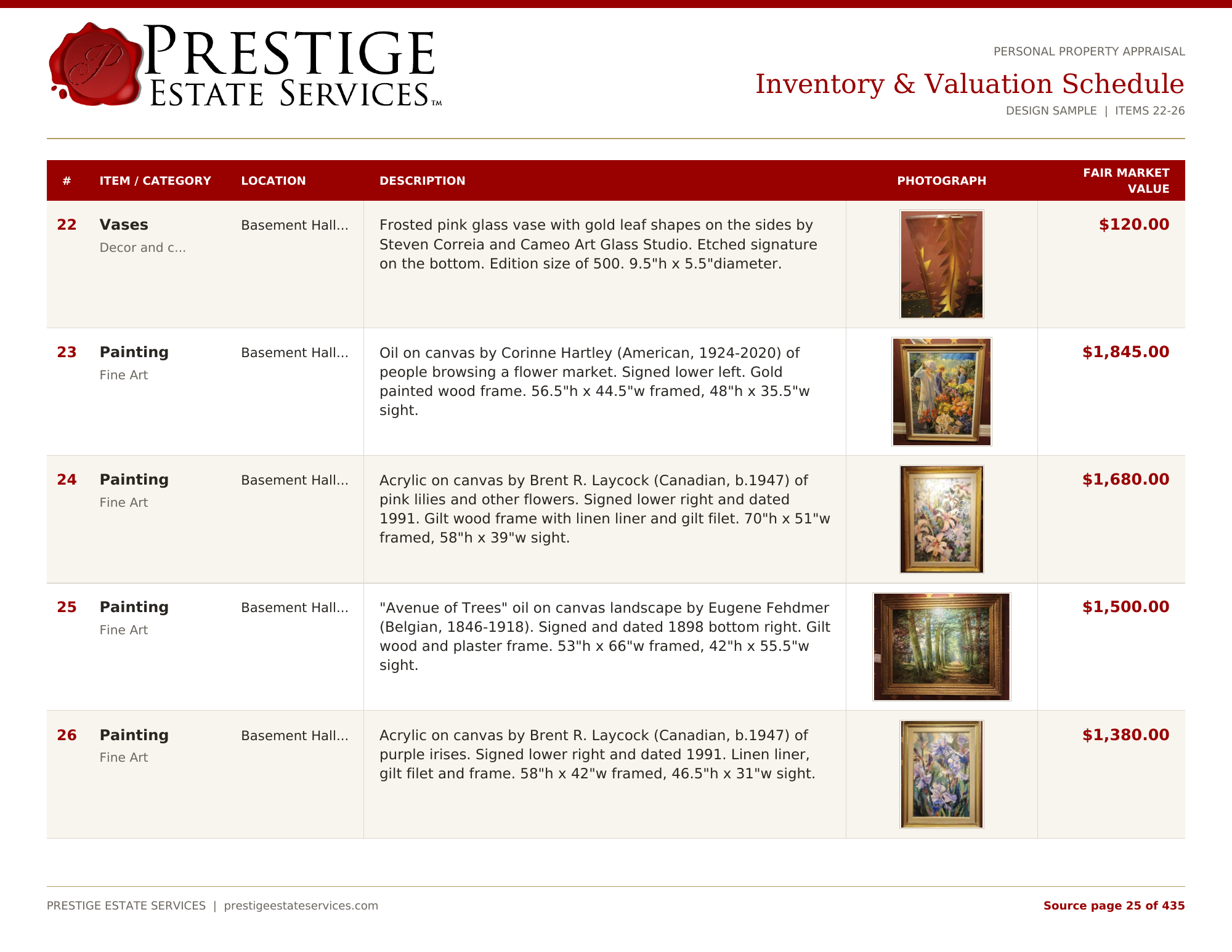
Photographs, descriptions, item numbers and condition notes identify what we appraised. If items are grouped, the entry explains what the group includes. Family working lists can use those same numbers.
A Defined Value Basis
The report states its purpose, intended users, valuation date and value definition. These details show which question the values answer and the date they describe.
Value and Evidence
We explain the market research, relevant comparisons, value approaches and conclusions. The report connects those findings to the specific art, antiques, furnishings or collections being divided.
A Clear Scope Record
The report describes the inspection, records relied on, assumptions and items left out. It also includes the appraiser’s qualifications, signed certification and supporting sources as appropriate to the work.
The sample below shows how photographs, descriptions and fair market values can appear together. It is a hypothetical example of report layout. Your report follows the items, dates and value basis agreed for your project.
Internal Review and Ongoing Support
Our ISA CAPP appraisal review department examines each formal report before it reaches you. The review covers the research, conclusions and appropriate USPAP reporting. Routine questions about the completed report are included, and your assigned appraiser can explain its entries and findings.
If the family later needs to insure selected items or add newly found belongings, contact us. We will discuss the extra work and cost before proceeding. A different purpose or value date may require a separate report.
How Does the Appraisal Process Work?
We begin with your belongings and the decision ahead. One authorized contact can help organize records and access, especially when items are in several homes. Our appraiser keeps you informed as the project moves from intake to the written report.
Define the Purpose
Tell us why the property is being divided, who needs the report and which date the values should reflect. Share relevant instructions and any firm deadline.
Review the Property
Send photos and a rough list of the belongings. We review the categories, likely research needs and access, then discuss how much item detail the report should provide.
Agree on Scope
We set out the included items, report needs, inspection plan and estimated project time. Tell us about unavailable objects or exclusions before the work is agreed.
Inspect and Record
Your appraiser documents identity and condition and checks existing lists against the belongings available. Maker marks, labels and old repairs can help distinguish objects that look alike.
Research the Market
We study relevant sales and other market evidence for the agreed date. Condition, quality, completeness and past ownership can help explain differences among similar objects.
Deliver the Report
We write the report, complete internal review and deliver the PDF. The named users can compare its values with their proposed selections and ask routine questions about the findings.
Can the Appraisal Be Completed Remotely?
A formal remote appraisal may suit items that photographs and records identify in enough detail. We need to assess markings, size, condition and any evidence gaps. The report’s purpose and the needs of its users also matter. We can discuss whether a visit, more images or other records are needed.
Our Online Photo Appraisal is a separate informal opinion. It does not provide the formal distribution report described here. You do not need to buy a photo opinion to discuss a formal project estimate.
How Can Values Support the Division Process?
An equitable distribution appraisal gives each item a clear identity and value for the agreed purpose. The people involved can then compare proposed groups without relying only on the number of objects. Keep report item numbers on each selection list so everyone discusses the same belongings.

Compare Item Groups
For example, one heir may prefer an antique desk while another wants several framed prints. Comparing the appraised values shows how those proposed groups differ. Counting one object against several would miss that information.
Discuss Exchanges
The parties may discuss an exchange or a balancing payment if their agreement allows it. The appraisal supplies values for that discussion. Their attorney or other advisor helps them work through the terms.
Hold or Sell Items
Some items may stay jointly owned or be considered for sale later. A sale price can differ from an appraised value because the market, timing, condition and selling costs can change.
Let your appraiser know if a set is split, an item is damaged or a missing piece turns up. For example, separating a matched pair of vases may change what is being valued. The report may need review before its figures are reused.
If the concern is how another appraiser reached a value, ask about appraisal review. That service examines a report and its support. If you also need a new value opinion, we discuss that work when planning the assignment.
Preparing for Your Appraisal and Project Estimate
You can contact us before you have a complete inventory. Start with a few photos and an outline of the family decision. These details help us explain the next step and prepare a useful project estimate.

- Why the belongings are being divided and who needs the report.
- Written instructions, the date the values should reflect and any deadline.
- Every property location, approximate item counts and the size of each collection.
- Overall and detail photos, existing lists and any items that may need specialist research.
- Receipts, records of past ownership, earlier reports and known repairs or missing pieces.
- Access plans and a list of belongings that have already moved or been divided.
Our written estimate covers the time expected for the whole project, including research and the report. The number of objects, property types, locations and available records affect that estimate. Review our appraisal fee schedule, then share enough detail for us to assess your project.
For a large contents project, include square footage and an idea of how much property each room or storage area holds. If the work moves beyond the original scope, we pause the affected part, discuss the change and obtain your written approval before resuming.
Access and Handling
You do not have to attend if an authorized person can provide access. Accessible, unpacked items can reduce handling time. Tell us about fragile or boxed belongings before the visit. Our appraisers cannot lift or move heavy or oversized objects.
If an item cannot be reached or clearly documented, we may need more photos, records or safe access before including it. Keep labels and related records with the belongings. Where possible, photograph items and record their location before they are moved to another home.
Turnaround and Firm Deadlines
Most formal projects take about two to four weeks after intake, depending on size and complexity. Several locations, missing records or specialist research can affect the schedule. Tell us about any planned distribution or other hard deadline early.
Expedited requests depend on appraiser availability and existing projects. An expedited deadline becomes a commitment only when Prestige Estate Services confirms it in writing. We will discuss the proposed timing with you.
Practical questions
Equitable Distribution Appraisal Questions
Does the appraiser decide who receives each item?
No. Our report provides values for the agreed belongings. The authorized people and their advisors decide legal shares, selections and the terms of their agreement. Values support those choices without assigning an item to a particular heir.
Can we appraise only a few selected items?
Yes, we can review a request for selected items. Tell us which objects matter and what the report needs to answer. We will discuss whether those items alone provide enough information for the planned decision.
Can belongings at several homes be included?
Yes, when access and the work can be coordinated. Include every home or storage location during intake. Photos, item numbers and one main contact can help keep records consistent across sites.
Does sentimental importance affect the market value?
Personal meaning and market value are different. Our research addresses the agreed type of value. Family members decide how memories and preferences affect what they hope to keep.
Can we rely on an earlier report?
An older report can help identify belongings and show past condition. Your appraiser reviews its date, purpose, included items and research before deciding what can be used for the new project.
Will a future sale match the appraised value?
An appraisal is tied to a defined value basis and date. A later sale may bring a different amount because condition, buyer interest, timing and selling costs affect the result.
Is this service also used for divorce matters?
For marital property matters, use our divorce appraisal service. This page focuses on heirs, beneficiaries and co-owners. Tell us the purpose at intake so we can plan the appropriate assignment.
Do you appraise homes or other real estate?
No. We do not provide real estate appraisals. This service covers movable belongings such as art, antiques, furniture and collections. A family project involving a home and its contents will need the real estate valued separately.
Choosing the right appraisal service
Looking for Equitable Distribution Appraisals near me?
Clients comparing equitable distribution appraisers should consider the belongings, the report’s purpose and the proposed work. Nearby access can help with inspection. Experience with the actual property and a clear plan for its records also matter.
Match the Appraiser to the Belongings
A provider should explain its experience with the relevant art, antiques, jewelry or collections. Clients can share representative photos and ask how the report will separate important objects from routine grouped contents.
Coordinate Access Across the Family
Families should identify every location and choose an authorized contact where practical. A useful proposal addresses belongings in storage, items already moved and access for inspection. It also explains how item numbers will stay consistent.
Agree on the Report Before Scheduling
Clients can compare estimates more fairly when the property list, valuation date, value basis and report users match. Written terms should explain the work and approval of changes. The appraisal locations page helps clients find the relevant service area.
Start with a scope discussion
Discuss Your Personal Property Distribution
Tell us which belongings need values, where they are kept and who will use the report. Share photos, an existing list and any firm deadline. We will review the request, discuss the work and help you plan an appraisal for your family’s next decision.
Nationwide personal property appraisal support
Find a Personal Property Appraiser by Location
Prestige Estate Services provides equitable distribution appraisals nationwide. Explore our locations, then contact us about the belongings, access and timing. We can discuss site visits, several property locations and formal remote options that fit the project.