Commercial and institutional personal property
FF&E Appraisals for Furniture, Fixtures and Equipment
FF&E appraisals give owners, managers and advisors researched values for furniture, fixtures and equipment. Prestige Estate Services documents the agreed business assets and explains their values in a written report. Whether you are planning a purchase, an insurance review, a facility move or a tax matter, we start with the decision the report must support. Our commercial personal property appraisal work can cover a single site or several locations, with the asset list, value date and report needs agreed at intake.
Your in-house appraiser develops the report, and our ISA CAPP appraisal review department checks it before delivery. Your assigned appraiser also answers routine questions about the findings.
Meet Prestige Estate Services
We do not provide real estate appraisals.
The people behind the appraisal
Meet Our Personal Property Appraisers
Our FF&E appraisers help you turn a varied equipment list into a clear record of assets and values. Your assigned appraiser handles the research and report and answers questions throughout the project. Our Head of Appraisals and office staff provide support. Explore our personal property appraisal services.

All Prestige Estate Services appraisers are in-house W-2 employees. We do not use contract appraisers as members of our appraisal staff.
Independent Research and Professional Standards
We develop values from evidence about the assets and their market. Our work follows the Uniform Standards of Professional Appraisal Practice (USPAP). These standards guide appraisal development and reporting, including personal property work.
What Is Included in an FF&E Appraisal?
FF&E means furniture, fixtures and equipment. You may also see it written as FFE. We agree on the assets and work included in your project before research begins. That scope should identify leased items, attached fixtures, exclusions and equipment that needs specialist knowledge.
Clarify Ownership and the Asset List
For an attached fixture, ask the owner and legal advisor to clarify ownership and removal rights. We define the personal property interest to be valued and any assumptions about removal. We do not include land or building value.
For a large purchase, move or renovation, compare your asset list with what is on site. Mark duplicate entries, missing items and equipment owned by someone else. For example, a leased copier should not quietly become part of a total for assets you own.
Accounting Records and Appraised Values
Tax basis has a separate role. IRS Publication 551 explains how basis is used in tax calculations, including depreciation and gains or losses. Your tax advisor handles those calculations; we research the value required for the appraisal.
Which Industries and Facilities Can Be Served?
Furniture and equipment appraisals should reflect the assets and the market for them. We can plan work at one facility or several sites. Share the property types, locations and access needs so we can match the project with suitable experience.

Hotels and Resorts
Guest-room furniture, lobby seating, artwork and food-service equipment may be included. A hotel FF&E appraisal can account for room counts, renovation plans and how the furnishings will be sold or reused.
Restaurants and Cafes
Restaurant equipment appraisals may cover cooking, refrigeration, food prep, seating and storage. Make, model, service history and condition help identify useful comparisons. Tell us which pieces are fixed in place or need special removal.
Office Contents
Office furniture appraisals can cover desks, chairs, storage and meeting-room equipment. Matching sets, total quantities and current demand matter. An office with hundreds of similar chairs presents a different sale question from a single used chair.
Shops and Displays
Showcases, shelving, counters, displays and point-of-sale equipment may fit the project. Identify leased items and items that belong to the building owner before we agree on the list.
Care Facility Assets
Care facilities may need values for room furnishings, office equipment and support assets. Medical devices and other regulated equipment need specific expertise. We review those items before agreeing to include them.
Public Institutions
Schools and public facilities may need records for desks, storage, exhibits or audiovisual equipment. Consistent item and location numbers help track the assets through insurance reviews, moves and surplus planning.
Tell us about unusual machinery, medical devices or technical systems at the start. These assets may need a different research plan from routine furnishings. We will discuss the expertise and records the work requires.
What Determines the Value of FF&E?
FF&E appraisals use the asset’s details and relevant market evidence. A flat percentage of the purchase price rarely explains the whole value question. Equipment can still work yet have fewer buyers because newer models offer features or support that buyers need.

Age and Useful Life
Age is one factor. Maintenance, usefulness and buyer demand also matter. An older machine with good service records may compare differently from one with the same age but little known history.
Condition and Care
Wear, damage, repairs and service records help explain condition. Tell us if operating status is unknown. We need to address that gap instead of treating the equipment as fully working.
Make and Model
Brand, model, capacity, size and setup help us find relevant comparisons. For example, two commercial ovens can look alike but differ in capacity, fuel type or included parts.
Quantity and Demand
One chair and hundreds of chairs may appeal to different buyers. Lot size, local demand and the time allowed for a sale can affect the research and the value conclusion.
Removal and Freight
Taking equipment apart, moving it and shipping it can add significant cost. The report explains whether the agreed value includes, excludes or separately considers those costs. Share loading limits and any removal deadline early.
Market Changes
Design changes, scarce parts and shifts in business needs can reduce demand. We consider those factors alongside physical wear. A low hour count alone may not offset a lack of parts or service support.
The valuation date tells you when the appraised values apply. It can differ from the site visit or report date. If you need values for an earlier date, we review records and market evidence from that period.
When Is an FF&E Appraisal Needed?
Start with the decision the FF&E appraisal needs to support. The same asset list may help with more than one project, but insurance, a sale and a tax matter can require different values, dates and reports.

Insurance Records
Asset records and replacement research can help with insurance schedules. Your insurer or broker should confirm the required basis and report details. They also address the coverage under the policy.
Loss Evidence
After damage or loss, earlier records may help establish identity and past condition. We review the evidence needed for the value question. The claim professionals address cause, liability, coverage and payment.
Sales and Transfers
A purchase or ownership change may call for values of named business assets. We define the equipment portion separately from goodwill and other intangible assets. Tell us whether items will stay installed or be removed.
Estate Property
Equipment in an estate may need values for an earlier date. Share ownership records, lease details and the advisor’s instructions. These help identify the assets and the specific estate purpose.
Reuse and Donation
Before a renovation or donation, record the equipment while its parts, labels and condition are clear. Removal can change what is included or what records remain. Tell us your plans before the items leave the site.
Lending and Agencies
Lenders and agencies may request values for collateral or surplus planning. Share their written requirements early. They and the appropriate advisors handle title, liens and other due diligence.
Choose the relevant service for insurance appraisals, damage and loss appraisals or estate tax appraisals. We can discuss how that purpose affects the equipment research and report.
For a tax-related gift, discuss a charitable donation appraisal before removal. Your tax advisor addresses eligibility and filing treatment. For public assets, review our government property appraisal service.
How Does the FF&E Appraisal Process Work?
We plan FF&E appraisals around your assets, records and operating schedule. Photos and a rough list help us estimate the work before a site visit. Your appraiser then develops the evidence and research needed for the agreed report.

Define the Project
Tell us why you need values, who will use the report and which date it should reflect. Include every site, any deadline and whether the equipment will stay in place or move.
Set the Scope
We agree on the assets, exclusions, value basis and level of detail. We also discuss site access and any specialist work. The written plan gives everyone a clear description of the job.
Gather Useful Records
Send asset lists, invoices, photos, model details and service records. Mark uncertain counts and ownership questions. We can explain which missing information matters most before inspection and research.
Inspect and Document
Your appraiser records the agreed item details, counts, locations and observed condition. The report explains what came from a site visit, photographs or other supplied records.
Study the Market
We assess suitable sales, dealer records, replacement sources and other evidence. Condition, capacity, quantity and removal terms help explain the comparisons. An asking price alone does not show what a buyer paid.
Prepare the Report
We connect the asset list to the research and conclusions, then complete internal review. You receive the report as a digital PDF. Your appraiser remains available for routine questions about its findings.
Similar routine items may be grouped by room, type, model or count. For example, matching guest-room nightstands may suit a group entry. A rare designer desk or a machine with unusual wear may need its own entry.
We discuss any grouping, sampling or reliance on supplied counts before using that approach. The report explains it so readers can follow the entries and total. Grouping should not hide a meaningful difference between assets.
Plan for occupied rooms, restricted areas, site escorts and any shutdown windows. Ask the responsible facility staff to arrange any needed access or safe demonstration. Tell us who will handle equipment connections or movement before the visit.
Can an FF&E Appraisal Be Done Remotely?
A formal remote appraisal may be possible when photographs and records show the equipment’s identity, setup and condition in enough detail. We also consider the report users’ requirements. Missing labels, uncertain counts or unverified condition may call for more records or a site visit.
The Online Photo Appraisal is a separate informal opinion, with its own process. It is not the formal business-asset report described here. Buying a photo opinion is not required to discuss a formal project estimate.
What Does Your FF&E Appraisal Report Include?
Your FF&E appraisal report arrives as a digital PDF. It connects the asset schedule with researched values and the reasons behind them. We confirm the intended users—the people the report is prepared for—and the detail they need before work begins.

Project Definition
The report states the client, purpose, users, value date and included property. It explains the inspection and important assumptions, including whether assets stay in place or require removal.
Asset Schedule
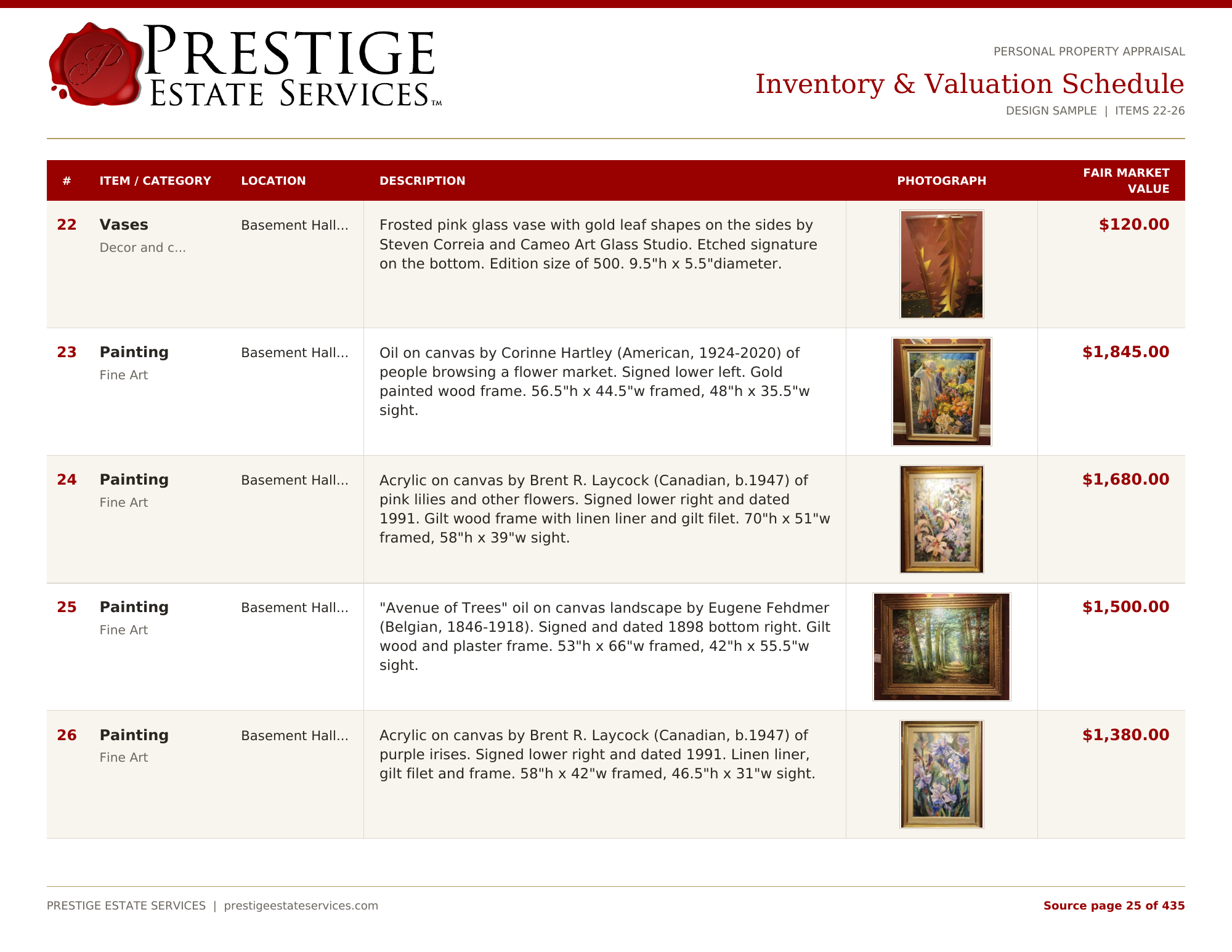
Entries include the agreed descriptions, counts, models, photographs and locations. Readers should be able to identify grouped items and exclusions and connect them to the total.
Market Research
We explain the market and cost evidence used for the actual equipment. The research addresses meaningful differences between the subject assets and the examples used for comparison.
Scope and Disclosures
The report describes the methods, assumptions and limits of the work. It includes the appraiser’s qualifications, signed certification and supporting sources appropriate to the assignment.
The sales comparison approach studies similar assets. We assess differences in condition, age, capacity, setup, quantity, location and sale terms. Those details help explain why two similar machines may support different values.
The cost approach considers the current cost of a suitable replacement or reproduction, then any relevant loss in value. Wear, outdated design and wider market conditions may matter. It is more than the original invoice less a fixed percentage.
In some assignments, income linked to a specific asset may help support its value. We assess whether the records and purpose make that approach useful. It does not turn the equipment report into a valuation of the whole business.
If you need another report examined, ask about appraisal review. A Restricted Appraisal Report may suit a defined reporting need. We discuss the users and purpose before selecting the report format.
Internal Review and Support After Delivery
Our ISA CAPP appraisal review department examines every formal report before delivery. The team checks the research, conclusions and appropriate USPAP reporting. Your assigned appraiser can explain the report entries and answer routine questions about the findings.
The image below is a hypothetical example of report layout. Its photographs, descriptions and fair market values show how item records can fit together. An FF&E schedule uses the assets, columns, value basis and date agreed for your project.
Planning Your FF&E Appraisal Estimate and Schedule
You can request a project estimate with a rough asset list and useful photos. The count, variety and locations of the items affect the work, along with the research and report detail. Complete intake records help us estimate the total project time.
- The reason for the appraisal, report users, value date and deadline.
- Facility addresses, site contacts, access limits and planned move or removal dates.
- An asset list or approximate counts by type and location.
- Overall and detail photos, model numbers, invoices and service records.
- Leased items, ownership questions, exclusions and equipment with unknown working condition.
- Report instructions from the insurer, lender, advisor or agency that needs it.
Project Fees and Useful Preparation
Our written estimate covers the time expected for the whole project, including research and reporting. Review the appraisal fee schedule for published fees. Our fees are not a percentage of the appraised value.
Where safe, photograph equipment before it moves, changes or leaves the site. Include labels, included parts and condition. You do not have to attend if an authorized person can provide access. Our appraisers cannot lift or move heavy or oversized assets.
Check the list for leased, missing or duplicate assets. Also note removal costs and any gaps in condition records. These checks help prevent an orderly spreadsheet from giving a misleading picture of the property.
Contact us if you add equipment, need a different purpose or require values for a new date. We will review the request and discuss any extra work and cost. A separate report may be needed. Routine questions about the completed report are included.
Our guide to preparing for an FF&E appraisal provides more detail on records and planning. You can also send your initial list and ask which details to gather next.
Keeping Scope and Costs Clear
For a large facility, share floor area and an idea of how much equipment each room or storage area holds. Accessible items and organized records can reduce handling time. Tell us about boxed assets, blocked labels or access that needs facility staff.
If the work goes beyond the original scope, we pause the affected part and discuss the change with you. We obtain your written approval before resuming. If evidence is too limited, we may need more records, safe access or a narrower asset list.
Turnaround and Firm Deadlines
Most formal projects take about two to four weeks after intake, depending on size and complexity. Several sites, missing records or specialist research can affect timing. Share planned moves, closings and other hard deadlines at the start.
Expedited requests depend on appraiser availability and existing projects. Prestige Estate Services must confirm an expedited deadline in writing before it becomes a commitment.
Practical questions
Furniture and Equipment Appraisal Questions
What do FF&E and FFE both mean?
Both mean furniture, fixtures and equipment. The report still needs a clear list of the actual assets, exclusions and purpose. The acronym alone does not decide what the appraisal covers.
Is an inventory enough to establish equipment value?
An inventory tells you which assets are present. An appraisal adds researched values for a stated basis and date, with the analysis needed to explain them. Your inventory can help us plan that work.
Can attached fixtures be included in the appraisal?
Some attached items may be included when the personal property interest is clear. Ask the owner and legal advisor about ownership and removal rights. We do not provide real estate appraisals.
Can several facilities be covered in one project?
Yes, when the equipment, records, access and deadline can be coordinated. Include every facility at intake. Consistent item and location numbers help us track assets across sites.
Can similar equipment be valued together in groups?
Yes, when grouping preserves meaningful differences and supports the purpose. Routine matching furnishings may suit a group. Important, unusual or condition-sensitive equipment may need its own entry and research.
Does the appraisal also value the whole business?
No. We value the agreed physical assets. The operating business, goodwill, customer relationships and other intangible assets need separate business valuation work.
Should we record equipment before a move?
Yes, where it is safe and practical. Record labels, counts, included parts and condition before the move. Equipment can become harder to identify once it is split up, altered or mixed with other assets.
Can one value serve every insurance or sale purpose?
No. Insurance replacement, fair market value and liquidation planning can use different definitions and sale assumptions. Tell us the intended use so we can research the right question for your equipment.
Choosing the right appraisal service
Looking for FF&E Appraisals near me?
Clients seeking FF&E appraisers should start with the actual equipment and the report’s purpose. Nearby access can help with inspection. Relevant asset experience, reliable records and a clear work plan also matter.
Match Experience to the Equipment
A provider should explain its experience with the relevant equipment. Office furnishings, restaurant machines and regulated devices can need different records or specialists. Clients can share sample photos and ask how unusual items will be handled.
Plan Access Around Operations
Facilities should identify occupied rooms, site contacts, restricted areas and shutdown windows. For several sites, a consistent list helps track moved or missing assets. The appraisal locations page provides a starting point for access discussions.
Confirm the Scope Before Comparing Quotes
Comparable quotes should cover the same assets, dates, value basis and report detail. Written terms should explain travel, inspection, research, review and approval of changes. Any remote approach should address the equipment evidence and report users.
Start with a scope discussion
Plan Your FF&E Appraisal
Tell us what furniture or equipment needs values, where it is kept and why you need the report. Share rough counts, photos and any firm deadline. We will review the request, discuss the work and help you plan the next step.
Nationwide personal property appraisal support
Find a Personal Property Appraiser by Location
Prestige Estate Services provides FF&E appraisals nationwide. Explore our locations, then contact us about the equipment, site access and timing. We can discuss one facility, several sites or formal remote work when the evidence and purpose support it.