PERSONAL PROPERTY • A PRACTICAL COMPARISON
Remote vs. In-Person Appraisals for Personal Property
Remote vs. in-person appraisals offer two ways to gather the evidence behind a personal property value. Prestige Estate Services helps owners, families and advisors choose an approach for art, antiques, furnishings and collections. Remote work uses photographs and records; an in-person appraisal includes a visit to the belongings. We review the property, report purpose and available details, then plan the research and written report. Tell us what you need to value and how you will use the result.
Work directly with an appraiser from our in-house firm. Our ISA CAPP appraisal review department checks every formal report before delivery, and routine questions about the findings are included.
Meet Prestige Estate Services
This service covers tangible personal property. Prestige does not provide real estate appraisals.
ONE FIRM. ACCOUNTABLE APPRAISAL WORK.
Meet Our Personal Property Appraisers
Your assigned appraiser guides the project from intake through the completed report. You can also ask questions as the work develops, with support from our Head of Appraisals and office staff. We review the belongings and your needs before deciding how to gather the evidence.

All Prestige Estate Services appraisers are in-house W-2 employees. We do not use contract appraisers as members of our appraisal staff.
For example, if a project needs a specialist for a defined part of the work, our firm coordinates that input. Prestige remains responsible for the appraisal and its final review.
What Is the Difference Between Remote and In-Person Appraisals?
The main difference is how we examine and document the property. For a remote appraisal, you or someone with access supplies photographs, measurements and records. For an in-person appraisal, the appraiser visits the belongings. Both approaches still involve research, analysis and a report suited to the agreed purpose.

Compare the Evidence and Work
| What to Consider | Remote Appraisal | In-Person Appraisal |
|---|---|---|
| How information is gathered | We review your photographs, measurements, item list and records. | The appraiser visits, examines and records the agreed belongings. |
| When it may fit | The objects and their condition are clear in the records, with someone available for follow-up. | Many items need records, or materials, marks and condition require a closer look. |
| Your preparation | Organize the photographs and records, then supply missing details when requested. | Gather records, identify the belongings and arrange safe access for the visit. |
| Main limitation | Photographs may leave hidden repairs, marks or materials unclear. | Even a visit may leave hidden details or missing history that need more evidence. |
| Written deliverable | A formal PDF report when the evidence supports the agreed assignment. | A formal PDF report based on the examination, records and research. |
| Time and cost | May reduce travel time; preparing and checking records still takes work. | Adds site time but may simplify records for a large or varied collection. |
| Who decides the approach | The appraiser assesses the records and any needs of the report recipient. | The appraiser assesses which details need direct examination and plans the visit. |
DOCUMENTATION THAT SUPPORTS THE CONCLUSION
When Is a Remote Appraisal a Good Fit?
Remote personal property appraisals can work when the available images and records show enough about the items. We need to understand their identity, size, materials and condition. First, your appraiser reviews the evidence and asks for missing details before deciding whether a visit is needed.

When Remote Documentation Can Work Well
- Each object has a clear item number or name that matches its images and records.
- Photographs show useful marks, signatures, materials and condition, with accurate measurements.
- Receipts, earlier reports and ownership records provide useful background for research.
- Someone with access can answer questions and safely obtain any missing views.
With fine art, the reverse, signature, labels and surface may help identify the work. Antiques may call for views of joints, marks and repairs. For example, clear photographs of a silver tea set and its marks may support remote research. An unclear repair on a handle could call for a closer look.
If the records leave an important question open, we discuss the next useful step. That may mean more images, further records, specialist input or a visit. We then explain what each option adds to the work so you can decide how to proceed.
A CLOSER LOOK AT THE BELONGINGS
When Should Personal Property Be Examined In Person?
In-person appraisals let the appraiser examine the belongings directly and create item records during the visit. This often helps with varied household contents, large collections or unclear condition. We agree on the property to include and discuss access before arranging the on-site inspection.

When an On-Site Visit Adds Value
- Many belongings need records across rooms, storage areas or property types.
- Surface wear, repairs, construction or materials need a closer examination.
- Existing records leave item counts, measurements or important marks unclear.
- The report recipient requests a visit, or the appraiser needs direct evidence.
The visit gathers evidence for the appraisal. Your appraiser then studies the market, compares relevant information and writes the report. If identity or materials remain uncertain, we may need further records or specialist findings. However, a close look does not replace the research needed to support the value.
For example, a home may contain furniture in several rooms and boxed sets in storage. A visit can help match those pieces and create a clear inventory. Our estate inventory and valuation and in-person personal property appraisal pages explain those related services.
Arrange Safe Access
You do not have to attend if an authorized person can provide access. Accessible, organized belongings can reduce handling time. Tell us about unpacking or crating needs, since handling can add time when the appraiser must do it.
If an item is blocked or a fragile surface cannot be viewed safely, we assess what the available evidence supports. We may need better access or further records before including it. A visit does not remove the need for enough evidence.
Can Either Approach Produce a Formal Appraisal Report?
Yes. Either approach can support a formal report when the evidence and project requirements support it. First, we confirm the intended use: why you need the appraisal. We also identify the report users, the property and the date the values should apply to. Those choices guide the inspection plan.

Match the Report to Its Purpose
- Estate tax appraisals address the values and records needed for the estate’s tax-reporting purpose.
- Probate appraisals help an executor document personal property for estate administration.
- Insurance appraisals address the requested value basis and documentation. Share any insurer inspection requirements first.
- Charitable donation appraisals require planning around the gift, available evidence and applicable reporting rules.
Our formal work follows the Uniform Standards of Professional Appraisal Practice (USPAP). These ethical and performance standards cover appraisal work, including personal property. The report explains what we examined, which sources we used and the reasoning behind the values.
For example, an inherited painting may need an earlier estate value and a current insurance value. However, the date of a visit does not choose either value date. Share both purposes at intake so we can plan the evidence, research and reports around them.
What Will You Receive in the Formal Report?
Your formal appraisal arrives as a digital PDF, whether the work uses remote records, an on-site visit or both. It connects the belongings to researched values and the reasons behind them. Clear photographs and item descriptions help you match each entry to the correct object.

Property and Evidence
The report identifies the agreed property, its relevant condition and the information used. It explains whether the appraiser examined the items directly, relied on supplied photographs or used both sources.
Values and Reasoning
The report states the purpose, value date and type of value used. It explains the market research, value approaches and reasoning behind the conclusions, with supporting sources.
Assumptions and Supporting Details
Important assumptions and limits appear in the report. It also includes the appraiser’s relevant qualifications and signed certification as appropriate to the assignment. These details help readers understand the work and its basis.
Review Before Delivery and Support Afterward
Every formal report goes through our internal quality assurance and quality control process. Our ISA CAPP appraisal review department examines the research, conclusions and appropriate USPAP reporting before delivery. Your assigned appraiser can answer routine questions about the findings.
If you later add belongings or need a report for another purpose, contact us. We will discuss any added research, separate report and cost before proceeding. For example, a change in use or value date can change what the report needs to address.
The image below is a hypothetical item schedule with photographs, descriptions and fair market values. It shows one part of a report. Your report uses the value basis and date appropriate to the agreed purpose, with the research and explanations that support it.

What Should You Prepare for Either Approach?
Start with the belongings, their location and the reason you need values. You can contact us with incomplete records; we will explain what else may help. The same initial information lets us compare remote work, an on-site visit or a combination of both.

Information to Gather Before the Consultation
- Explain the report’s purpose and who will use it. Share written requirements from your advisor, insurer or other recipient.
- List the item types, approximate quantity and locations. Name the person who can arrange access or provide photographs.
- Show the whole object, other useful sides, marks and visible damage. Keep each item’s images together and avoid filters.
- Include measurements, known maker or artist details, receipts, older reports and ownership records.
- Give the required value date and report deadline. These may differ from the planned inspection date.
How We Select the Approach
-
Discuss the Project
We review the purpose, belongings, location, available records and deadline. You can request an estimate through this intake process.
-
Assess the Available Evidence
Your appraiser assesses whether the records supply enough detail or whether a visit would help. We discuss any evidence still needed.
-
Confirm the Scope and Next Steps
The plan identifies the belongings, documentation, research and report. We also discuss access, expected hours and scheduling before work begins.
Keep labels and existing records with their related items. Photograph the current condition; avoid cleaning, repairing or opening frames just for the appraisal. Tell us about fragile surfaces or blocked access. Our appraisers cannot lift or move heavy or oversized objects.
Is a Remote Appraisal Faster or Less Expensive?
A remote appraisal may reduce travel and site time, but research and report writing still take work. Clear records help; incomplete photographs can lead to more follow-up. However, a visit may be more efficient when many belongings need records. For this reason, we estimate the whole project after reviewing its needs.

What Affects Timing and Fees?
- Number and types of items, and whether they need separate entries.
- Research needed to identify objects, assess condition and compare market evidence.
- Clarity and completeness of photographs, measurements and supporting records.
- Site access, packing, follow-up questions and the agreed report deadline.
Our appraisal fee schedule explains the published rates. The written estimate covers the time expected for the agreed project and its report. A detailed intake form, photographs and records help us estimate accurately. For larger properties, also include approximate floor area and how much fills the rooms or storage space.
Agree on Changes Before Added Work
If the project moves beyond the original scope, we pause the affected work and discuss the change. Written client approval is required before we continue. That lets you review the added tasks and their effect on cost.
For example, an estimate may cover a photographed group of ceramics. Adding boxes of unlisted pieces can change the inventory and research time, even if the appraisal remains remote. Let us know when the property or purpose changes.
Timing After Intake
Most formal projects take about two to four weeks after intake, depending on size and complexity. However, missing records, extensive research or access problems can affect the schedule. Tell us early about a filing, move or other firm deadline.
Expedited requests depend on appraiser availability and current projects. Prestige Estate Services must approve an expedited deadline in writing before it becomes a commitment. Early notice gives us more opportunity to assess the work against your schedule.
Questions About Remote and On-Site Appraisal Work
These questions cover common choices about photographs, visits and formal reports. If a collection raises a different concern, tell us what is available and what you need to decide.
Photos, Visits and Shipping
Can the project begin remotely and later include an on-site visit?
Yes. An initial review may show that a visit or further evidence would help. If that changes the agreed work, we discuss the effect on cost and timing and obtain written client approval before continuing.
Can photographs from a phone be used?
Often, yes. Use sharp, well-lit images that show the requested views, marks and condition. Send the original files when possible and avoid filters. Your appraiser will ask for more images if an important detail is unclear.
Do I need to ship my belongings for a remote appraisal?
Remote work starts with photographs and records, so you do not normally need to ship belongings. If direct examination or specialist testing becomes necessary, discuss the arrangements with us first. Do not send an object without an agreed plan.
Property Evidence and Report Scope
What if the property has already been distributed, damaged or lost?
Share what remains: earlier photographs, inventories, receipts, reports or records of damage. We assess whether that evidence can support the requested value and date. Some gaps may need more research, and some items may lack enough evidence for the assignment.
Will the appraisal establish whether an artwork or antique is authentic?
The appraiser examines identification evidence needed for the value opinion. For example, a signature or mark can be a clue, but it may need further support. If authentication, testing or a specialist’s opinion is needed, we discuss that work and explain how it affects the appraisal.
Can one appraisal cover belongings in more than one location?
Potentially. Tell us where each group is kept and who can provide access. For example, records may support remote work for items at one home, while a storage unit needs a visit. We plan the evidence and report for the combined project.
Does This Service Include Real Estate Appraisals?
No. Both approaches cover tangible personal property, such as art, antiques, furniture and collections. We do not provide real estate appraisals. Tell us about the belongings within the home, estate or other property you want to include.
Choosing Personal Property Appraisers near me
A search for personal property appraisers near me can help locate a firm for a visit. The next question is whether its expertise fits the belongings and the report’s purpose. A useful comparison considers both local access and the quality of the evidence available for remote work.
Confirm Experience With the Property
The firm’s background should fit the art, antiques, furnishings or collection involved. Relevant knowledge matters whether the evidence comes from photographs or direct examination. An initial item list helps identify any need for specialist input.
Confirm the Reporting Requirements
A proposal should state the purpose, expected report users and value date. It should also address written requirements from an insurer, advisor or other recipient. Those details help owners compare equivalent services.
Confirm Access and the Inspection Plan
The plan should cover property locations, access, available records and any handling limits. It should explain why a visit may be needed and how changes in work or cost are approved.
START WITH YOUR PROPERTY AND PURPOSE
Let’s Choose the Right Appraisal Approach
Tell us what needs a value, where the belongings are and how you will use the report. Send a few photographs, any available records and your deadline. We will review the request and discuss which approach fits the evidence, access and work involved.
NATIONWIDE PERSONAL PROPERTY APPRAISAL SUPPORT
Find a Personal Property Appraiser by Location
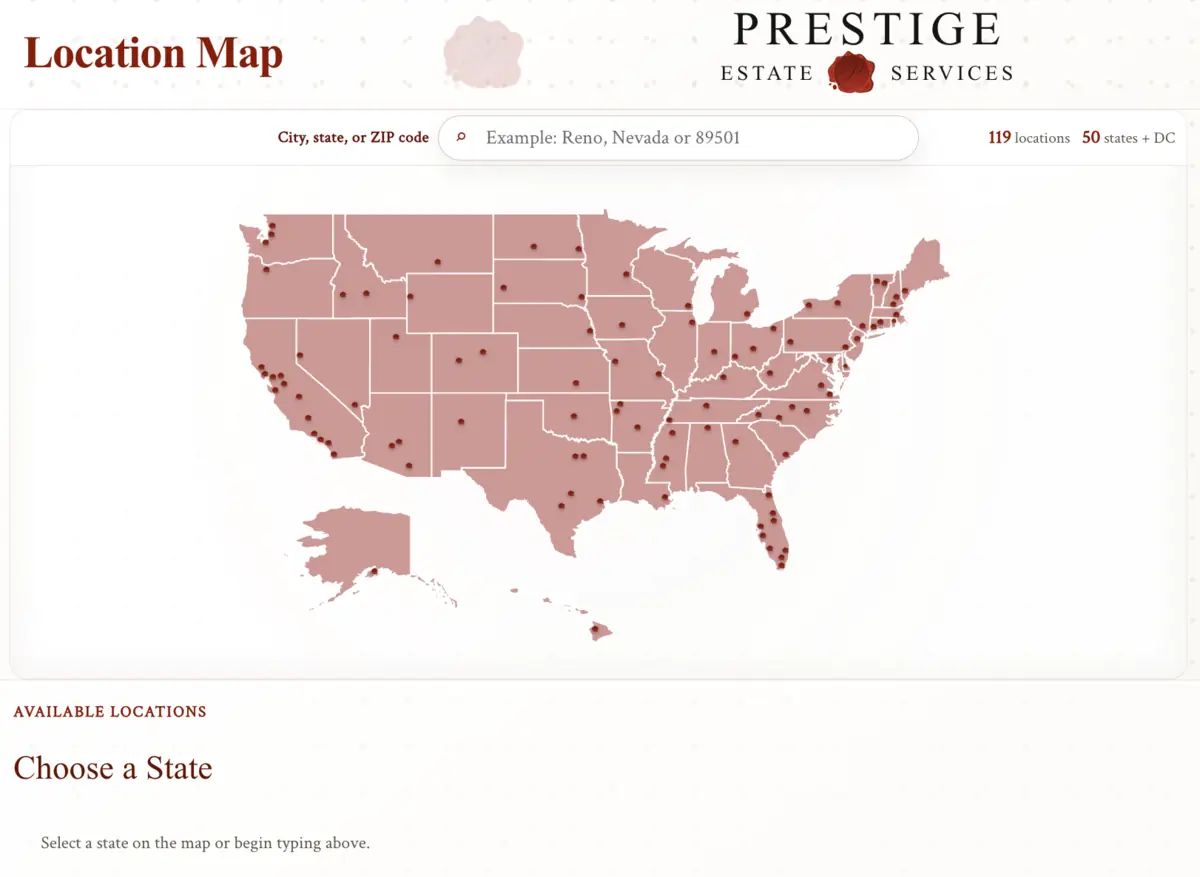
Prestige provides personal property appraisals nationwide. Explore our appraisal locations and share where the belongings are kept. We can discuss a visit, formal remote work or a combined plan based on the property and available evidence.