Washington Personal Property Appraisers
Personal Property Appraisal Services · Washington, District of Columbia
Our Washington personal property appraisers research values for art, antiques, furniture and collections. Prestige Estate Services prepares appraisals for estate, tax, insurance, donation and family needs.
Our in-house team handles your appraisal. The team reviews each formal report for quality and appropriate USPAP reporting before delivery.
Jump to Appraisal Services

Planning With Washington Personal Property Appraisers
Our Washington coverage includes the city’s Georgetown, Capitol Hill and Dupont Circle neighborhoods, with projects in the broader area considered through the team. The property may be a single object, selected pieces or a household. This page explains the different services so you can describe the request clearly, including any instructions from an attorney, tax adviser or insurance professional.
We appraise personal property. We do not provide real estate appraisals.
Meet Our Personal Property Appraisers
Meet Your Personal Property Appraisal Team for Washington, District of Columbia

The appraisers you work with are in-house W-2 employees of Prestige Estate Services, not independent contractors.
A mixed project can raise several kinds of questions. Furniture construction, an artwork’s medium and an equipment model need the right property knowledge. Prestige reviews these needs while planning the work. Every formal report also receives an internal quality review before delivery. Appraisers in our review department hold the ISA CAPP designation.
You can begin with the facts you have, without choosing a technical specialty first. Our appraisal services overview shows the range of work. Share a sample of the belongings and explain the requested result. We can discuss how the proposed service would address that need and which details would help define it.
Send the request in the adviser’s own words
If an attorney, tax adviser or insurer has asked for a report, include the full request with your inquiry. A short phrase such as “estate value” may leave out a date or a key instruction. For example, a letter may identify who will use the report or which belongings to include. Those details help us discuss the right work.
Also flag any part you do not understand. You do not need to turn the request into appraisal terms yourself. Instead, send it with a plain description of the property and your deadline. We can then discuss what the assignment needs and where the adviser may need to clarify the request.
Personal Property Values in Washington
Personal Property Appraisals in Washington, District of Columbia
What happens between my first request and a written appraisal?
A personal property appraisal starts with your reason for needing a value. We discuss the belongings, the date the value must reflect and who will use the result. Our personal property appraisal service then brings together identification, market research and a written explanation. The report explains a value that fits your request.
A serving tray in Washington, DC, can show how an appraisal moves beyond a household label. Its size, material, construction and condition help identify the piece. Prestige then connects that description to your value question and the market evidence. The reader should be able to recognize the tray described in the report without relying on memory of the visit.
Match the appraisal to your question
The first discussion helps separate the result you need from the records you already have. For example, a receipt shows what you bought and paid. A family list also shows which objects someone noted. Personal property valuation adds research and reasons for a stated use. Share the records you hold, and we can explain what further work the request needs.
The finished report links its values to the property and the agreed scope. Those details matter when someone reads it later. An adviser should not have to guess whether the values concern current insurance needs or an earlier estate date. Describe your decision in ordinary words at the start so the report can serve it.
Tangible Personal Property Appraisals in Washington, District of Columbia
Can one assignment include everyday contents and unusual objects?
Yes. A tangible personal property appraisal can cover a mix of physical belongings. We agree in advance how to treat each type. Tangible personal property includes objects such as furnishings, artwork, jewelry and equipment. Prestige’s tangible personal property work helps define what belongs in the request. You can also ask about unfamiliar pieces alongside ordinary household contents.

A globe is a physical object even though its printed map conveys information. We treat the stand, sphere and other parts as one object. For example, size, construction, age and condition may affect the research. Including it in a contents request means describing the actual globe, not placing a value on geographic information or financial rights.
Keep the physical property clear
To plan a household contents appraisal, start with the rooms, collections or categories you want covered. You need not know every maker or decide which piece matters most before asking. A broad view lets Prestige see the range of the work and ask focused questions. Some items need their own research, while suitable groups may share an entry in the report.
A home and a collection do not always have the same boundaries. If you want only selected belongings appraised, say which groups are included and which are outside the work. This helps with a Washington, DC, home where the owner is also arranging separate work for business assets. Clear lists let each report cover what its reader expects.
Hypothetical example: valuing the contents apart from the home
A Washington homeowner might ask whether household contents could be valued as a percentage of the home’s purchase price. That approach would not identify the furniture, artwork or collections inside. It could also carry facts about the land and building into a different value question.
A tangible personal property appraisal could define the included belongings and research them for the stated purpose. Room photographs and existing lists would help show that property. The home’s price would not replace evidence about the contents themselves. The resulting report would address the agreed movable belongings, with real estate outside the scope, rather than infer their worth from the address.
Fair Market Value Appraisals in Washington, District of Columbia
Which market should a fair market value appraisal reflect?
A fair market value appraisal uses the market that fits the property and the report’s purpose. Fair market value concerns willing, informed buyers and sellers who freely choose to trade. Prestige’s personal property valuation research examines evidence for that question at the agreed date. It does not assume that the highest advertised price is the appropriate answer.

For a guitar in Washington, DC, we compare instruments with a similar maker, model, period and condition. A current retail listing and a recorded resale can show different kinds of evidence. We therefore ask whether each source fits the market and value date. Matching the broad object name is only the beginning of that comparison.
Choose evidence for the stated market
Fair market valuation also examines how closely each sale relates to the item. Condition, complete parts and a supported model or artist name can matter more than a shared category. Useful sales may still differ from the property. The report explains how we weighed those differences and why the sales help. We do not simply average the prices.
In contrast, a replacement figure can reflect a different buying situation. If you bring an insurance report to a request for fair market value, explain the new use. However, descriptions and images may still help even when the old value does not. Prestige can build on that useful evidence while researching the question your present decision raises.
Estate Tax, Form 706 and Date-of-Death Appraisals
Estate Tax Appraisers in Washington
Do I need to sort the entire estate household before calling?
No. Start an estate tax appraisal in Washington, DC, with an overview of the belongings and the adviser’s instructions. Prestige can help define the contents work before the representative attempts a detailed value list. The aim is to identify the property that needs appraisal and the date and tax purpose it must address. The estate’s attorney or tax professional decides the applicable filing obligations.

A chest of drawers may need closer attention within an estate of ordinary furnishings. Its construction, design and condition can guide the decision to research it separately. We can therefore discuss that treatment before the estate contact tries to rank every item by assumed importance.
Follow the estate’s request
A few room views can show the mix of belongings without asking you to make appraisal judgments. Earlier lists may help show the full scope, especially if objects are at more than one address. Tell us which sites belong to the project. We then plan how to cover key pieces and broader groups.
The next discussion concerns the report. The adviser may need clear entries for certain pieces and an explained treatment of other contents. Our estate tax appraisers review those needs with the estate contact, then research the agreed values. The report gives the advisers a record of contents values and the reasons behind them.
If the estate review changes the request, tell us before assuming our work covers it. More property, another value date or a new reader may affect the work. Keeping these decisions together shows what we agreed and which questions still need the adviser’s direction. Raise those questions while we plan the work.
IRS-Qualified Estate Tax Appraisers for Form 706 in Washington
What should the Form 706 preparer be able to follow in the report?
Our IRS-qualified estate tax appraisers connect each item to its value and date. We prepare a USPAP-compliant report for the estate’s agreed use. The Form 706 instructions from the IRS discuss household goods and personal effects within Schedule F. Your preparer decides how the estate’s facts fit the return; the appraisal provides the researched property values.
A ship model in Washington, DC, may need its own entry instead of a broad decorative-object total. The appraisal describes its scale, construction, condition and known history, then explains the evidence for its value. As a result, the preparer can see what the value covers and why the model needed its own research.
Use the preparer’s instructions
A Form 706 appraisal explains values so the preparer can use them. The report should explain the kind of value and the property features that matter to it. If the estate already uses item numbers, discuss those during planning. The preparer can then match a researched entry to other records without treating each description as a new asset.
The appraiser’s knowledge must fit the belongings. For example, art, decorative objects and specialized equipment may need different research. Therefore, share these categories early so Prestige can assess the work. IRS-qualified does not mean the IRS endorses the firm or will accept every report. The actual property and reporting purpose guide the proposed service.
Date-of-Death Personal Property Appraisals in Washington, District of Columbia
What if the belongings changed after the required date of value?
A date-of-death appraisal can address an earlier date when the available evidence supports that work. We study the belongings as they existed at the requested date, even when the visit and report come later. This is called retrospective appraisal. We consider changes after the death rather than assume those features were always present.
For a brooch in Washington, DC, an earlier photograph may show a setting or component that later changed. A present examination can establish current features, while dated records help address the earlier state of the piece. We then weigh those sources together, explain any key assumptions, and research the value at the date of death.
Connect the earlier date to the records
A retrospective appraisal also needs a market that fits the earlier date. Later sales may offer useful clues, but they may reflect changes that had not yet occurred. Therefore, Prestige weighs those sales alongside evidence closer to the period in question. The report explains how the research supports the earlier value instead of putting a present-day price on a past event.
Give us dates with the records when you can. Give the photo date, repair date or date of the earlier description. However, a dated record may explain one feature without proving every fact about the item. The appraiser can describe those limits so the adviser knows what supports the value and what remains uncertain.
Probate and Estate Inventory in Washington
Probate Appraisals in Washington, District of Columbia
Can an appraisal clarify uncertain figures on an estate inventory?
Yes. A probate appraisal can supply researched contents values for the Washington, DC, estate task your representative or counsel defines. An existing inventory is a useful starting point. However, a figure beside an item may not show its date or purpose. We establish those details before developing the appraisal. Counsel remains responsible for the estate’s legal and filing requirements.

A cabinet may have an earlier value written beside its name on a family list. Prestige still needs to identify the actual piece and examine relevant construction and condition. However, the old entry can still provide a useful lead. A probate valuation adds researched support for the date and use counsel requested, rather than repeating the earlier figure.
Explain what the estate needs
Suppose the estate contact receives an old list that mixes purchase prices with insurance figures. Therefore, adding those amounts would not necessarily answer the probate request. Prestige can use the descriptions to identify the property, then research the requested kind of value. The report gives the estate a consistent set of values instead of carrying forward mixed figures.
Share the list and explain how counsel plans to use the report. Clear descriptions or item numbers can help connect it with the estate’s other records. If a listed item is outside the appraisal, clarify that boundary. The report should show what we valued without suggesting it settles every issue in the estate.
Estate Inventory and Valuation Reports in Washington, District of Columbia
How can we create a contents record that several people can use?
Plan an estate inventory around how its readers will find and recognize the belongings. For a Washington, DC estate, Prestige can organize descriptions, photographs and relevant notes by room, category or collection. The agreed record may document contents alone or include separately researched values. Explain the next task first, so the inventory contains useful detail instead of a long list with no clear purpose.

Shape, color, fittings and wear can distinguish a suitcase from similar luggage. An inventory photograph and a clear description can help different family members recognize the same case. Consistent references connect the image to its entry even when the family reads the record away from the property.
Keep each entry easy to find
Location and identity do different jobs. For example, a room note helps someone find the object at the time of the visit. By contrast, a description and image help them recognize it later, even if it has moved. Item numbers can link these parts. Discuss the detail needed by people who will use the record without having attended the visit.
Adding values changes the work. Prestige needs to know their use, date and value basis before researching them. A list with figures is not automatically a formal report for tax, court or another outside reader. If that is the goal, explain it when we plan the service so the work can address it.
An existing contents inventory can still help. Show us how it is arranged and explain what no longer works for the family. You may need clearer photographs, better groups or values for selected pieces. We can discuss work that fills those gaps and makes the record easier to use for the next task.
Charitable Donation, Insurance and Loss Appraisals
Charitable Donation Appraisals in Washington, District of Columbia
How do I arrange an appraisal for a gift from a larger collection?
For a charitable donation appraisal, identify the pieces in the gift before planning the work. Prestige can appraise the selected property for Washington, DC donors. We agree on the purpose and timing with you and your adviser. The scope need not treat the retained collection as donated property. Your tax adviser explains whether the gift qualifies, which records you need and how to treat the deduction.
A sculpture selected for donation needs its own identity within a larger collection. Material, dimensions, artist information and any edition details help distinguish that work from others the donor will retain. Our charitable donation appraisers research the included sculpture for the gift. As a result, the donor and adviser can see which property the reported value concerns.
Define the gift and the needed work
The written appraisal and the tax form remain separate documents. The IRS instructions for Form 8283 call the form an appraisal summary, not the appraisal itself. Discuss any required appraiser signature before the work starts. Give the finished report and gift records to the adviser handling your return.
Timing can also affect how we gather the facts. Discuss the gift date and access to the works while planning the appraisal. Prestige can explain which details the research will need. However, a value opinion does not by itself set the amount you may deduct. Your tax adviser makes that assessment for the gift.
Hypothetical example: looking beyond a request for a signature
A Georgetown donor might have a nearly completed Form 8283 for a gift of architectural drawings and ask an appraiser simply to sign it. The donor could have entered a figure from an older record, without new research into the drawings or the relevant market. A signature request would not describe all the appraisal work needed.
Before a charitable donation appraisal, Prestige could review the property, intended use, date and available evidence. The donor would need to explain access to the drawings and provide the records already held. The proposed work would address a supported value and written appraisal, not merely endorse a supplied number.
The tax adviser would determine which documents and declarations the donor’s circumstances require. The donor could then coordinate the form with the appraisal engagement. Consequently, completing paperwork would remain separate from developing the valuation evidence that supports it, with each task understood before work begins.
Insurance Appraisals in Washington, District of Columbia
What does an insurance appraisal add to a purchase receipt?
An insurance appraisal can add clear item details and researched values to the facts on a receipt. The receipt records what you bought and paid at a particular time. Prestige reviews the included Washington, DC belongings and prepares the agreed report for policy review, scheduling or an update. Bring the insurer’s instructions so the work addresses that use from the beginning.
A necklace description can record the features that distinguish it from another piece of similar length. Materials, workmanship, fastening and condition help establish what a replacement would need to match. Prestige considers those details with the agreed insurance value basis, so the insurance professional can relate the appraisal entry to the actual necklace.
Make the item details useful
Older receipts may omit details that matter when comparing a replacement. For example, a label such as jewelry or artwork gives a category without describing its quality or features. The appraisal can develop a suitable record of the selected pieces, with images when included in the scope. The insurer can then connect the stated value with a specific item.
Insurance replacement valuation therefore needs more than a total of earlier purchases. The sources depend on the insurer’s request and the comparable property available. Prestige explains the values for that purpose. You and the insurer can then discuss coverage. However, the appraisal does not set policy terms or promise a payment after a loss.
Damage and Loss Appraisals in Washington, District of Columbia
How can earlier images help when an object cannot be inspected intact?
In a damage and loss appraisal, earlier images can help establish an item’s identity and condition. For Washington, DC belongings, Prestige reviews those images alongside the remaining property, records and claim instructions. The amount of support depends on what the evidence actually shows. A report can explain both its conclusions and important limits when damage or loss prevents a complete present inspection.

For example, an earlier image of a rug may show its overall pattern, borders and proportions before damage occurred. In addition, close views can add evidence about wear or repairs. Our damage appraisers consider what each image supports alongside dimensions and other records. A photograph that identifies the rug may still leave some questions about its earlier condition unanswered.
Check what the records can show
Tell us what result the insurer, adjuster or adviser has requested. Value before the event and value in damaged condition are separate questions. A repair estimate may offer useful facts, but it does not automatically answer either one. Agreeing the date and condition keeps the research focused on the value question raised by the loss.
Keep the context of older records when sharing them. A dated invoice, list or series of photographs can help explain how the facts fit together. Prestige separates what we can see directly from what other sources show, and explains key assumptions. The report supports the value question while the proper parties decide cause, coverage and settlement.
Appraisals for Family and Legal Decisions
Divorce & Marital Asset Appraisals in Washington, District of Columbia
Can the appraisal focus on selected belongings in a divorce?
Yes. A divorce appraisal can focus on selected belongings in a Washington, DC marital matter. The list, value date and basis should be clear before work starts. A written report supplies impartial value information for discussion, mediation or litigation. It does not assign ownership or decide how the parties must divide the belongings.

The marital asset appraisal should help readers recognize a teapot from the agreed property list. Its material, known maker, size, lid and condition can distinguish it from pieces that look similar. Prestige researches that particular piece using the instructed value basis, giving the parties a value reference tied to the item they are discussing.
Compare values on the same basis
Agreeing the list makes the comparison useful. For example, if one set of figures covers a whole collection and another covers selected pieces, the totals may answer different questions. We agree which pieces to cover and how to list them in the report. The parties and counsel can then follow the property behind each value.
Explain any earlier reports and their use. An insurance figure may answer a different question, so it may not fit the current request. The new appraisal should make its own assumptions and date clear. Counsel can use those values in the broader matter without asking the appraiser to decide the legal treatment of the assets.
Equitable Distribution Appraisers in Washington
How can heirs compare groups that contain different numbers of items?
An equitable distribution appraisal lets heirs compare proposed groups of belongings without treating quantity as value. Prestige appraises the included Washington, DC property using an agreed basis and date, then links those values to clear entries. The family can use the entries when considering selections or exchanges. The heirs and their advisers keep control of personal choices and the final division.

For example, a quilt may form part of one heir’s proposed selection. Its design, age, fabrics, workmanship and condition can guide research into the relevant market. A clear entry in the inheritance appraisal lets heirs compare the quilt’s value with the other belongings in that selection. The family can compare proposals without reducing the discussion to an item count.
Help readers compare the belongings
Tell us how the family expects to review the choices. Item numbers may help when people discuss selections from different places. By contrast, one broad total may be less useful for that task. Prestige can discuss the detail needed, so the report gives the family values it can work with rather than a total it must divide on its own.
Hypothetical example: comparing selections without counting them as equal
Heirs in Capitol Hill might propose giving one person a large tapestry and another several small carvings. A relative could object that one person would receive many more objects. The item count alone would not show whether the selections had similar financial values.
An equitable distribution appraisal could research the identified tapestry and carvings on the same agreed basis. The family could then compare the supported totals while keeping each entry clear. More objects would not automatically mean more value, and physical size would not settle the question either. The heirs and advisers would decide the allocation using the researched record alongside their other considerations.
Litigation Appraisal Review in Washington, District of Columbia
What can a review tell counsel about assumptions in an appraisal?
An appraisal review can explain how a report’s key assumptions affect its findings. For Washington, DC clients and counsel, Prestige can assess a full report or specific technical issues within an agreed scope. The review considers the evidence, methods and reasoning relevant to those questions. Its findings help counsel understand the work already performed.
With binoculars, an appraisal may depend on a model identification or an assumption about working condition. The review appraiser can check whether the cited evidence addresses those features and whether the original appraiser explained any difference. The useful question is how the assumption affects the reasoning, not whether the reader prefers the resulting number.
Follow the evidence behind the report
Provide the full report and the exhibits tied to the question. Otherwise, a value page alone may leave out the use, date or property details that explain the result. If counsel has raised a concern, include it without presuming the answer. The reviewer needs enough context to test the reasoning fairly, including evidence that may support the work.
However, a review is not automatically a second appraisal of the belongings. If you also need a new value opinion, discuss that as part of the proposed work. Keeping the requests distinct makes the findings easier to use. Counsel can then tell which findings assess the earlier report and which, if agreed, provide a separate value.
Restricted Appraisal Reports in Washington, District of Columbia
When can a concise formal report meet the intended readers’ needs?
A Restricted Appraisal Report may suit a defined use when its named readers need a concise formal report. For a Washington, DC, request, Prestige reviews the property and how those readers will use the report. However, this formal report differs from informal photo guidance. The decision depends on the work and its audience, not simply a preference for fewer pages.

A sextant may need study of its maker, features and market, even for a concise report. The requested value still needs sound research. We therefore consider how much explanation readers need before choosing the report type. The length of the report does not show how much work the appraisal needs.
Consider the needs of each reader
Share any written instructions before choosing a restricted personal property appraisal report. Describe the decision, the intended readers and any plan to send the report onward. We can then discuss a format that fits the actual request.
Government Assets and Business Equipment Appraisals
Government & Seized Asset Appraisals in Washington, District of Columbia
What should an agency explain when requesting personal property values?
A government property appraisal starts with the assets, the decision and the date the values must reflect. In Washington, DC, Prestige can appraise the agreed agency-held, surplus or seized goods. The request also sets the rules for our work. We then identify and research the assets and explain the findings in the report.

A government asset appraisal can cover a golf club as a specific movable asset. Its type, maker or model when known, and relevant condition help define suitable comparisons. The agency’s stated purpose determines the value question. Prestige reports the research for that purpose. However, we do not assume the agency plans to sell every item.
Define the agency’s asset task
An agency list can provide useful descriptions, quantities and item numbers. Share it with the request and flag selected groups that need separate treatment. We can then assess how to link the assets with their values in the report. Officials can use that work in planning while keeping responsibility for authority, procurement and any disposal process.
Furniture, Fixtures and Equipment Appraisals in Washington, District of Columbia
Can selected equipment be appraised separately from an operating business?
Yes. An FF&E appraisal covers furniture, fixtures and equipment: the physical assets in the agreed business or institutional project. Prestige can value a selected group or a broader asset schedule for the agreed purpose. This work concerns the equipment, furnishings and relevant removable fixtures. It does not value the whole business, its financial rights or its real estate.
An equipment appraisal needs more than a broad office-equipment label for a business typewriter. Model, age, completeness and working condition can affect the relevant market. We identify the machine and its role in the project, then tie the value research to that entry.
Describe the equipment as it is
The business decision also guides the value basis. Work for a planned transfer may differ from work for insurance or another use. Explain who needs the result and what it must address. An asset register can help define the property, but purchase costs and book depreciation may not answer the market-value question.
For a Washington, DC, project, tell us which sites and assets belong in the work. Model details, quantities and equipment records can also help with planning. Prestige discusses the research and report needed before the visit. The resulting asset schedule links values to the physical property covered, so the client can use the report for the stated business decision.
Art, Antique and Furniture Appraisals in Washington
Art Appraisals in Washington, District of Columbia
Why do medium and edition matter when artworks show the same image?
An art appraisal distinguishes works that share a subject but differ in maker, medium or edition. Those distinctions can lead to different markets. Prestige identifies relevant features of the artwork and researches evidence suited to the actual piece. The report relates that work to a value for the client’s stated purpose and date.

During a fine art appraisal, we distinguish prints that share an image but come from different processes or editions. Paper, dimensions, printing method and available edition information help distinguish the actual work. We therefore use those facts to choose relevant sales. The same subject alone does not make two prints a useful match.
Check the details before choosing sales
Share records that name the artist, seller, process or earlier owner. Images of the reverse may show labels or useful details absent from the front. The appraiser then weighs what those sources support. A familiar image or visible signature may offer a lead without settling every question about who made the work and how.
For a Washington, DC, collection, we may need several lines of research. Prints, paintings and three-dimensional works can have different sources and comparison issues. Prestige discusses the categories and use before starting. We tie values to the identified works, so the owner or adviser can follow the evidence for each part of the collection.
If authorship or another key feature is unclear, the team can explain what further evidence may help. Documents do different jobs. An invoice may show a purchase but say little about condition today. Bringing the records together helps define the work needed, rather than assuming that one certificate answers the whole appraisal question.
Antique Appraisals in Washington, District of Columbia
How do materials and construction help identify an older object?
An antique appraisal uses construction and materials to help identify the object and choose useful comparisons. We also study marks, condition and available history. Together, these clues can help distinguish different periods, makers or later changes. We then research a value for your purpose, rather than rely on an age label alone.
An inkwell may combine different materials or show changes from years of use. The body, lid, lining, decoration and any supported maker information can help identify it. Prestige considers construction and condition alongside available history. This gives the research a firmer starting point than an age estimate based only on the object’s appearance.
Connect the object to its history
A family account can guide the inquiry even when it does not prove every detail. Distinguish facts in records from details the family has passed down. An antique appraiser can follow useful leads while making clear how much they support. Earlier images or descriptions may also reveal changes that affect our understanding of the object today.
The market still depends on the report’s purpose. An older decorative piece may need different research for insurance than for an estate. For a Washington, DC, request, tell Prestige why you need the value, even if its maker or period is unclear. The report can then explain what the research supports and any material assumptions behind the conclusion.
Furniture Appraisals in Washington, District of Columbia
How do original features and present condition affect furniture research?
Furniture appraisal considers how design and condition affect the market for a piece. Prestige considers design, maker, materials and construction together with relevant wear or alterations. The work can include antique, vintage, custom, designer and contemporary pieces. These differences therefore help us compare the actual furniture, rather than rely on a label such as old wood furniture.
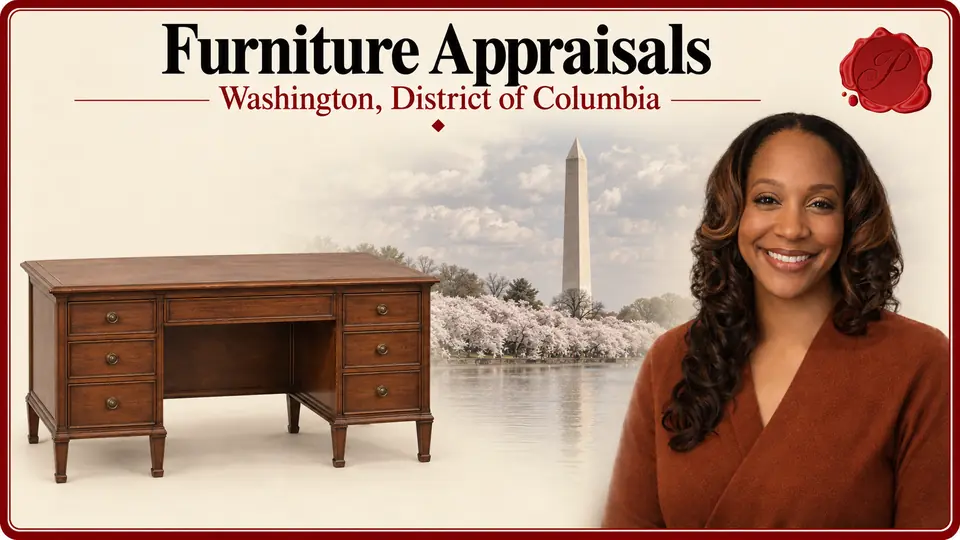
A desk’s original design and present function both merit attention. The maker, construction and materials help identify the piece, while drawers, joints and working surfaces show relevant condition. For furniture valuation, we consider these features in the market that fits the piece. A repair can matter differently depending on what it changed and how that feature affects the piece.
Use comparisons that fit the piece
Receipts and labels can help distinguish a maker’s design from a similar-looking piece. Later work also matters. New hardware, a changed finish or a structural repair raise different questions. However, one vague note about wear may miss those distinctions. Prestige weighs the features that matter to the market and the kind of value requested.
For a home in Washington, DC, with furniture from different periods, an overview shows the range before detailed work. Important pieces may need their own entries, while we can describe suitable groups together. Ask how the report will make that treatment clear. You can then see its coverage without assuming every furnishing received the same research.
Online Photo Appraisals and Project Fees
Online Photo Appraisal Guidance in Washington, District of Columbia
What should I send when I want an informal opinion from photographs?
For an Online Photo Appraisal, send clear photographs and the facts you already know about the item. An appraiser then reviews that material and emails a written result. It can identify the item, when supported, and offer an estimated value or range with useful background. The product is intended for general understanding, helping you decide whether a more detailed appraisal is worth discussing.
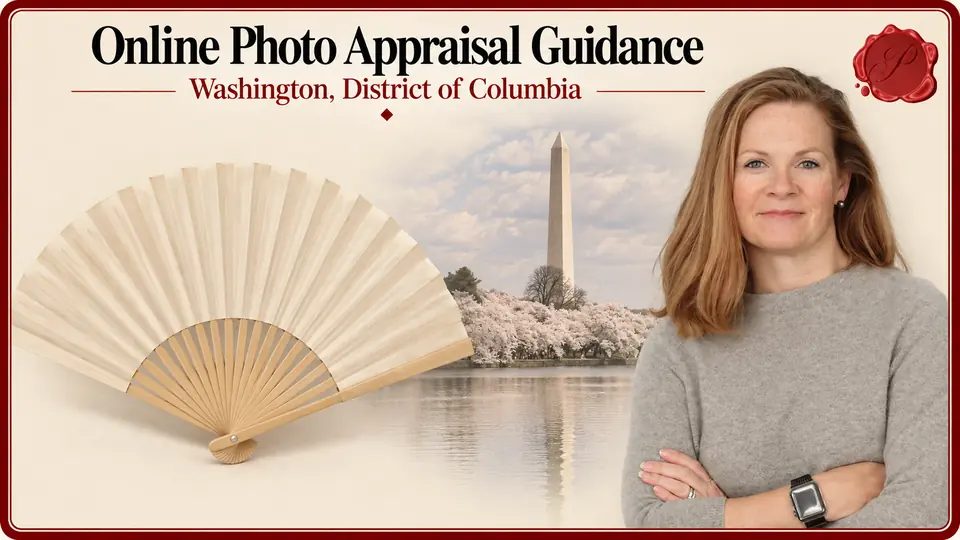
For a folding fan, show the whole open design as well as the closed object and useful details of its structure. Dimensions and known materials can also help interpret the photographs. Tell the appraiser about damage or repairs you already know about. Clear views give the informal review more to work with than a decorative image alone.
Know what the initial answer means
For a Washington, DC, submission, share what you know and flag uncertain details. Measurements show scale, while a close view can reveal a mark or join. The result therefore depends on what the appraiser can learn from those details and the limits of the views you send.
Informal photo appraisal guidance does not replace formal reporting for tax, court, insurance, probate or donation. Formal remote appraisal may also use photographs, but it has its own scope and report needs. If an adviser requested an appraisal for a specific decision, share those instructions before choosing the online photo service.
Hypothetical example: stating what a photograph cannot establish
A Dupont Circle owner might submit a photograph of a shiny serving tray and ask for its value as silver. The surface could look similar to plated metal, while the mark in the image remains unclear. Appearance alone might not support the proposed material description.
An Online Photo Appraisal could use clearer mark photographs and the owner’s records where they help. However, if the supplied evidence still left the metal uncertain, the informal response would need to say so. Further examination might be needed before a material-specific value could be supported. The guidance would not treat an attractive surface as proof of silver content.
Personal Property Appraisal Fees in Washington, District of Columbia
How does the proposed work affect the appraisal estimate?
Personal property appraisal fees in Washington, DC reflect the research, inspection and report work needed. Prestige considers the purpose, mix of property, quantity and required detail. Tell us about those needs and your deadline. We can then discuss the work that fits the task, using more than a rough item count.

For example, a candlestick may be easy to photograph yet raise several research questions. Its material, construction, maker and repairs may affect which sales offer useful comparisons. Prestige considers the work needed to answer those questions and write the report. Physical size alone therefore tells little about the appraisal cost.
Account for all parts of the work
Grouping needs a clear plan. A household request may allow suitable groups, while a collection may need research for each piece. The purpose guides that choice. Ask what the estimate covers. If the scope changes, we pause to discuss the work, cost and timing, and obtain your written approval before proceeding.
Records and sample photos help explain the project before scheduling. Include each property location and the adviser’s instructions. Published prices stay on the central Fee Schedule. Contact Prestige to discuss the work, including research and writing as well as the time spent examining the belongings.
Documentation Trusted by Attorneys, CPAs and Insurers
Planning Your Washington Appraisal
Start with who needs the result and what they plan to do with it. If an adviser supplied a letter, form or list, include it. That can make the purpose clear. Prestige can then ask about the belongings, the value date and when you need the finished work.
Photos help show the size and range of the request. For example, a room view can show household contents, while a close view may reveal a piece that needs special research. Earlier reports and lists can also help. You do not need to identify or value every object before contacting us.
The proposed agreement connects the property with the intended readers, research and report. Review that scope with the team and raise questions before proceeding. Also name any other property locations and the authorized contact who will arrange access.
Report delivery and support
We deliver formal reports as digital PDFs tailored to the task. They explain the property, research, value reasoning, assumptions and limits, with photos where included. Appraiser qualifications and a signed certification appear as applicable. Your assigned appraiser is your main contact, with support from the Head of Appraisals and office team. Routine questions about the report are included.
Most formal projects take two to four weeks after intake, depending on the work. Therefore, share your deadline early and ask us to confirm the start date. Expedited timing requires a written commitment. Discuss a shorter deadline before making plans around it.
A Visit, Formal Remote Work or Informal Photo Guidance
In-person appraisal includes direct examination of the belongings. Formal remote appraisal relies on suitable photographs, records and other available evidence. Prestige considers whether the property and intended use support that method. The comparison of remote and in-person appraisals explains how those approaches differ while keeping the requested result in view.
The informal Online Photo Appraisal is a separate product for general guidance. It provides an emailed opinion from submitted material rather than a formal report for tax, court or similar reliance. The use should guide the choice. Two services can both use photographs while requiring different research, agreements and written results.
Research and the Written Result
After gathering the facts, Prestige researches the relevant market and develops values for the agreed use. The report explains those results and their basis. USPAP means the Uniform Standards of Professional Appraisal Practice. The Appraisal Foundation’s USPAP overview describes the profession’s ethical and performance standards. Each assignment still needs a clear purpose, intended users and scope.
Personal Property Appraisers Near Me in Washington
Ask whether the proposed appraiser’s property knowledge and work plan fit your actual belongings. A useful discussion covers what is included, which value question will be researched and what the written result will explain. You can compare that description with the instructions you received. Prestige’s personal property appraisal services give context for the conversation.
Location is part of planning, but it should not replace those questions. For a Washington project, give the complete address of the belongings and say whether the work includes another site. If someone else will provide access or records, explain that role. The team can assess the project as a whole before arrangements are confirmed.
IRS-Qualified Form 706 and Estate Tax Appraisers Near Me in Washington
For estate-tax work, connect the preparer’s request with experience relevant to the property. Ask how the report will state the date, identify significant belongings and explain its conclusions. The estate-tax appraisal service addresses that reporting purpose. Provide the actual instructions so the team can assess the required work without relying on a broad service label alone.
Areas Served Around Washington
Prestige serves Washington, District of Columbia, including its Georgetown, Capitol Hill and Dupont Circle neighborhoods. These are areas within Washington, not separate cities. Tell us where the property is located and whether the project extends beyond one address. That information helps the team review the proposed scope and service arrangements.
For work elsewhere in the Washington area, describe the complete project when you contact us. If you are arranging an appraisal from outside the area, identify the person who can help with access and relevant records. The team can discuss those details along with the property and report needs, rather than assuming every request follows the same plan.
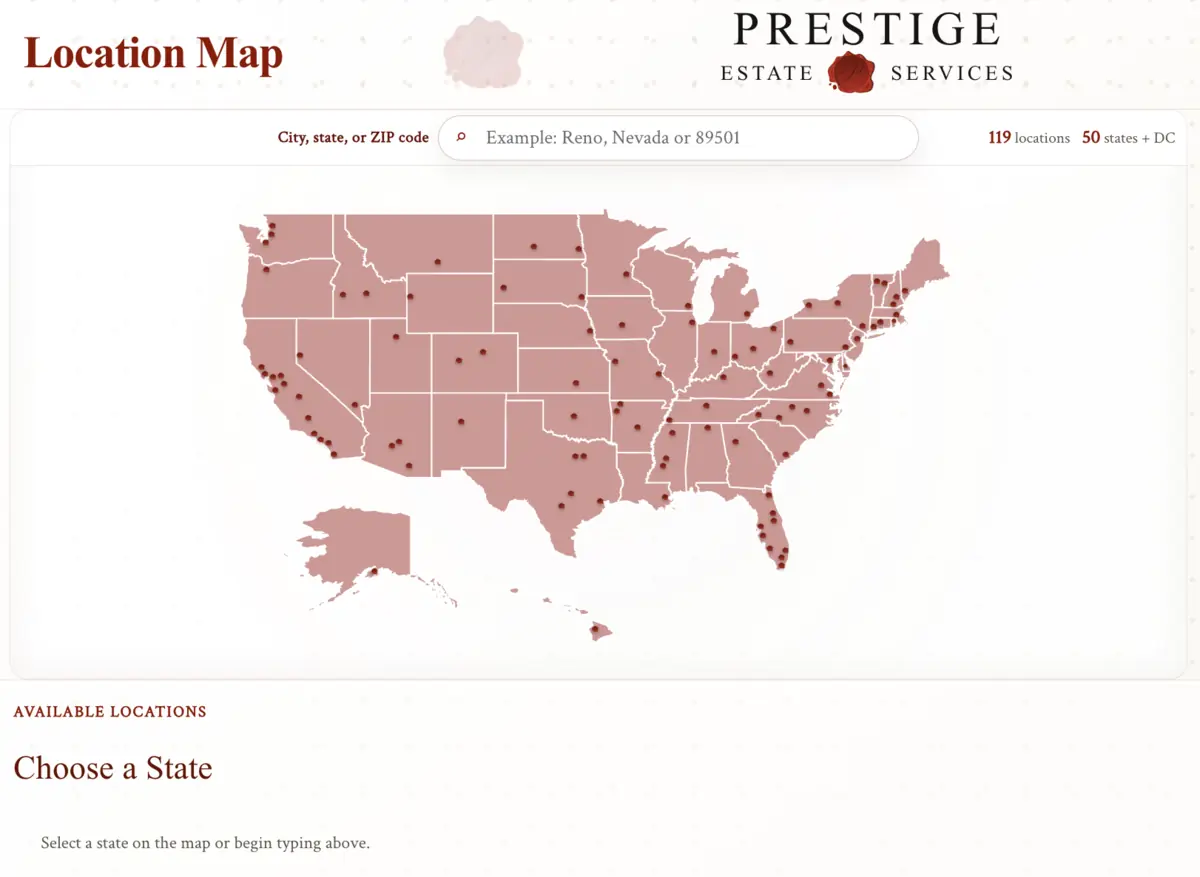
Our directory of appraisal locations offers a broader coverage overview. The linked map below opens that directory. Use it as a starting point for an inquiry about another location, and include the actual site of the belongings when requesting help.
Frequently Asked Questions About Washington Appraisals
Getting Started With Your Appraisal
Do you provide real estate appraisals in Washington, DC?
We do not provide real estate appraisals. Prestige appraises personal property such as artwork, furniture, jewelry, collections and equipment. A request concerning both a building and its contents involves separate work. Tell the adviser coordinating the project which belongings need values.
Must every object in a Washington home receive its own value?
The appropriate treatment depends on the property and the purpose of the report. Prestige can discuss individual entries for significant pieces and suitable grouping for other contents. Share an overview so the proposed work can reflect the actual mix rather than an assumption about the whole household.
Can an earlier appraisal help with a different purpose?
It may supply useful descriptions, images and history. Its value date and basis may still differ from the new request. Send the earlier report with the current instructions so Prestige can assess which parts remain useful and what further research the new purpose requires.
Property Records and Access
Can I arrange the appraisal while I am outside Washington?
Explain where the belongings are and who is authorized to supply records or arrange access. Prestige can review those details with the proposed service. The method and schedule depend on the property and required result, so discuss them before making arrangements on behalf of the engagement.
How do I know whether I need an inventory or an appraisal?
An inventory records the included belongings. Researched values add a separate task, and a formal appraisal also needs an agreed purpose and intended users. Tell us what the next reader must do with the record so the proposed service includes the right work.
Can you consider a value date that has already passed?
Prestige can assess a retrospective appraisal request when suitable historical evidence is available. Explain the earlier date and intended use, then share dated records and any known changes to the belongings. The appraiser considers what those sources can support before developing the historical conclusions.
Reports, Changes and Timing
Is a formal remote appraisal the same as the Online Photo Appraisal?
No. Formal remote work uses suitable evidence to develop a report for an agreed use. The Online Photo Appraisal is a separate informal service for general guidance by email. If an adviser needs a formal report, share that request before choosing a photo-based option.
What information should I provide for a fee estimate?
Describe the purpose, approximate quantity, property types and locations. Include sample photographs and any report instructions or completion date. Prestige can discuss the work those details indicate. Published prices remain on the central Fee Schedule, with the project scope reviewed before scheduling.
Arrange Your Washington Personal Property Appraisal
Tell us the decision you need to make and the belongings involved. A few representative photographs and any written request from your adviser can help start the discussion. Prestige will review the proposed Washington appraisal and explain the information needed to plan the work. Contact the team to discuss scope and scheduling.
1030 15th St NW, Washington, DC 20005