Replacement-value documentation · Policy scheduling
Personal Property Insurance Appraisals
Personal property insurance appraisals help you document art, antiques, furnishings and collections for coverage. Prestige Estate Services researches replacement values and prepares a written report for your insurer’s stated needs. Whether you are scheduling selected items, reviewing a policy or updating an older report, we connect clear descriptions and photographs to the values. Your insurance professional helps confirm the value basis and records required.
Our in-house appraisers prepare your report, and our ISA CAPP appraisal review department checks it before delivery. Your assigned appraiser also answers routine questions about the completed report.
Meet Prestige Estate Services
We do not provide real estate appraisals.
The people behind the appraisal
Meet Our Personal Property Appraisers
Our insurance appraisers match the research to your belongings and the report your insurer needs. Your assigned appraiser is your main contact through intake, research and delivery, with support from our Head of Appraisals and office staff. This service is part of our personal property appraisal services.

All Prestige Estate Services appraisers are in-house W-2 employees. We do not use contract appraisers as members of our appraisal staff.
Standards Behind the Report
The Uniform Standards of Professional Appraisal Practice (USPAP) guide appraisal development and reporting. We apply those standards to the property, evidence and purpose of your insurance assignment.
Which Insurance Appraisal Service Do You Need?
Personal property insurance appraisals help you document belongings before a loss, review a policy or add selected items to coverage. Start by asking your insurer what it needs. A list of possessions, a researched value and an appraisal after damage each serve a different purpose.

Coverage and Scheduling
Scheduling means listing particular belongings for coverage under the policy’s terms. Your insurer or agent explains which items to list and what values and records it needs.
Records for Losses
An inventory records what you own. A post-loss appraisal examines damaged or missing property using evidence about the items and the event. Tell us early if a loss has already occurred.
Our appraisal supplies researched values and descriptions for the stated insurance use. Your insurer sets coverage, limits and policy terms. Together, clear item records and the right value definition help you discuss the belongings with your insurance professional.
If belongings have been damaged, stolen or destroyed, ask about our damage and loss appraisals. A dispute under a policy’s appraisal clause is also a different matter from preparing values for coverage. Share the insurer’s request so we can discuss the service you need.
What Value Does an Insurance Appraisal Establish?
Replacement value appraisals research the cost to obtain comparable property in the relevant market. The definition depends on the item and the insurance purpose. An antique chair, an original painting and a current retail item may need different sources. We agree on that value basis before research begins.

The valuation date tells you when the appraised values apply. It may differ from the day we inspect the items or send the report. Receipts and older appraisals help explain an object’s history, but we assess their relevance to the required date and market.
The Texas Department of Insurance home insurance guide explains replacement cost and actual cash value. Its state-specific guidance provides useful background; ask your own insurer which terms and reporting requirements apply to your policy.
What Personal Property Can Be Included?
We can discuss one valuable object, selected scheduled items, a collection or household contents. The scope means the items and work included in your project. Agreeing on that list helps us plan the right expertise, inspection and research.

Art and Objects
Fine art, sculpture, prints, ceramics and glass often need research into the maker, materials and condition. Records of past ownership can also help identify the work.
Antiques at Home
Antiques, furniture, clocks, rugs and lighting need descriptions that show what makes each piece distinct. Age, construction and condition can affect the replacement market.
Jewelry, watches, silver, instruments, rare books and specialty collections can be considered when the required expertise is available. Send any grading reports or specialist findings with your intake records. If an item needs authentication, testing or a separate specialist examination, we discuss that work before proceeding.
For household contents, tell us which rooms or items to include. Some reports group routine objects, while scheduled items may need individual entries. If you also need a broader record of belongings, discuss our inventory and valuation service.
What Does an Insurance Appraisal Report Include?
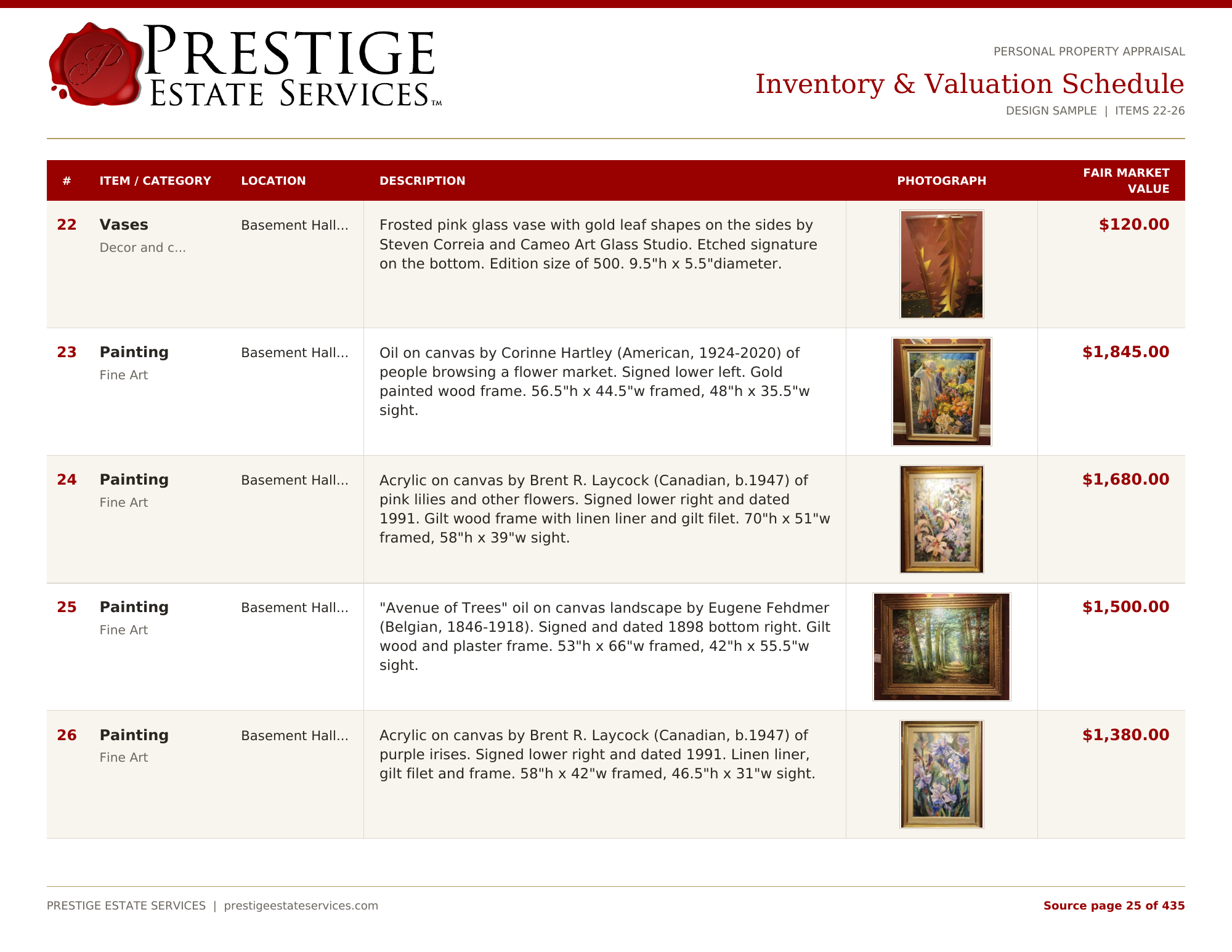
You receive a digital PDF that connects the belongings to their descriptions, photographs and researched values. Before we begin, we confirm the report’s purpose and intended users—the people it is prepared for. Your insurer’s written instructions help us plan the detail, schedules and records needed.

The report also includes the appraiser’s qualifications, a signed certification and supporting sources as appropriate to the assignment. The example below shows how photographs, descriptions and values can appear together. It uses fair market values to illustrate the layout; your insurance report uses the value definition agreed for your project.
If you later need the report for another purpose, contact your appraiser before using it. For example, a donation may call for a different value basis from insurance. We discuss any added research, separate report and cost with you first.
Review and Support After Delivery
Our ISA CAPP appraisal review department checks each formal report and its supporting work before delivery. The team reviews the research, conclusions and appropriate USPAP reporting. Routine questions about the delivered report are included; your appraiser can explain the findings and help you read the entries.
How Does the Insurance Appraisal Process Work?
We begin with your property list and the insurer’s written instructions. Once we agree on the work, our appraiser documents the belongings, researches values and prepares the report. An on-site visit, a formal remote appraisal or a mix of both may suit the project.

Confirm the Purpose
Tell us whether you need values for a new policy, scheduled items or a review. Share your insurer’s instructions and deadline.
Set the Scope
Send item types, rough counts and locations. We discuss the work, records, access and report detail, then provide an estimate for the project.
Record Each Object
Your appraiser records the agreed items, dimensions, markings and condition. Point out missing labels, past repairs or items that are hard to reach.
Research the Values
We compare relevant market evidence and explain the values in the report. Internal review follows before we deliver your PDF.
For a formal remote appraisal, photos and records must show enough detail about identity, size, markings and condition. Your insurer may have specific inspection requirements. Discuss those needs during intake; the appraiser can explain whether more images, records or an on-site visit are needed.
Our Online Photo Appraisal provides an informal opinion through a separate service. It is not the formal insurance report described here, and you do not need to buy it to discuss a formal project estimate.
What Should You Provide Before the Appraisal?
Start with a short description of the belongings and your insurance goal. You can contact us before every record is ready. These details help us plan the visit and estimate the work:

- Your insurer’s instructions, contact details and requested delivery date.
- Item types, rough counts, locations and plans for access.
- Overall photographs and close-ups of signatures, maker marks, labels or serial numbers.
- Receipts, prior appraisals, ownership history and records of repairs or restoration.
- Known condition changes, uncertain descriptions, missing records and items to leave out.
Keep original records and group copies by item or collection. Use the same item names or numbers on photos and receipts so we can match them. For a large home or storage area, share the square footage and how much property it contains.
You do not have to attend the inspection if an authorized person can provide access. Make items safely accessible where possible. Unpacking, unwrapping and repacking add time when the appraiser must do them. Our appraisers cannot lift or move heavy or oversized objects.
When Access Is Limited
Tell us if an object is blocked, packed away or too fragile to handle safely. We may need better photographs, additional records or another way to inspect it. The appraiser explains any supported assumptions or limits; an item may need to stay outside the report if the evidence is insufficient.
When Should Values Be Updated, and What Affects Fees?
Ask your insurer how current the report must be. An update may help when you buy or sell objects, restore a piece, learn more about its maker or see a change in its market. There is no single update schedule for every collection and policy.

Send the earlier report and a list of changes. We can then assess which entries need new photographs, inspection or market research. An update should clearly identify the items included and the date their values reflect.
Insurance appraisal fees depend on the items, access, records, travel and research needed. Our written estimate covers the expected time for the full project, including the report. Review the published appraisal fee schedule, then share photos and property details so we can estimate your work.
If the project moves beyond the agreed scope, we pause the affected work and discuss the change with you. We obtain your written approval before that work resumes. This gives you a chance to review the added work and its effect on cost.
Timing and Expedited Requests
Most formal projects take about two to four weeks after intake, depending on the size and complexity of the work. Tell us about policy renewals and firm deadlines early. Expedited requests depend on appraiser availability and current projects. An expedited deadline requires written approval from Prestige Estate Services.
Practical questions
Insurance Appraisal Questions
What Should I Ask My Insurer Before Ordering an Appraisal?
Ask which items need a report, what value definition applies and how recent the appraisal must be. Confirm any requirements for the appraiser’s qualifications, inspection and report format. Share those instructions during intake so we can plan the right work.
Can a Report Include All My Belongings?
Yes, if the agreed scope and your insurer’s requirements support that approach. A report can cover selected scheduled items, a collection or broader contents. We agree on which objects need separate entries and which may be grouped.
Can I Use a Receipt as My Appraisal?
A receipt records an earlier purchase and can help identify the item. It may not show the value your insurer needs today. Ask what records the insurer requires; the appraiser then assesses the relevant evidence for the agreed date.
Is an Online Photo Estimate a Formal Report?
No. An Online Photo Appraisal gives informal value guidance. A formal insurance appraisal is a separate assignment with the research and reporting agreed for your insurer’s needs. Discuss the formal option with us if that is the report you need.
What If the Property Has Already Been Damaged?
Tell us about the event, the items affected and the records you still have. Damage and loss appraisals address post-loss value questions. We review that purpose separately from the pre-loss insurance documentation described on this page.
Do You Appraise Houses or Buildings?
No. We appraise movable personal property such as art, antiques, furnishings and collections. We do not provide real estate appraisals. If you need values for a home and its contents, identify the belongings that need our appraisal.
Choosing the right appraisal service
Searching for “personal property insurance appraisers near me”?
When comparing insurance appraisers, look for a match between the property, the insurer’s instructions and the proposed report. Local access is useful, along with the skills to identify and research the actual belongings. These questions help clients compare providers.
Match Expertise to the Collection
A client should describe each category and ask who will handle the work. Fine art, jewelry and antique furniture may need different skills. The provider should explain how it will address any specialist needs.
Confirm What the Insurer Requires
The proposed service should address the requested value basis, date and report format. Clients should also confirm inspection requirements and who the report is prepared for. Those details help them compare estimates for the same work.
Plan Access and Future Updates
Clients should discuss access, fragile objects and the records already available. A useful proposal explains the full project and how changes are approved. After delivery, organized records make it easier to identify what has changed when an update is needed.
Start with a scope discussion
Discuss Your Personal Property Insurance Appraisal
Tell us which belongings you want to insure or review, where they are located and when you need the report. Include a few photos and your insurer’s instructions. We will discuss the work, explain the estimate process and help you plan the next step.
Nationwide personal property appraisal support
Find a Personal Property Appraiser by Location
Prestige Estate Services provides personal property insurance appraisals nationwide. Explore our locations, then contact our team about your belongings and reporting needs. We can discuss access, site visits and whether formal remote work suits the project.