Independent valuation · Current or retrospective dates
Damage and Loss Appraisals for Personal Property
Damage and loss appraisals help you establish personal property values after fire, water damage, theft, breakage or a transit loss. Prestige Estate Services examines the belongings and records, researches the relevant market and prepares a written report. We work with owners, attorneys, insurers and other authorized clients who need clear support for a value question. If an item is missing or destroyed, we first assess what its photographs and history can tell us.
Your report is prepared by our in-house appraisers and checked by our ISA CAPP appraisal review department. Your assigned appraiser remains available for routine questions after delivery.
Meet Prestige Estate Services
We do not provide real estate appraisals.
The people behind the appraisal
Meet Our Personal Property Appraisers
Our damage and loss appraisers help connect the available records to the actual belongings. Your assigned appraiser is your main contact during intake, research and report writing, with support from our Head of Appraisals and office staff. Learn more about our personal property appraisal services.

All Prestige Estate Services appraisers are in-house W-2 employees. We do not use contract appraisers as members of our appraisal staff.
Standards Behind the Work
We apply the Uniform Standards of Professional Appraisal Practice (USPAP) to appraisal development and reporting. The report explains the evidence, research and assumptions used to reach its values.
When Is a Damage or Loss Appraisal Useful?
A damage or loss appraisal is useful when someone needs a researched explanation of what the affected belongings were worth. The request might concern an insurance claim, a property dispute, a shipping incident or records for an estate. We begin with the question the report needs to answer.

Claims and Disputes
An owner, insurer or attorney may need values for identified items after a loss. Share the written request, relevant dates and the people who will use the report.
Trusts and Transit
An executor or trustee may need to document affected contents. An owner may need values for goods damaged in transit. Item lists, condition records and shipping documents help us plan either project.
Our role is independent personal property valuation. Prestige does not act as a public adjuster, insurance appraisal-clause panel member or umpire. Those are different services. Your insurer, adjuster or attorney handles the relevant coverage, claim or legal questions.
If the main question concerns an existing report, discuss personal property appraisal review. Reviewing another appraiser’s work and developing a new value opinion are separate assignments. We can help identify which service fits the request.
What Property and Damage Can Be Evaluated?
We can assess selected items, a collection or a larger group of contents when the evidence supports the work. Fire, smoke, water, breakage and handling can affect objects in different ways. We record the condition we can observe and identify any earlier records used.

More Object Types
Jewelry, watches, silver, books, instruments, electronics and selected equipment may be included when we have the required expertise and records. Tell us about every property category during intake.
For example, a chipped porcelain bowl may need close-ups of the rim, maker marks and any retained pieces. Earlier photographs can show whether the chip was present before the event. These records help explain condition; a value appraisal does not by itself prove what caused the damage.
A conservator or repair specialist may advise on treatment and supply a cost estimate. We can consider those findings when they are relevant to the agreed work. The cost to repair an object and any loss in its value are separate questions.
What Evidence Should Be Preserved?
Keep records that connect each object to its identity and condition. Original files are helpful, along with the date each image was taken. Use the same item number or description across photos, receipts and lists so we can match the records.

- Overall photographs and close-ups of damage, signatures, maker marks or serial numbers.
- Images from before the event, including older appraisal photos and room views.
- Receipts, invoices, inventories, insurance schedules and records of past ownership.
- Repair, restoration, shipping, storage and custody records relevant to the items.
- The reported event date, the date the values must reflect and any written instructions.
Put safety first. Follow your insurer’s and relevant professionals’ instructions about handling, repair and disposal. Do not enter unsafe areas or delay needed emergency work to take appraisal photographs. When safe, document the condition before items are moved or changed.
The Texas Department of Insurance storm guidance recommends photos, videos and saved repair receipts. It also advises contacting the insurer before discarding damaged property. Ask your insurer how those steps apply to your situation.
Arrange Safe Access
You do not have to attend if an authorized person can provide access. Tell us about fragile objects, blocked rooms or items still packed away. Unpacking and repacking add time when the appraiser must do them. Our appraisers cannot lift or move heavy or oversized items.
Can Missing or Destroyed Items Be Appraised?
Sometimes we can appraise missing or destroyed property from reliable records. This may involve a retrospective appraisal, which states a value for an earlier date. The records must show enough about the item, its features and its condition at that time.

For example, a photograph of a vintage typewriter may show its maker and model. A serial number, receipt and older condition photos can add detail. A note saying “old typewriter” gives us much less to research. Send what you have so we can assess the gaps.
Your appraiser reviews where the information came from and how the records fit together. An earlier report may help identify the item and describe its former condition. Its value still reflects its own date and purpose, so we research the date needed for this assignment.
We explain which records support the work and where assumptions are needed. If an essential fact is missing, we discuss further evidence or a narrower question the report can answer. Some items cannot be valued on the records available.
Remote Review or an On-Site Visit?
For surviving items, photographs may support a formal remote appraisal when they show identity, size, markings and condition in enough detail. Your insurer or attorney may have inspection requirements. We review those needs during intake and explain whether a visit or more records would help.
Our Online Photo Appraisal is a separate informal opinion. It is not the formal loss report described here, and buying one is not required to discuss a formal project estimate.
Which Date and Measure of Value Apply?
The valuation date tells the reader when the appraised values apply. It can differ from the event date, inspection date or report date. We also agree on the value definition—the question our market research must answer. Send any policy or legal instructions that specify these points.

Actual cash value is another insurance term. It often means replacement cost less depreciation for factors such as age and wear. The Texas Department of Insurance home insurance guide explains the distinction. Your own policy and instructions determine the definition needed for the report.
We develop the value from the evidence and explain how we reached it. The appraisal can support a discussion with your insurer or attorney; they address policy terms, coverage and the legal use of the findings.
What Will the Damage or Loss Report Explain?
You receive a digital PDF that connects the belongings, supporting records and appraised values. We agree on the report’s purpose and intended users—the people it is prepared for. Its detail follows the property, evidence and questions included in the project.
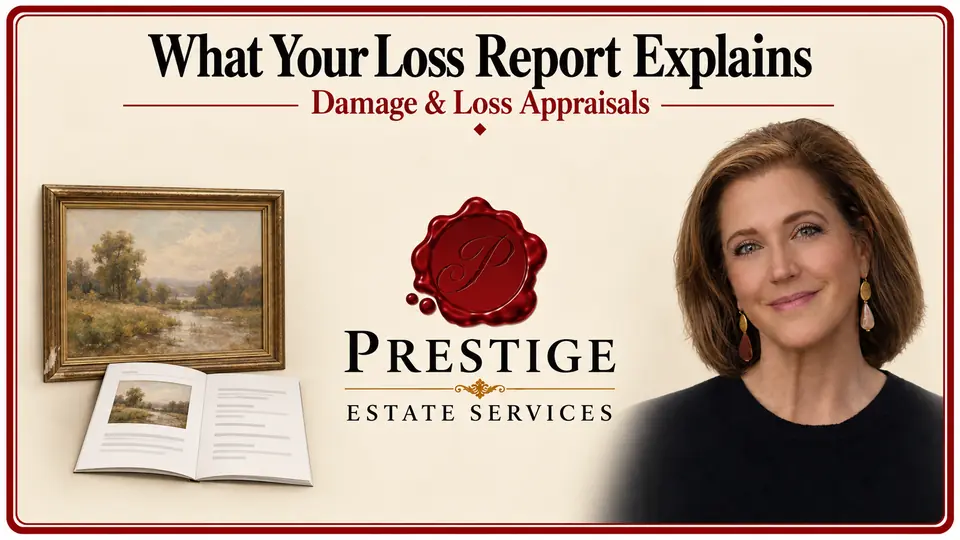
The report includes the appraiser’s qualifications, signed certification and supporting sources as appropriate to the work. The example below shows how item photos, descriptions and values can appear together. Its fair market values illustrate the layout; your loss report uses the value basis and dates agreed for your project.

If you later need added items, testimony, another value date or a report for a different use, contact your appraiser. We discuss the additional work and cost before proceeding. A new purpose may need a separate report.
Review and Questions After Delivery
Our ISA CAPP appraisal review department checks each formal report and its supporting work before delivery. The team reviews the research, conclusions and appropriate USPAP reporting. Routine questions about the delivered report are included, so your appraiser can explain the findings and entries.
How Do Scope, Timing and Appraisal Fees Work?
Start with the belongings, the reported event and the records you have. We review what the project needs, including any specialist input. The scope is the work and items included. Agreeing on it gives you a clear basis for the estimate and the report.

Describe the Request
Send item types, rough counts, locations and relevant dates. Identify your main contact, the people who need the report and any firm deadline.
Review the Records
We review photos, descriptions and earlier reports. We also discuss safe access to surviving objects and what further evidence may be needed.
Study Market Evidence
Your appraiser studies the item details, condition and relevant market evidence. The research addresses the agreed value definition and date.
Explain the Report
We prepare the report, complete internal review and deliver your PDF. Your appraiser answers routine questions and discusses any request for further work.
Fees reflect the time and complexity of the work, not a percentage of the claimed loss. Our written estimate covers the expected time for the whole project and report. Review our appraisal fee schedule, then share photos, records and item counts for a project estimate.
Complete intake details help us estimate the work. For a large contents project, include the property’s square footage and how much it contains. If the project moves beyond the original scope, we pause the affected work, discuss the change and obtain your written approval before resuming.
Timing and Expedited Requests
Most formal projects take about two to four weeks after intake, depending on size and complexity. Missing records or specialist research can affect the schedule. Tell us about claim, court or other deadlines early.
Expedited work depends on appraiser availability and existing projects. Prestige Estate Services must confirm an expedited deadline in writing. We will discuss the proposed schedule with you during intake.
Practical questions
Damage and Loss Appraisal Questions
Who Can Request a Damage or Loss Appraisal?
Owners, executors, trustees, attorneys, insurers and other authorized clients can contact us. Tell us what property is involved and why a value is needed. We then review the evidence, required expertise and the people the report is for.
Does PES Negotiate an Insurance Claim?
No. Prestige provides independent personal property valuation. We do not act as a public adjuster, insurance appraisal-clause panel member or umpire. Ask your insurer or attorney which professional handles claim negotiation or a dispute under the policy.
Can an Earlier Appraisal Be Used?
An earlier appraisal can help identify the item and show its condition at that time. Its values apply to its stated date and purpose. For a later loss, we assess that record alongside the evidence and market data needed for the new assignment.
Is a Repair Estimate the Same as an Appraisal?
No. A repair estimate describes proposed work and its cost. An appraisal answers a value question. The amount spent on repair does not automatically equal the loss in value, and any before-and-after analysis must be included in the agreed work.
What Is the Difference From an Insurance Appraisal?
A personal property insurance appraisal usually documents items for coverage review or scheduling before a loss. Damage and loss appraisals address value questions after a reported event. The records, dates and value definitions may differ.
Do You Value Buildings or Structural Damage?
No. We do not provide real estate appraisals. Our work covers movable personal property such as art, antiques, furnishings and collections. Building values, construction costs and structural damage require other professionals.
Choosing the right appraisal service
Searching for “damage and loss appraisers near me”?
Clients comparing damage and loss appraisers should look at property expertise, evidence needs and the proposed report. Nearby access may help with an inspection. The best fit also depends on the question the appraisal must answer.
Choose the Correct Professional Role
The client should confirm whether the request is for an independent value opinion, a report review or another professional service. An insurer or attorney can explain the roles needed in a claim or dispute.
Match Expertise to the Surviving Evidence
Clients should describe missing items, affected property types and the records that remain. The provider should explain what those records can support and whether more photographs, an inspection or specialist input is needed.
Confirm Dates, Access and Report Use
A useful proposal identifies the value date, report users, access needs and included work. Clients can compare estimates more fairly when those details match. They should also ask how new items or other changes will be discussed and approved.
Start with a scope discussion
Discuss Your Damage or Loss Appraisal
Tell us which belongings were affected, what happened and which records you still have. Include the location, relevant dates and any deadline. We will review the request, explain the next steps and help you plan an appraisal for the question you need answered.
Nationwide personal property appraisal support
Find a Personal Property Appraiser by Location
Prestige Estate Services provides personal property damage and loss appraisals nationwide. Explore our locations, then contact our team about the belongings and records involved. We can discuss safe access, site visits and formal remote options for your project.
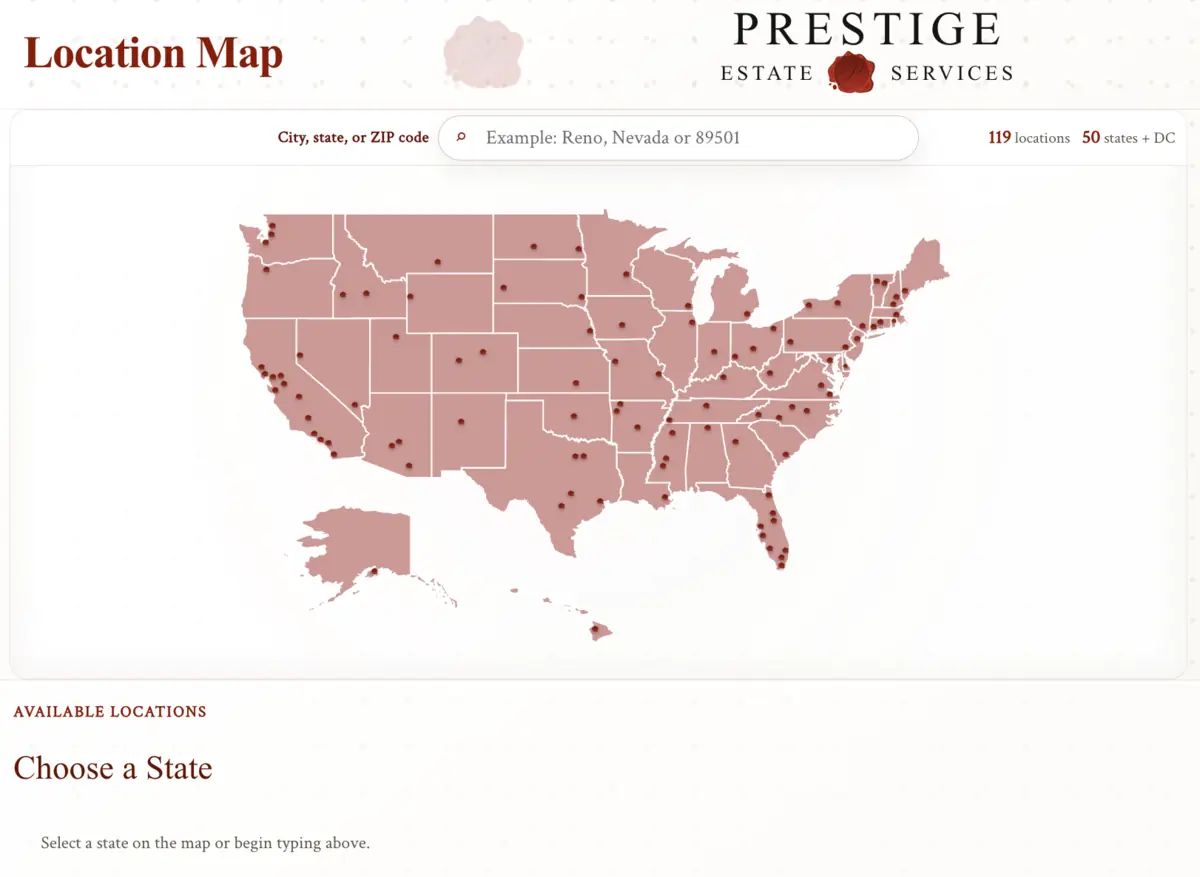
Select a state to view its locations.
Browse All Locations
Alabama
Alaska
Arizona
Arkansas
California
- California — Bakersfield
- California — Berkeley
- California — Fresno
- California — Irvine
- California — Long Beach
- California — Los Angeles
- California — Modesto
- California — Napa
- California — Oakland
- California — Oxnard–Thousand Oaks
- California — Palm Springs
- California — Pasadena
- California — Riverside
- California — Sacramento
- California — San Bernardino
- California — San Diego
- California — San Francisco
- California — San Jose
- California — San Luis Obispo
- California — San Mateo
- California — Santa Barbara
- California — Santa Monica
- California — Santa Rosa
- California — Stockton
- California — Vallejo–Fairfield
Colorado
Connecticut
Delaware
District of Columbia
Florida
- Florida — Boca Raton
- Florida — Daytona–Deltona
- Florida — Fort Lauderdale
- Florida — Fort Myers–Naples
- Florida — Jacksonville
- Florida — Key West & Florida Keys
- Florida — Melbourne
- Florida — Miami
- Florida — Orlando
- Florida — Sarasota
- Florida — St. Petersburg
- Florida — Tallahassee
- Florida — Tampa
- Florida — West Palm Beach
Georgia
Hawaii
Idaho
Illinois
Indiana
Iowa
Kansas
Kentucky
Louisiana
Maine
Maryland
Massachusetts
Michigan
Minnesota
Mississippi
Missouri
Montana
Nebraska
Nevada
New Hampshire
New Jersey
New Mexico
New York
North Carolina
North Dakota
Ohio
Oklahoma
Oregon
Pennsylvania
Rhode Island
South Carolina
South Dakota
Tennessee
Texas
Utah
Vermont
Virginia
Washington
West Virginia
Wisconsin
Wyoming
Personal property appraisals. We do not appraise real estate.