Boston Personal Property Appraisers
Boston Personal Property Appraisers at Prestige Estate Services help you understand what your art, antiques, furnishings and collections are worth for estate, insurance and family needs. Our IRS Qualified Estate Tax Appraisers also provide personal property valuations for estate advisers. We serve Boston, including Beacon Hill and Back Bay, and nearby Cambridge, Somerville, Quincy, Newton, Brookline, Medford and Waltham.
Our in-house team handles your appraisal. The team reviews each formal report for quality and appropriate USPAP reporting before delivery.
Jump to Appraisal Services

Boston Personal Property Appraisers Serving Massachusetts
If you’re settling an estate, you may need values for the belongings in a home. For insurance, you may need a schedule listing selected pieces and their values. Tell us why you need the appraisal so we can prepare the report for that purpose.
You can ask us about one important piece, a collection or the contents of a home. Tell us where the belongings are, who needs the report and your deadline. We’ll review the photos and records available to decide whether a formal remote appraisal or an on-site visit would be suitable.
Explore our appraisal services or view our appraisal locations to find the right starting point.
We appraise personal property. We do not provide real estate appraisals.
Meet Our Personal Property Appraisers
Meet Your Personal Property Appraisal Team for Boston, Massachusetts

The appraisers you work with are in-house W-2 employees of Prestige Estate Services, not independent contractors. Your assigned appraiser leads the appraisal work and answers questions, with support from the Head of Appraisals and office staff.
Our review team checks every formal report before we send it to you. The reviewers hold the ISA CAPP designation. They examine the report and the research behind it for quality and appropriate USPAP reporting. USPAP stands for the Uniform Standards of Professional Appraisal Practice.
Planning Your Boston Appraisal
How do I arrange an appraisal from outside Boston?
You can arrange a Boston appraisal while living elsewhere. Tell us who can let the appraiser in and whether the belongings are at one address or several. For a home in Back Bay or Beacon Hill, include any stairs, entry rules or other access arrangements we should know about. These details help us plan the inspection before we arrive.
What should I send before a visit?
Send photos of each room and clear views of the major pieces. Include labels, marks, receipts and earlier reports if you have them. Tell us the approximate floor area and how full the rooms are. Two homes of the same size can take different amounts of work to appraise.
You don’t have to attend the visit, but someone must arrange access. Appraisers cannot lift or move heavy items. If a cabinet blocks a mark or the back of a picture, talk with us about safe access beforehand. We can also review your photos and records to see whether a formal remote appraisal is possible.
Understanding Personal Property Appraisals in Boston
Personal Property Appraisals in Boston
What does a personal property appraisal provide?
A personal property appraisal explains what specific belongings are worth and how we reached that opinion. For our Boston clients, the written report connects the value to the items they own and the reason for the appraisal. It provides more than suggested prices.

Before we begin, we agree on the scope: the work your appraisal will cover. We examine the belongings, research the market and explain what we find. The report names its intended users, meaning the people it is prepared for. An executor, owner or adviser can then understand how the findings answer their appraisal needs.
Whether you have a clock, a collection or a household of different belongings, our personal property appraisal services can help. Tell us why you need a contents appraisal so we can plan the work.
Tangible Personal Property Appraisals in Boston
Which belongings can be included?
Tangible personal property appraisals cover physical belongings, including furniture, decorative objects, jewelry and equipment. Your Boston appraisal may include everyday household contents as well as pieces that need a closer look. We’ll start by listing the types of items you want us to appraise.

A room photo gives us an overview of your belongings, but it may not show who made a bowl or a piece’s condition. Close-up photos and an inspection can help. We also note whether we’re valuing one piece, a set or a collection, because this affects the research.
Our tangible personal property service helps turn your description into a clear list of belongings to appraise. When we first discuss the work, tell us which items you want to leave out.
Fair Market Value Appraisals in Boston
Why can a market value differ from an insurance figure?
A fair market value appraisal considers what an informed, willing buyer and seller would agree to, with neither forced to act. This may be the right value for a Boston estate or another purpose we discuss. It differs from replacement cost in the market used for an insurance appraisal.

Sales of similar items help us assess value, but the details matter. We compare quality, condition, size and dates. With a silver goblet, we may consider the metal as well as the object’s appeal to buyers. One seller’s asking price does not establish what someone would pay.
Our personal property valuation work explains which market and date we used. This helps you understand why the appraised value may differ from the purchase price or an estimate of replacement cost.
For executors, trustees, attorneys and CPAs
Estate Tax, Form 706 and Date-of-Death Personal Property Appraisals in Boston
Estate Tax Appraisers in Boston
How do I request values for estate-tax planning?
If you’re handling a Boston estate, you may need personal property values for its tax work. Through an estate tax appraisal, we document the belongings included and research their fair market value for the date needed. The estate’s tax adviser decides which returns to file and explains what the report needs to cover.

Massachusetts has its own estate-tax return, Form M-706. Ask the estate’s adviser about both state and federal filing needs, since they may differ. The Massachusetts estate-tax guide explains the state’s process. Our part is to value the belongings included in the appraisal.
Estate tax appraisers decide how to describe individual pieces, such as a ring, and when ordinary household contents can be grouped. These entries help the tax preparer follow the estate valuation while recognizing that different belongings may need different treatment.
IRS-Qualified Estate Tax Appraisers for Form 706 in Boston
What helps a preparer use the Form 706 appraisal?
Our IRS-qualified estate tax appraisers identify the belongings being valued and support their values for the estate’s tax needs. For Boston estates, we work with the authorized estate contact on the item list, value date and report requirements. The preparer can then match the entries to the estate’s records.

When similar pieces appear on several lists, descriptions help tell them apart. A tureen’s material, maker, dimensions and condition can distinguish it from another vessel. We explain the market research behind its value and any assumptions that affect our conclusion.
The IRS Form 706 instructions explain federal reporting requirements. We prepare the appraisal as agreed; the tax professional prepares the return. IRS qualification refers to the appraiser’s qualifications. A USPAP-compliant appraisal follows the professional standards that apply to the work. Neither term means IRS approval.
Hypothetical example:
For example, a Boston executor might have a contents list from the home and another from an earlier trust file. Both lists could describe the same silver tureen in different ways. Before the CPA combines the records, the appraiser could compare photos, dimensions and marks to match them to one entry. If there is a second, similar tureen, it would need its own record. We should not assume that similar descriptions mean the same object. Our estate-tax appraisal work could give the preparer a clear list of property and values. Each entry needs to identify the right item before the preparer uses its value.
Date-of-Death Personal Property Appraisals in Boston
Can you value property for an earlier date?
A date-of-death appraisal estimates what personal property was worth on the day its owner died. We may inspect the belongings and write the report later. For your Boston estate, we research the market at that earlier date rather than use today’s prices.

The belongings may have changed since the owner died. A barometer, for example, might now be missing a part. Dated photos, earlier descriptions and repair records can help us understand what was there and its condition at the time. We review those records and explain any relevant limits in the report.
This is called a retrospective appraisal. Its effective date of value is separate from our inspection date. The estate adviser can see which period we researched and which records support that earlier value.
Probate and Estate Inventory Appraisals in Boston
Probate Appraisals in Boston
How does an appraisal help with probate administration?
A probate appraisal gives the estate contact researched personal property values for the probate work involved. For Boston estates, we confirm the belongings to include and the value date with the representative or counsel. The attorney directs the court filing process.

A probate contents report should make it easy to connect each value to an item or a clearly described group. Photos and item numbers help you find a cabinet or collection in the inventory. We explain our research so the representative can understand how the appraisal differs from an informal estimate.
Send us any inventory format or reference numbers you’re already using. Where suitable, we can link our appraisal entries to that record so your attorney can find the same item in both places.
Estate Inventory and Valuation Reports in Boston
Do I need an inventory, values, or both?
Your family may first need a clear record of the belongings in a Boston home. Estate inventory and valuation work can organize that information and, if the work includes it, research what the property is worth. An inventory alone does not provide an appraisal opinion backed by research.
We can organize the inventory by room, category or collection. Descriptions, photos and location notes show which belongings each entry includes. A medal collection may need a separate number for every piece, while a group of ordinary household contents may fit under one entry.
If you need values, we’ll ask how you plan to use them before adding research. This helps the record serve your family’s next step. We’ll make clear whether you’re receiving documentation only, an inventory with values or a formal appraisal report for a specific use.
Donation, Insurance and Damage Appraisals in Boston
Charitable Donation Appraisals in Boston
When should I arrange a donation appraisal?
Discuss your charitable donation appraisal while you’re planning the gift. Timing and paperwork can affect the work. Boston donors may need a qualified appraisal for noncash property, including an instrument, artwork or collection. Your tax adviser decides how the gift is treated for tax purposes and which reports are needed.

We list the items you’re donating, research their fair market value and prepare the report we’ve agreed on. Form 8283 is a separate tax form, not the appraisal. The IRS Form 8283 instructions explain the form and related appraisal requirements.
How can the final gift list affect the report?
The report needs to cover the same belongings you plan to give. If you change the list or the gift date, contact us before using the earlier appraisal. We can review whether the changes affect the work needed, our research or the report.
Hypothetical example:
For example, a Boston donor might plan to give a violin to a charity after a performance season. The donor could keep the instrument while the charity prepares to receive it. The appraiser would need the planned gift date and a clear description of what the donation includes. An earlier appraisal for a private decision would not automatically serve as a donation appraisal. We could work with the donor and adviser to confirm the timing and research the instrument using the appropriate basis of value. If the gift is delayed, the donor should let us know so we can review how that affects the appraisal. Our charitable donation appraisal service could provide the required value support, while the adviser handles tax and filing details. Starting early gives everyone time to complete their part and resolve questions along the way.
Insurance Appraisals in Boston
What does an insurance appraisal document?
If you need a new insurance policy schedule or an update to existing coverage, an insurance appraisal documents the belongings and their values. For Boston owners, we confirm how those values should be determined and which records you need for that coverage purpose.

For a brooch, a suitable replacement may need to match its materials, workmanship, size and condition. The report can describe those features. We research the relevant replacement market to establish values, since the original receipt may no longer reflect current prices.
Clear photos help your insurance professional match each description to the right item when reviewing your policy. You can share the report with them. Your insurer decides the coverage terms, limits and any claim settlement.
Damage and Loss Appraisals in Boston
What if the belongings are damaged or no longer available?
After belongings are damaged or lost, a damage and loss appraisal helps answer questions about their value. In Boston, we may inspect damaged items or study earlier photos and records of missing pieces. What we can conclude depends on what the inspection and records show.

Photos of a damaged quilt may show where stains or tears appear and how far they extend. A treatment estimate explains the repair work needed. Our appraisal considers the quilt’s value for the purpose we’ve discussed with you. Each serves a different need.
The loss valuation explains the dates, condition details and assumptions behind the figures. Owners and claim teams can use the report to discuss those values. Decisions about the policy remain with the insurer.
Family Distribution and Appraisal Review in Boston
Divorce & Marital Asset Appraisals in Boston
How do values help spouses compare household assets?
When spouses need to compare belongings for a marital settlement, a divorce appraisal values the items on a consistent basis. Boston spouses and their attorneys can use the report to compare their financial worth. The appraisal doesn’t decide ownership or who receives each piece.

Before research begins, we confirm which assets to include, the date to use and how value will be defined. When both parties provide records, we assess them using the same approach. A guitar’s replacement quote and an unrelated auction result can serve different purposes; combining them needs an explanation.
Hypothetical example:
For example, one spouse might choose a guitar collection while the other keeps furniture. The instruments on one list might carry retail replacement prices, while the furnishings on the other have resale values. Adding the figures would not give a consistent comparison. An appraiser could agree on a suitable common value basis with the spouses and their attorneys, then research both groups using that basis. Our divorce appraisal service could help counsel compare those selections. The report would address financial values; personal wishes and decisions about the legal division would remain separate.
Equitable Distribution Appraisers in Boston
Can heirs compare different selections fairly?
An equitable distribution appraisal helps heirs compare the value of inherited belongings using a common record. Boston families can refer to that record when discussing different groups of items. It gives them financial values without putting a price on family memories.

Heirs may use different names for the same serving tray. Giving it a clear item reference helps everyone connect that piece to its value in the schedule. We research all included belongings for the same agreed purpose and date so the family can compare them.
Families can discuss different selections with their advisers using those values. If a new selection changes what is being valued, such as splitting up a group, ask us whether the analysis still applies. The family makes the final choices about the belongings.
Litigation Appraisal Review in Boston
What does an appraisal review examine?
Boston attorneys may need to know whether an existing appraisal supports its conclusions and answers the question in dispute. An appraisal review examines that work for the purpose we’ve agreed on. A review does not automatically include a new opinion of value.
We look at how the report identifies the items, describes its market and date, and explains the findings. For example, a telescope appraisal may use sales of instruments with different features. The reviewer checks whether it explains those differences well enough for the report’s use.
Before starting, we state which materials the review will cover and what conclusions we will provide. If an attorney also needs an independent appraisal, we discuss that separate task. The review findings stay distinct from any new valuation we develop.
Restricted Appraisal Reports in Boston
When might a concise formal report fit?
A Restricted Appraisal Report may suit Boston clients who need a concise report for a specific purpose and named users. Discuss those needs with your appraiser before selecting this format. This is still formal appraisal work, separate from an informal photo opinion.

A brief report can still require detailed research. A pair of cufflinks, for example, may need careful identification and a study of the market. The appraisal’s needs guide that work, and a shorter report still needs a well-supported value conclusion.
Tell us who will rely on the report, including any other person or organization. We consider whether those intended users will have enough information to understand the findings. Knowing this early helps us choose the right report type.
Government and Business Property Appraisals in Boston
Government & Seized Asset Appraisals in Boston
Can you value agency-held personal property?
Government property appraisals help agencies make specific decisions about movable assets, including surplus or seized property. With a Boston agency, we confirm the asset list, purpose and value basis before starting. The agency explains the authority and process that govern its decision.

For binoculars or other equipment, testing records may help show whether an item works. We document its model, quantity, condition and other features, then research the relevant market. If we cannot confirm that it works, we explain which records and assumptions we used.
Agency staff can match the report’s supported values to identified assets in their own records and use the findings when considering their planned action. The appraisal explains what the items are worth. It does not determine how the agency can legally dispose of them.
Furniture, Fixtures and Equipment Appraisals in Boston
What is included in a business equipment appraisal?
Boston businesses may need a furniture, fixtures and equipment appraisal for a transfer, planning or reporting. An FF&E valuation covers the physical assets included in that work. It values those items for the stated purpose, rather than the operating business as a whole.

A typewriter or other office machine might sell as working equipment, as a collectible or in neither market. Its identity and condition matter. We review the asset schedule and record models, quantities, condition and relevant features. The chosen value basis guides our research.
Let us know which assets you own, which you lease and which to leave out. We also ask whether equipment will stay in use or leave its setting, since that can affect value. The report explains the basis for valuing these assets.
Art, Antique and Furniture Appraisals in Boston
Art Appraisals in Boston
How do you choose useful comparisons for artwork?
For an art appraisal, we start with the artist, medium, size, condition and known history. Boston owners may need a fine art valuation for an estate, insurance or another stated use. These details help us decide which market and other artworks offer useful comparisons.

A drawing and a reproduction can look alike in a room photo, yet need different research. We examine the materials and marks, review records and assess the attribution, or who is believed to have made the work. If its identity is still unclear, we may need more evidence.
Your report explains the evidence behind the artwork’s value. Keep any invoices, labels and exhibition records you have; they may help establish its history. If the work is framed, leave it in its frame until safe handling has been arranged.
Antique Appraisals in Boston
Which features help identify an antique?
An antique’s age is only part of its value. Quality, rarity and condition also influence the market. Our antique appraisals examine materials, construction, marks and history. For Boston clients, that may mean period furnishings, decorative objects or individual family heirlooms.

Before comparing sales, an antique appraiser studies how a piece was made and how its parts fit together. Repairs or replacement parts may change the comparisons. A candlestick’s mark can help identify it, but we check it against the object’s other features.
Hypothetical example:
A family might have a candlestick said to come from a well-known household. An engraved crest gives the appraiser somewhere to start, but does not prove the story. The next step would be to look for dated records linking that particular piece to the claimed owner. If the records cannot support that link, an appealing story alone would not add value in the report. Our antique appraisal service could value the object using the available evidence and explain the limits of its claimed history. The family could then see which facts support the value and which remain unproved.
Furniture Appraisals in Boston
Do you appraise modern furniture as well as antiques?
Furniture appraisals cover antique, vintage, designer, custom and contemporary furnishings. Boston clients can have one chair, selected pieces or a mixed household appraised. What you own and why you need the appraisal guide our research.

We look at the maker, construction, materials and condition to find useful comparisons. New upholstery can affect an antique frame differently from a recent designer chair. We explain those differences; an improvement does not necessarily add its full cost to market value.
For a large household, grouping suitable items can make the report easier to use. Distinctive pieces may need their own research and descriptions. Send photos of whole rooms and any maker labels so we can plan which furniture needs separate attention.
Photo Guidance and Appraisal Fees in Boston
Online Photo Appraisal Guidance in Boston
When is informal photo guidance useful?
An Online Photo Appraisal can help you learn about an item and get an informal estimate of its value. Boston owners can send clear photos and details for an appraiser to review. When the evidence allows, the emailed result may identify the item, give a value or range, and explain useful background.

For a snuff box, one general photo is not enough. Photos of the base, interior, hinge and marks may show important details. Include its measurements and any known condition problems so the appraiser can assess what the images show.
This informal product is separate from a formal appraisal for tax, probate, court or insurance use. For a formal report, contact us to discuss what you need and whether a remote appraisal would work. You do not need to buy informal guidance first.
Personal Property Appraisal Fees in Boston
What determines the cost of an appraisal?
Personal property appraisal fees reflect the work your project needs. In Boston, that includes inspection, research and report preparation to answer the question we agree on. Room count alone does not tell us how much work is involved.

A chess set may be appraised as one group. A collection with scarce makers or missing parts can take more research. Photos sent during intake help us see what you have and prepare an estimate. Time also adds up when the appraiser must unpack, document and repack belongings.
Check our current fee schedule for published prices. If your project needs work beyond what we originally agreed, we pause to discuss the change. We obtain your written approval before starting that added work.
Documentation Trusted by Attorneys, CPAs and Insurers
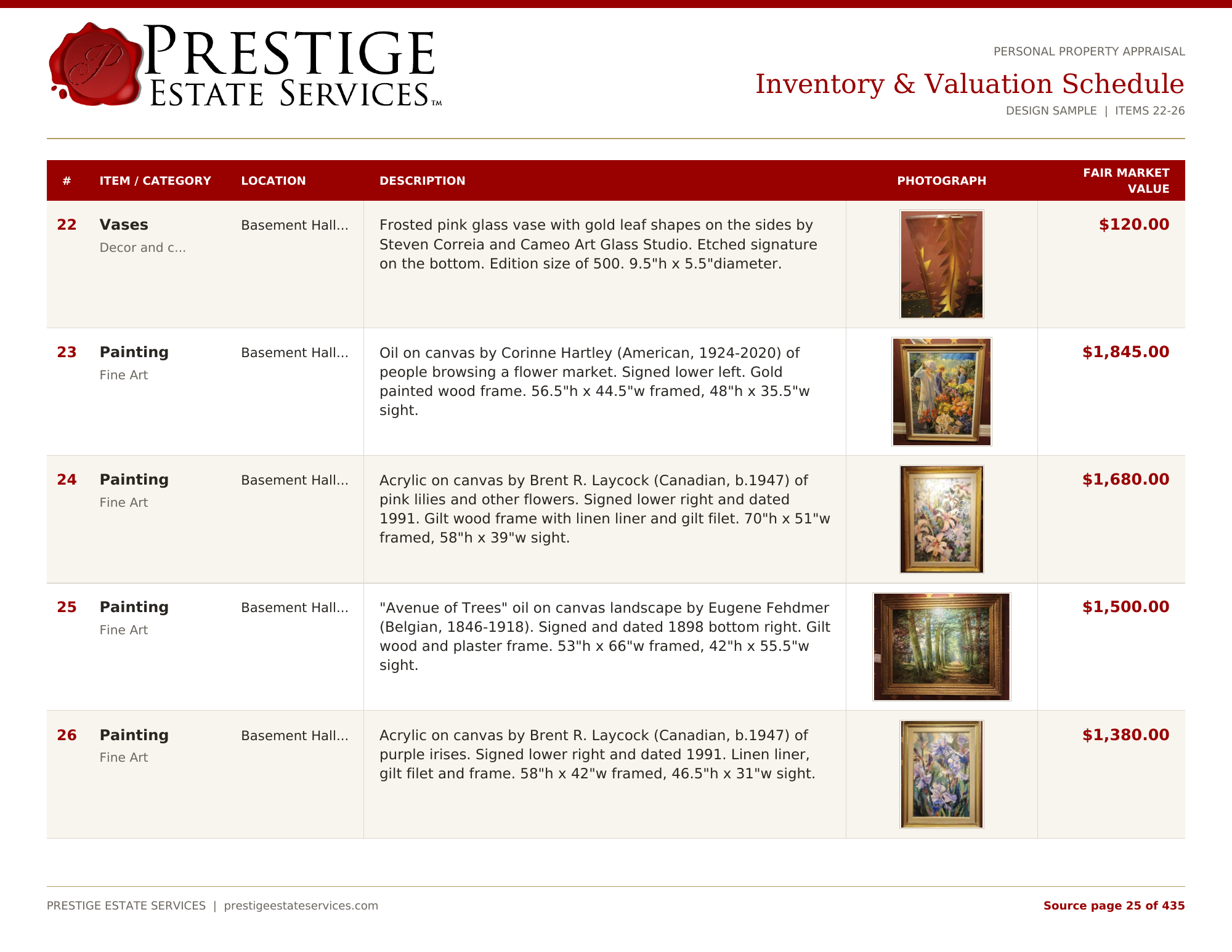
You receive your formal report as a digital PDF prepared for your assignment. It explains which belongings were appraised, the relevant date, value definition and methods used. Descriptions and photos connect the analysis to your items.
The sample below is a hypothetical item schedule showing fair market values. It shows one part of a report. Other report types may use different value definitions; an insurance appraisal, for example, may need a basis suited to that purpose.
What supports the value conclusions?
As appropriate, your formal report explains the market research, values, assumptions and limits. It includes the appraiser’s credentials, sources, signed certification statement and required signatures. How much detail it contains depends on the agreed work and report type.
How long does the work usually take?
Most formal projects take about two to four weeks once intake is complete. The size of your project and the work it needs affect that timing. Tell us about firm deadlines at the start. Expedited work is often possible, but we must confirm a deadline in writing before committing to it.
Can I ask questions after delivery?
Routine questions about your completed report are included, and your appraiser can explain the findings. If you later need the appraisal for another purpose, we’ll discuss a separate report and any additional work or fees before proceeding.
Choosing an Appraisal Method
An online photo appraisal provides informal guidance based on your images. A formal remote appraisal is a separate assignment. We consider it only when the available evidence can support the purpose of the appraisal. An in-person appraisal includes an on-site inspection of the belongings we agree to appraise. During intake, we discuss which option suits your items and the people who will use the result.
Choosing an Appraiser for Property in Boston
Personal Property Appraisers Near Me in Boston
Choose an appraiser who understands your belongings and can prepare the report you need. Ask what the work will cover and how the inspection and research will address your items. Our appraisal team can discuss this with you before you begin. Our personal property appraisal services explain more about the work and reports.
IRS-Qualified Form 706 and Estate Tax Appraisers Near Me in Boston
For an estate appraisal, ask about experience with your types of belongings, the valuation date and the report your preparer needs. Tell us whether your adviser needs federal, Massachusetts or other estate documentation. That helps define our personal property work. Start with our estate-tax appraisal service.
Areas Served Around Boston
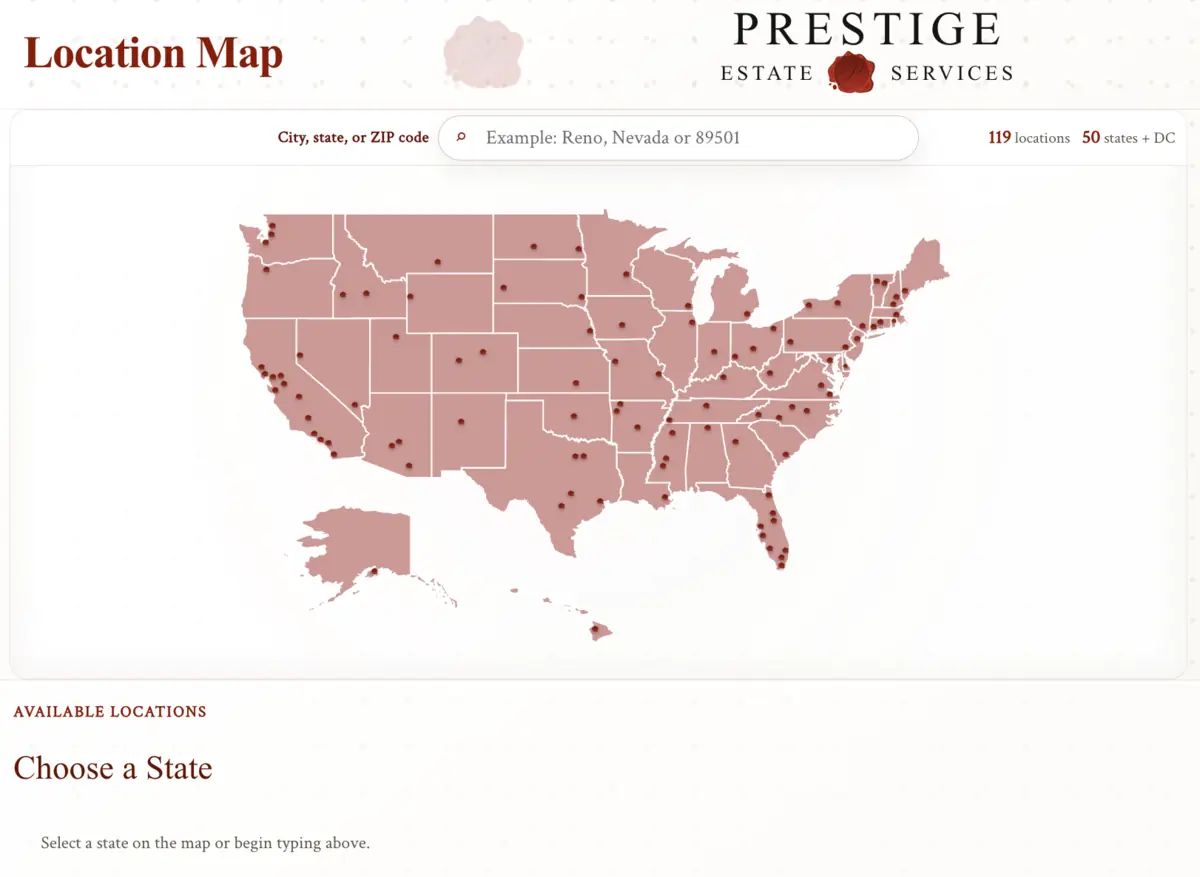
We serve Boston and nearby Cambridge, Somerville, Quincy, Newton, Brookline, Medford and Waltham. If your belongings are in Beacon Hill, Back Bay, Charlestown or another Boston neighborhood, let us know. The correct address helps us plan how to access the property.
If belongings are kept at several locations, give us each address during intake. We can discuss scheduling and what the work will cover across all locations. For projects outside this area, contact our team to check availability.
Frequently Asked Questions About Boston Appraisals
Choosing the Right Service
Do you appraise homes or land?
We appraise the belongings you own, including art, antiques, furnishings and collections. We do not provide real estate appraisals. Tell us which pieces you need valued, and we’ll help you choose the right personal property appraisal service.
Does an estate appraisal also cover insurance needs?
An estate appraisal uses the type of value needed for the estate’s purpose. Insurance may call for a different value. If you need insurance reporting later, we’ll discuss a separate report and any additional work. We can’t simply relabel the estate report.
Can I request help with only a few items?
Yes. Tell us about the pieces and why you need to know their value. We’ll discuss whether you need a formal appraisal or whether informal photo guidance would answer your question, then explain what the work involves.
Planning the Project
Must I be present for the inspection?
No, but you’ll need to arrange access. It helps to have someone available who knows the belongings and can answer practical questions. Tell us about stairs, building rules or anything that may be difficult to reach safely.
Is a formal remote appraisal possible?
Sometimes. During intake, we’ll review your photos and records to see whether they provide enough information for a formal appraisal. What the recipient needs and the features of the items also help us decide whether we need an on-site inspection.
Can you meet an urgent deadline?
Tell us your deadline when you first contact us. We can often expedite work, depending on availability and our existing projects. We must confirm the deadline in writing before we commit to meeting it.
Reports and Estimates
What information helps you prepare an estimate?
Tell us why you need the appraisal, where the belongings are and roughly how much there is to appraise. Send clear photos, useful records and any deadlines. This helps us estimate the time for inspection, research and reporting.
What happens if the project grows?
If the project appears to need work beyond what we originally agreed, we’ll pause and discuss it with you. We’ll obtain your written approval before going ahead with any additional work.
Discuss Your Boston Personal Property Appraisal
Tell us what you need appraised, where the belongings are and how you’ll use the result. Our team can review that information with you, explain what the appraisal should cover and help you take the next step with your Boston project.
Prestige Estate Services · 198 Tremont St, Boston, MA 02116