Baltimore Personal Property Appraisers
Baltimore personal property appraisers at Prestige Estate Services help Maryland clients value art, antiques, furnishings, collections and equipment. We study the belongings and their market. Then we explain the values for the estate, insurance or family task you need to complete.
Our in-house team handles your appraisal. The team reviews each formal report for quality and appropriate USPAP reporting before delivery.
Jump to Appraisal Services

Appraisal Planning for Baltimore and Nearby Communities
Start with the question you need answered. Our personal property work can cover one valued collection or the contents of a home. Tell us who needs the report and share any written request from your adviser. Those facts help us plan the work before we inspect the belongings.
We serve Baltimore and nearby Towson, Columbia, Ellicott City, Catonsville, Dundalk and Glen Burnie. Coverage also includes Annapolis, Bel Air, Westminster and Havre de Grace. Our Locations page can help when the belongings are in other markets.
We appraise personal property, including art, antiques, furnishings and collections. We do not provide real estate appraisals.
Meet Our Personal Property Appraisers
Meet Your Personal Property Appraisal Team for Baltimore, Maryland

The appraisers you work with are in-house W-2 employees of Prestige Estate Services, not independent contractors.
One collection may call for several types of expertise. Prestige plans the work around the items and the report you need. The firm draws on experience coordinating complex collections and professional stakeholders to help keep those parts of a project aligned. This matters when different types of belongings need research for one report.
Our appraisal review department consists of appraisers holding the ISA CAPP designation. Before delivery, this department checks each formal report and its supporting work for quality and appropriate USPAP reporting. USPAP means the Uniform Standards of Professional Appraisal Practice. The Appraisal Foundation explains these standards and their role in appraisal work.
Your assigned appraiser is the main contact for appraisal questions. The Head of Appraisals and office staff also support the project. You can share new records during research or ask about the findings after delivery. The person handling your appraisal can explain how those facts relate to the work.
How Can You Arrange an Appraisal From Elsewhere?
You can arrange a Baltimore appraisal from elsewhere. Name the person who can let us in and who will give instructions about the work. A city home and a second address in Towson or Columbia may call for separate access plans. List each location at intake so we can consider the whole request.
Which Access Details and Records Help?
Baltimore can mean the city or the wider area in a casual conversation. Use the street address and community name to make your request clear. For a home in the city’s Roland Park or Guilford neighborhood, include its floors and any separate storage in the access plan. If a building contact must arrange entry, tell us before the visit.
Room photos help show the mix of belongings, while close views can reveal marks and wear. Send useful records with them. Prestige can then assess whether they support formal remote work or whether a visit would reveal needed facts. We choose the method to fit the property and the needs of the person receiving the report.
Working With Baltimore Personal Property Appraisers
Baltimore Personal Property Appraisers
What will a personal property appraisal tell me?
A personal property appraisal explains the value of named belongings for a stated use. Our Baltimore personal property appraisers start with the task you face. You may need estate values, an insurance record or a basis for dividing contents. We then define which belongings and kind of value the report will cover.

A contents appraisal joins facts about the items with market research. We study how each piece was made, its materials, maker and state. Next, we look at suitable market data and explain how it supports the values. The report gives the reader a reasoned view instead of a total with no clear basis.
Defining the Work and the Report
Scope means the work included in the project. Intended users are the people for whom we prepare the report. Agreeing on both helps us plan the visit, research and report. For instance, a family choosing pieces may need a different layout from an insurer reviewing a list of valuables.
Our personal property appraisal services can cover one collection or a whole home. Some items need their own entries, while others may fit a group. Each entry should make clear what it covers. You can then link the report to the belongings and ask about a value without guessing which pieces it includes.
Tangible Personal Property Appraisals in Baltimore
Which belongings belong in the appraisal?
A tangible personal property appraisal covers physical belongings, including furnishings, art, antiques, jewelry and equipment. For a Baltimore household, the first task is to define which movable objects belong in the project. A room count alone cannot describe a collection, its accessories or pieces kept away from the main home.
Prestige reviews the mix and describes the pieces, sets and groups. A list might show a display cabinet apart from the ceramics it holds. However, a full set of tableware may need one entry showing the pattern, pieces and counts. We choose the grouping to fit the actual belongings and the use of the report.
Choosing the Included Belongings
Movable property valuation also needs clear limits. Bank accounts and other financial interests differ from the contents of a home. If you are unsure whether to include a built-in feature, share the adviser’s request. We can then discuss which personal property the work will cover before the list grows beyond that scope.
Our tangible personal property appraisal guidance can help you describe the work you need. Include collections in closets, display cases or a second home when they belong in the project. The agreed list gives you and the appraiser a clear boundary. It need not treat everything at an address as one asset.
Fair Market Value Appraisals in Baltimore
Why can fair market value differ from an insurance figure?
A fair market value appraisal considers a price that informed, willing buyers and sellers would agree to without pressure to act. It concerns the relevant market on a stated effective date, meaning the date the value reflects. Baltimore owners may need this basis for estate or other formal work.
Prestige studies relevant sales and how those items differ from yours. Quality, condition, missing parts and the type of market can affect that comparison. Therefore, an expensive piece with a similar name may provide weak evidence for an incomplete one. The research must explain the link rather than rely on an average alone.
Fair market valuation differs from finding the cost to replace a piece. An insurance replacement figure may use a different market or set of terms. Likewise, a receipt shows what someone paid in one sale. That price may help the research, but it does not answer every later value question.
The IRS describes fair market value for donated property in Publication 561. When requesting personal property valuation, share the agreed use so we can apply the right definition. You can then read the report knowing what its amount measures and which date it addresses.
For executors, trustees, attorneys and CPAs
Estate Tax, Form 706 and Date-of-Death Personal Property Appraisals in Baltimore
IRS-Qualified Estate Tax Appraisers in Baltimore
Where do we start when our adviser needs estate contents values?
An estate tax appraisal supplies personal property values for the estate’s tax adviser. For Baltimore estate contents, Prestige agrees on the belongings and the requested date before research starts. That keeps the report focused on the tax task. Meanwhile, relatives may be making other choices about the same objects.

Estate tax appraisers study the belongings, their condition and fair market value evidence. The report links clear entries and photos with researched values. As a result, the preparer can find a collection or group and see what it includes. Those references also help when the preparer asks about one part of the estate.
Defining the Estate Request
IRS-qualified estate tax appraisers need qualifications suited to the assignment. A USPAP-compliant appraisal follows the professional standards that apply to the work and report. These terms describe different parts of the service. Neither replaces a clear asset list or the research needed for a personal property estate valuation.
Share instructions that affect the estate’s interest in the belongings, including agreements your lawyer identifies. The tax adviser decides the filing treatment and tells us which value question needs support. We can then explain the interest the report values and the facts or assumptions on which that opinion rests.
Hypothetical example: Property subject to a loan agreement
Suppose a Baltimore executor needs estate tax values for a collection of scientific instruments, with several pieces on a long-term display loan. The estate’s records could show ownership, but an agreement might limit when a buyer could receive those pieces. The executor would need counsel to explain which terms apply to the interest being appraised.
For this estate tax appraisal, Prestige would review counsel’s instructions, describe the instruments and assess the records about their condition. We would then study whether the loan terms affect the market evidence. A sale with no such terms might allow the buyer to take the piece at once. That difference could matter even if the two instruments look alike.
The report could state the interest valued, the instructions used and any supported effect on the findings. The preparer could then see why holding an object, owning it and making it available to a buyer are different facts. Counsel would explain the agreement’s legal meaning; the appraisal would not assume that every loan lowers value.
IRS-Qualified Form 706 Personal Property Appraisals in Baltimore
How does the appraisal connect to Form 706 records?
IRS-qualified estate tax appraisers help the Form 706 preparer link reported values to named belongings. A Form 706 appraisal for a Baltimore estate should state the value date, basis and property covered. The preparer can then use those records in the estate tax return and ask about specific entries.

The federal estate tax return brings together several kinds of assets. Our work concerns its agreed personal property part. Entries must make important pieces clear and explain any grouped contents. Photos and item numbers help the preparer link an entry to other records, rather than rely on a room name alone.
Connecting the Report to the Return
Prestige provides the appraised values and explains the research supporting them. The tax preparer handles filing decisions, needed attachments and how the appraisal fits the return. Therefore, send the preparer’s written request early, especially if it calls for specific descriptions or a different value date. The IRS Form 706 instructions provide the current filing guidance.
A USPAP-compliant appraisal also explains key assumptions and limits. These help the reader see what supports the values, rather than treat the table of amounts as the whole report. Before you request a signature or a revised list, explain why you need it. The appraiser can then assess the work that request involves.
Date-of-Death Personal Property Appraisals in Baltimore
Can you appraise belongings for a date that has already passed?
A date-of-death appraisal estimates values for the requested earlier date, even when we inspect the pieces later. For Baltimore belongings, Prestige sets present observations apart from facts about their past state. This retrospective appraisal asks what they were worth then. It does not carry today’s prices back without research.
Dated photos, receipts, earlier lists and repair records can help show what a piece was and its state. However, each source supports only the facts it shows. A visit may reveal how the piece was made, while a dated photo may show old wear. We assess the sources together and explain key gaps.
Historical market data must also fit the requested date. The appraiser studies relevant sales and their terms, including differences from the subject. Later records may reveal an earlier fact, but later market changes did not exist at death. The report makes clear which date its values reflect.
When arranging a date-of-death personal property appraisal, keep old records in context. Tell us when someone took the photos or made the lists and what has changed since then. This helps the adviser see which facts support the earlier value. Some of those facts may no longer be visible during a visit.
Probate and Estate Inventory in Baltimore
Probate Appraisals in Baltimore
How can an appraisal support a probate inventory?
A probate appraisal provides values for the estate task set by the personal representative and counsel. In Baltimore, Prestige starts with their list of belongings and requested date. We aim to produce a record they can use to help administer the estate, rather than assume every estate needs the same report.
Probate appraisers describe the belongings and arrange researched values to fit the estate’s records. A distinct collection can remain easy to find beside grouped contents. This helps when counsel asks about one entry or needs to match the report to a list already in use. Clear structure makes those checks easier.
Maryland’s Register of Wills provides official resources for handling an estate. Counsel can identify the filing task and what it needs. Prestige then researches values within that scope. The appraisal supplies value evidence, while the personal representative remains responsible for the estate’s administrative duties.
The firm’s work with estate attorneys on probate and estate-settlement reports informs this coordination. Share existing inventory references when you have them so we can discuss a useful report structure. Later family distribution or insurance requests may involve different questions, even though they concern the same belongings. Identifying the present task keeps those decisions clear.
Estate Inventory and Valuation Reports in Baltimore
Do we need an inventory, an appraisal, or both?
An estate inventory and valuation report can describe belongings and give researched values when the scope calls for both. A contents inventory alone records what is present. For a Baltimore estate, Prestige first asks which result you need. We then plan the photos, descriptions, item references and any value entries.
Consistent identifiers make the record useful across rooms and collections. A photo, description and appraised value should point to the same object or defined group. We also explain grouping so a reader can see whether an entry covers a single piece, a set or several similar items. This gives the representative a clearer record than an unlabeled series of photos.
The firm draws on cataloging and inventory-organization experience when planning these records. If an earlier list already exists, share it before the work starts. We can assess whether its references help connect the new report to ongoing estate administration, rather than create an unrelated numbering system without discussion.
An estate valuation report can answer later questions about the belongings, but it describes the agreed work. It does not track each later move or distribution. Keep your own notes when property changes hands, and use the report’s references to name the pieces involved. The report and your ongoing estate records can then serve their own roles.
Charitable Donation, Insurance and Loss Appraisals in Baltimore
Charitable Donation Appraisals in Baltimore
What does an appraisal add to a charitable donation?
A charitable donation appraisal gives value evidence for a gift of personal property. Baltimore donors should ask their tax adviser about appraisal and filing requirements early. Prestige can then define the belongings, value date and use of the noncash donation appraisal. Those choices shape the research and the report.
Gift records need to show what the recipient will receive. Photos, item details and the agreed list help link the appraisal to that gift. If a collection has different editions, materials or levels of quality, we study how those features affect fair market value. The good purpose of a gift alone cannot establish its value.
The IRS instructions for Form 8283 explain current noncash contribution reporting. Your adviser can assess the needs that apply to the gift, including timing and the roles of the donor, appraiser and recipient. Therefore, share useful dates before arranging the work rather than assuming a later report can meet any schedule.
A Form 8283 appraisal and the tax deduction serve different roles. Prestige researches the value and prepares the needed appraisal records. Your tax adviser addresses the deduction. If you change the planned gift during the project, tell us promptly so the entries and research still reflect the pieces you intend to give.
Insurance Appraisals in Baltimore
How can I document valuables before an insurance loss?
An insurance appraisal records valuable belongings for the insurance review you are arranging. For a Baltimore collection, Prestige first confirms the recipient’s needs and value basis. Insurance replacement valuation may differ from estate fair market value. It answers a question about replacing the pieces under the agreed terms.
Our insurance appraisers record features that help describe each piece. Maker, size, materials, condition and included parts can guide the research. In addition, clear photos can record its state before a loss. A broad label such as decorative art tells an insurance professional much less than an entry tied to a named piece.
Replacement research considers the right market and the features of the piece. The highest advertised price is not always the best comparison. If an exact match is unavailable, the appraiser explains how the evidence differs from the subject. This helps the reader see why the research supports the appraised amount.
Share any schedule or written instructions from your insurance professional at intake, including inspection needs. A personal property insurance appraisal gives researched values for that discussion, while the insurance professional handles coverage and policy terms. After delivery, send the report to that professional and ask how the selected objects will appear in your insurance records.
Damage and Loss Appraisals in Baltimore
What can be established after an item is damaged or lost?
A damage and loss appraisal addresses value after damage, theft or destruction. For Baltimore property, Prestige first defines the question. You may need a pre-loss value, a value in its damaged state or another stated opinion. That choice guides the research because a repair estimate alone cannot answer every loss question.

The appraiser may study surviving pieces, dated photos, earlier reports, receipts and specialist findings. These sources help show what the item was and its state before the loss. However, gaps can limit the conclusions. We explain those limits so the reader can see what the damaged personal property valuation supports.
A loss appraiser researches the agreed value issue rather than deciding policy coverage or the cause of the incident. Keep original records and share the claims adviser’s specific request. The resulting report can then address the actual question without treating a planned payment or a treatment cost as a preset value.
Hypothetical example: A reconstructed photograph after theft
Suppose a Baltimore owner needs a loss appraisal for a stolen decorative vase. An image tool has reconstructed a blurred photo and added lettering that resembles a maker’s label. The original image does not show enough detail to read that label.
During the damage and loss appraisal, Prestige would request the original photo and ask what the image tool changed. We would also review purchase or collection records. The reconstructed lettering would not serve as an established maker’s mark. The report could explain which facts support the description and which remain unknown. A clearer-looking image cannot create a missing historical fact, so the value research would need to respect that limit.
Family Property, Appraisal Review and Reports in Baltimore
Divorce & Marital Asset Appraisals in Baltimore
How do you value belongings for a divorce matter?
A divorce appraisal supplies consistent values for the personal property under discussion between the parties and their advisers. For a Baltimore matter, Prestige sets out the belongings in scope, value date and value basis. This creates a common foundation for comparing marital asset values instead of mixing recollected costs with unrelated estimates.
The appraiser identifies the property and records the features that matter to its market. If the parties provide different descriptions of one piece, we examine the supporting facts rather than adopt either account by itself. Photos, dimensions and other records help connect each opinion to the correct object. The report then shows the property behind the figures under discussion.
Keeping the Property Lists Consistent
A marital asset appraisal can cover selected disputed items or a defined wider collection. Where several belongings share an entry, the description should make that grouping clear. Otherwise, a planned division may appear to cover the same property while assigning different sets of objects to each person. Clear entries help advisers compare the actual selections.
Value research remains separate from legal entitlement and the settlement. Your attorney can identify which assets and questions require appraisal support. Once those instructions are clear, the divorce appraiser can research the agreed personal property and explain the resulting values. You and your adviser retain the decisions about how those findings fit the matter.
Equitable Distribution Appraisers in Baltimore
Can values help heirs compare their proposed selections?
An equitable distribution appraisal helps heirs compare the values of planned selections from an estate. For Baltimore families, Prestige can organize an appraisal for heirs around clearly named belongings and a consistent value basis. The report supplies a financial reference while family preferences remain part of the family’s own decisions.
A selection may combine a few individually valued objects with a larger group of ordinary furnishings. The appraiser considers how the entries will support that comparison without counting the same property twice. Meanwhile, descriptions and photos allow relatives to recognize the pieces even if they cannot all view them together. This can make discussion more concrete.
Inheritance appraisal values do not measure personal attachment. An heir may prefer an object with modest market value because it holds family meaning. The report can keep those considerations distinct: one concerns the researched value, while the other concerns what a person wants to receive. Neither needs to erase the other.
Before the work starts, explain whether you need individual selections, grouped allocations or another reporting arrangement. Prestige can discuss a structure that lets your adviser compare the planned groups. If someone later needs insurance reporting for objects they receive, that is a new agreed use to discuss, rather than a reason to redefine the original distribution values.
Litigation Appraisal Review in Baltimore
Can you examine the reasoning in an existing appraisal?
Litigation appraisal review examines the quality and reasoning of an existing personal property appraisal. Baltimore clients and counsel may need to see whether the report’s evidence supports its findings. Prestige defines the review question and materials first, so the review appraiser can address the actual concern rather than simply search for a different number.
A personal property appraisal review considers the stated project, item details, assumptions, market data and analysis. The reviewer looks at how those parts connect. For example, a finding may depend on a condition assumption that the report does not clearly explain. Identifying that dependence can help counsel frame a focused follow-up question.
The scope also sets whether the reviewer forms a separate value opinion. Critiquing an existing report and appraising the property afresh involve different work. Therefore, explain whether you need review findings, a new value opinion or both. We can then identify the evidence, inspection and reporting suited to that request.
Send the full report and useful records, along with the issue you need addressed. The resulting findings should explain why a point matters to the appraisal’s reasoning, not merely list disagreements. Counsel decides how to use the review within the legal matter; Prestige provides the appraisal analysis agreed in the engagement.
Restricted Appraisal Reports in Baltimore
When is a Restricted Appraisal Report appropriate?
A Restricted Appraisal Report gives concise formal reporting when it fits the agreed use and intended users. For a Baltimore project, Prestige asks who needs the report and how they will use it. We then assess the format. A short document still needs to give those readers what the assignment requires.
The report type affects how we explain the work. It does not remove the need to describe the pieces, study their market and develop sound values. A restricted personal property appraisal report must meet the professional requirements that apply. As a result, fewer pages do not mean the value research is simpler.
Tell us whether an attorney, insurer, tax preparer or someone else will rely on the report. We use those facts to assess how much detail the reader needs. If that person needs a fuller account of the research, a different report type may fit better. We discuss that choice before agreeing on the work.
Restricted appraisal reporting is formal work, unlike informal Online Photo Appraisal guidance. It also is not a substitute for deciding how you want a sensitive document handled. Discuss both the report’s purpose and any document-handling needs directly. The planned engagement should make the deliverable and its intended audience clear before work begins.
Government and Business Asset Appraisals in Baltimore
Government & Seized Asset Appraisals in Baltimore
What does an agency need for a personal property assignment?
A government property appraisal supports an agency’s stated value question for personal property. For assets in Baltimore, Prestige first agrees on the purpose, pieces and report needs. A seized asset appraisal also needs that clear scope. The name of the asset category alone does not decide the value basis.

Asset numbers, counts and condition records help connect the appraisal to the agency’s list. Equipment may have serial numbers, while furnishings or collections may need photo references. We compare the records with evidence about the assets and explain our entries. The agency can then see which items each value covers.
The research must fit the agency’s management or disposal question. Different terms may call for different sales evidence or assumptions. Therefore, share the instructions and any limits on access at the start. Prestige can assess whether the facts support the requested opinion and explain key limits in the report.
Government asset appraisal supplies value evidence for the agency’s decision. It does not set agency policy or establish a contract award or endorsement. The agency retains its approval and disposal processes. Clear scope and asset entries help its staff use the findings within those processes, without giving the report a role beyond its agreed purpose.
Furniture, Fixtures and Equipment Appraisals in Baltimore
How do you appraise the physical assets of a business?
An FF&E appraisal values the furniture, fixtures and equipment in a business project. For a Baltimore business, Prestige defines the personal property asset list before researching values. The equipment appraisal covers those physical assets. The business’s income potential, customer ties and other intangible interests fall outside this physical asset valuation.
FF&E appraisers study the models, specifications, setup and records about condition. An accounting list can help locate assets, but market research may need more detail. We also make clear which parts and accessories each entry covers. The report then links its values to the actual equipment, rather than an unclear ledger label.
The report’s use guides the market and sale terms we need to consider. As a result, a transfer list and a planning request may call for different explanations. Share the equipment records and the decision you face. We can then make sure the business personal property valuation addresses that task.
Hypothetical example: Expansion capacity and installed equipment
Suppose a Baltimore business needs an FF&E appraisal for a packing system. Its control cabinet can support more stations than the business has installed. A sales sheet describes that maximum capacity, while the proposed transfer includes only the system’s current modules and stations. The owner would need values for the assets that exist now.
For the furniture, fixtures and equipment appraisal, Prestige would check the installed setup against the asset records. We would then research the system as configured, rather than count empty expansion slots as equipment. This would not certify its engineering output. The report could help the parties see which hardware the value covers. Capacity to add stations later does not establish that those stations already form part of the physical assets.
Art, Antiques and Furniture Appraisals in Baltimore
Art Appraisals in Baltimore
What features of an artwork guide the value research?
An art appraisal studies an artwork’s features and relevant market data to form a value opinion. For Baltimore owners, Prestige considers the artist attribution, medium, size, condition and edition details. Those facts help the art appraiser distinguish the work from pictures that look similar but belong to a different market.
Provenance means the documented history of an artwork. Gallery invoices, exhibition records and earlier collection notes may help establish that history. However, they must relate to the actual work. A signature also needs context. We assess what the records and the piece support instead of treating a family story as an established fact.
Fine art appraisal then links the description to the right market. A drawing, painting and reproduction by the same artist may have quite different buyers and price levels. Likewise, edition details can matter for prints and multiples. The firm’s experience with primary and secondary art markets informs this work and the choice of useful comparisons.
The report explains the art value for its agreed use and date. If the artist’s identity remains unclear, we can discuss the evidence needed to assess it. Keep labels and records with the piece, and avoid changing its surface for the appraisal. Its present state is part of the evidence we need to study.
Antique Appraisals in Baltimore
How can you investigate an inherited antique?
An antique appraisal studies what a piece is and how its features affect its market. For antiques in Baltimore, Prestige examines materials, construction, maker evidence, age and condition. An old date can matter, but it does not alone establish quality, rarity or value. The research must address the actual piece.

An antique appraiser considers repairs and changes alongside original features. The comparisons should reflect the piece as it exists, rather than the most appealing account in an old note. The firm’s antiques-trade and household-property appraisal experience helps inform those distinctions. Clear descriptions let you see which features matter to the research.
Share records that explain an assigned date or maker, including older accounts that disagree. Those differences can point to a question worth studying. Antique valuation should explain what the evidence supports. If the key facts remain unclear, that uncertainty must remain visible in the reasoning and the conclusions.
Hypothetical example: Two possible attributions
Suppose a Baltimore collector has a ceramic jug with two earlier opinions assigning it to different workshops. The collector might suggest averaging prices from both makers to obtain a compromise value. However, the two attributions could place the jug in different markets.
For the antique appraisal, Prestige would study the evidence behind each attribution and assess whether a specialist could help resolve it. If doubt remained, we would consider whether the work could proceed with clearly stated limits. The report could explain the supported description and its basis. An average price would not resolve which maker produced the jug or create a sound middle identity.
Furniture Appraisals in Baltimore
Can one assignment cover old and contemporary furniture?
A furniture appraisal can cover antique, vintage, designer and modern pieces in one project. For a Baltimore home, Prestige studies the maker, materials, construction, condition and market for each type. A household furnishings appraisal therefore does more than apply one price rule to all the chairs, tables and cabinets.

Furniture appraisers also decide how to describe sets and single pieces. A dining suite may need an entry showing its table, leaves and chairs. Meanwhile, an important single piece may need its own value. These choices help make the furniture valuation useful when you compare selections or check what the report covers.
Useful records can include sales receipts, maker labels and repair facts. However, the appraiser still needs market data suited to the value basis and date. An attractive listing helps show how a seller presents a piece, but its price needs context before it supports an appraisal finding.
Hypothetical example: Repeated listings for one piece
Suppose a Baltimore owner gathers several recent listings to support the value of a vintage sideboard. The photos and seller details could reveal that the same piece has appeared repeatedly at an unchanged asking price. The apparent examples might therefore show one unsold offering over time.
In the furniture appraisal, Prestige would check the listing history and whether a sale took place, then seek other market evidence. We would keep renewed ads distinct from separate sales. The report could explain why repeated offers at one price do not show that buyers paid it. Counting those listings as independent sales would give a false picture of the market.
Online Photo Guidance and Appraisal Fees in Baltimore
Online Photo Appraisal Guidance in Baltimore
When should I choose an Online Photo Appraisal?
An Online Photo Appraisal offers informal guidance about an object’s identity or estimated value. Baltimore owners can use it for early questions about a piece. It differs from a formal report for tax, probate, insurance or another stated purpose. Choosing the service depends on what you need to do with the result.
Useful photos show the whole object and clear views of its marks, materials and condition. Include dimensions and useful background, while making clear which details you know and which remain uncertain. More images help only when they reveal useful facts. Repeating one angle may leave an important part of the object unseen.
The appraiser assesses the supplied evidence and explains what it supports about the piece and its value. If photos leave a key question open, photo appraisal guidance should state that limit. You can then choose a useful next step with that gap in mind, rather than treat an unclear detail as settled.
If you already need a formal report, start with a formal appraisal inquiry. Prestige can assess whether remote work may suit and discuss an estimate through intake. You need not buy the informal product first. Formal work needs enough evidence for the agreed use; the Online Photo Appraisal has its own terms and purpose.
Personal Property Appraisal Fees in Baltimore
What information helps you estimate my appraisal cost?
Personal property appraisal fees reflect the inspection, research and report the project needs. For Baltimore clients, Prestige uses the intake details to prepare an appraisal estimate. We do not treat the home’s size as the whole job. The amount and types of property, along with the report needs, shape the expected effort.

Photos and a rough contents list help show how much property occupies the rooms or storage area. In addition, specialist collections can require research that ordinary room views do not reveal. Include useful documents and identify the collections when you inquire. A smaller space filled with varied objects may need more work than a larger, lightly furnished space.
Research, Reporting and Changes to the Work
The estimate covers work beyond the visit. Research, analysis, writing and internal review all take time after we inspect the belongings. Read the central Fee Schedule with the proposed scope so you can see how its terms relate to the appraisal cost. The visit is one part of the full service.
If the project appears likely to exceed its original scope, Prestige pauses to discuss the change. We require written client approval before proceeding with changed work. Full intake details help us make a useful estimate. This process also gives you a clear choice when new belongings or research needs add to the proposed work.
Documentation Trusted by Attorneys, CPAs and Insurers
During intake, Prestige reviews the belongings, purpose and report needs. Share any written request from an attorney, tax preparer or insurance professional. We use those facts to plan the visit and research. Then we discuss an estimate for the agreed work and the report it needs.
Most formal projects usually take about two to four weeks after intake, depending on size, scope and complexity. On-site intake time also varies. Tell us about hard deadlines early. Expedited work is often feasible, depending on the appraiser’s availability and existing projects, and Prestige confirms any expedited commitment in writing.
Keep the assigned appraiser informed if useful records emerge during research. A new photo or document may answer a question about identity or condition. Connecting the record to a specific item helps the appraiser assess its significance without guessing which entry it concerns.
What Your Formal Report Explains
We deliver formal reports digitally as PDFs. The report states its use, property scope, value date and value definition. Photos and descriptions show the belongings, while market research and appraisal approaches explain the values. The type of report and the work it covers determine the level of detail.
Key assumptions and limitations explain how the evidence affects the work. Supporting material fits the report type and assignment. It can include the appraiser’s qualifications or CV, certification statement, bibliography and required signatures or attestations. These help the reader see both the basis of the findings and who takes professional responsibility for them.
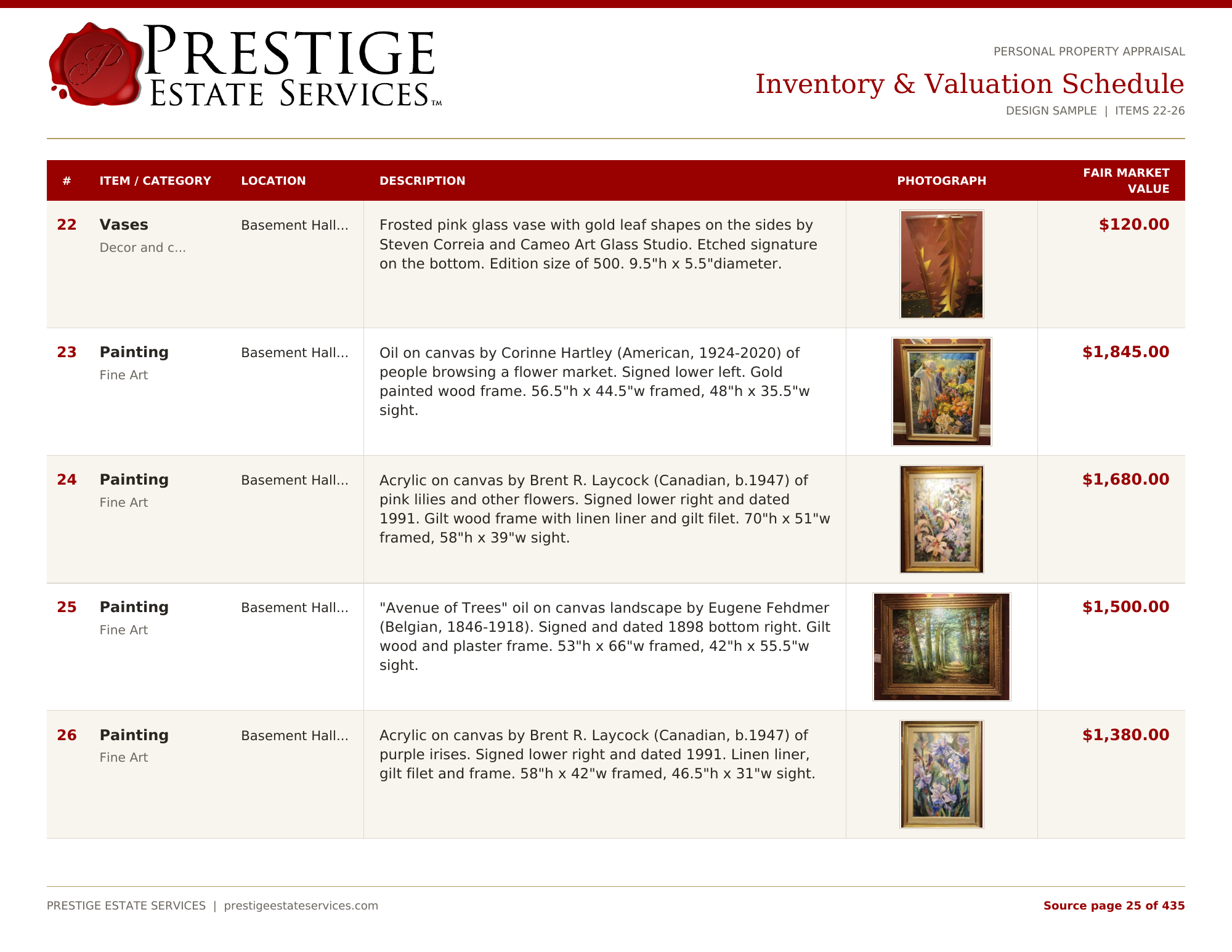
The pictured schedule is a hypothetical example using photos, descriptions and fair market values. It illustrates one part of a report. The full document also explains its purpose and reasoning. An insurance project uses the right agreed value definition rather than adopting fair market value merely because this sample does.
Reading Entries and Asking Questions
Read the purpose, date and scope before using the value entries. Then refer to an item number when asking about one finding. Routine questions about the delivered report are included. Your assigned appraiser can explain the facts and reasoning already in the report, and how they support the values.
A later request for a new use may need more work and a separate report. For instance, an heir may need insurance records for pieces received through a distribution. Prestige discusses that purpose and the relevant fees before proceeding. The new work can then address the question that has changed.
Preparing for Examination of Your Property
Arrange access before the inspection, preferably with someone available to provide it. Accessible belongings and organized records can reduce billable handling time. If the appraiser must unpack, unwrap, document, rewrap and repack objects, those tasks add time to the project. You do not need to clean or restore objects for appraisal.
Appraisers cannot lift or move heavy or overly large items. Tell us if furniture or stored material blocks an object. We can assess whether more views, records or access will be needed. In some cases, the evidence at hand will not support including that item; an assumption cannot replace essential facts.
Choosing How Your Property Is Examined
A formal remote appraisal may suit when photos and records clearly show identity, size, marks, condition and other needed facts. A visit may help when images leave key features unclear. Prestige assesses that choice through intake. We also consider any inspection or record needs supplied by the person who will use the report.
Our remote and in-person appraisal comparison explains the two ways to gather evidence. Either can form part of a formal project when the facts and scope support it. Informal Online Photo Appraisal is a separate service for general identification and estimated-value guidance. Its terms and purpose differ from those of a formal report.
Choosing an Appraiser for Property in Baltimore
Choose an appraiser by matching the property and agreed use to the planned work. Ask how the appraiser will gather evidence, research values and explain the result. A clear discussion of those steps makes qualifications, report options, timing and fees easier to assess together.
Personal Property Appraisers Near Me in Baltimore
When comparing Baltimore personal property appraisers, describe the collection and ask who will handle your questions. Our personal property appraisal guidance explains the service. Sample photos can focus the discussion on the types of items and the evidence needed. That gives you more to assess than a broad promise about every kind of belonging.
IRS-Qualified Form 706 and Estate Tax Appraisers Near Me in Baltimore
For estate reporting, ask how the appraiser’s qualifications fit the property and the preparer’s needs. Our estate-tax appraisal services provide researched personal property values. Share the requested date and written instructions. You can then discuss the proposed work and report before committing to the project.
Areas Served Around Baltimore
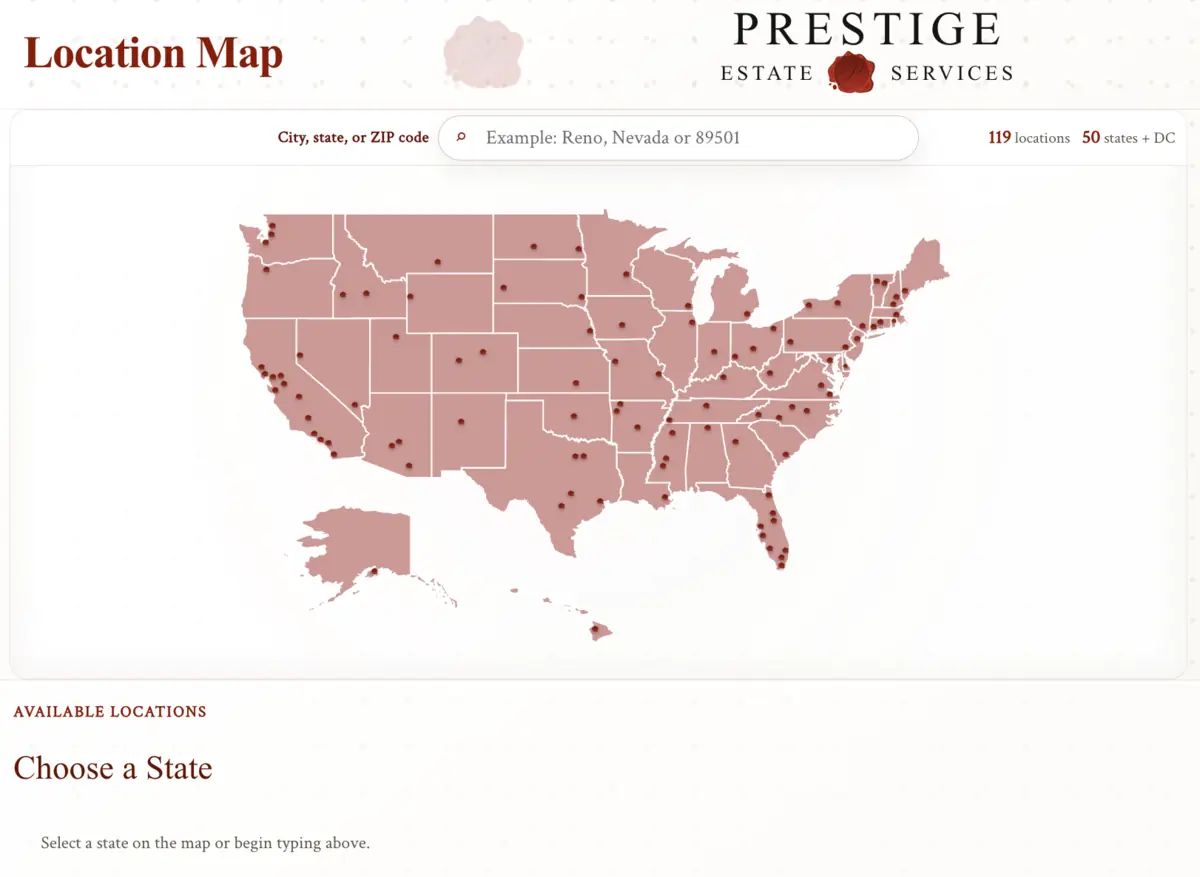
Our Baltimore coverage includes the city and nearby Towson, Columbia, Ellicott City, Catonsville, Dundalk and Glen Burnie. We also serve Annapolis, Bel Air, Westminster and Havre de Grace. Within the city, coverage includes neighborhoods such as Roland Park and Guilford. Name the place where the belongings are held, even if the person requesting the report lives elsewhere.
If one project involves several addresses, explain which property is at each and who can arrange access. A client living elsewhere can still coordinate that work. Use our Locations directory when the belongings extend to another market, and share the full request so we can consider its coverage together.
Baltimore Personal Property Appraisal Questions
Scope and Arranging Access
Do you appraise a Baltimore home or only its contents?
We appraise personal property such as art, antiques, furniture, collections and equipment. We do not provide real estate appraisals. If your adviser is coordinating several kinds of estate assets, make clear which belongings the contents report needs to cover.
Can I request the appraisal if I live outside Maryland?
Yes. You can arrange the project from elsewhere and name someone to provide access. Tell us who is authorized to give instructions and where the belongings are located. You need not attend, although we prefer someone available to let the appraiser in.
Should I send an old appraisal with my inquiry?
Yes. An old report may describe pieces or provide useful photos. Include its date and purpose so we can assess how it may help. The appraiser will decide what new inspection, research and reporting the current project needs.
Timing and Report Options
How long does a formal appraisal usually take?
Most formal projects usually take about two to four weeks after intake, depending on size, scope and complexity. Share firm deadlines early. Expedited work depends on availability and existing projects, and Prestige confirms an expedited commitment in writing.
Can you work from photographs for a formal report?
Possibly, when the photos and records show the facts needed for the work. Prestige assesses formal remote suitability through intake and considers any recipient needs. You do not need to buy the separate informal Online Photo Appraisal to request that assessment.
Will every belonging have its own value in the report?
Not necessarily. The appraiser may value suitable groups together and identify other pieces individually, depending on the project. The descriptions should explain each entry clearly. Discuss how you and your adviser need to use the facts when planning the report.
Changes and Follow-up
What happens if we discover more property during the project?
Tell your assigned appraiser. If the new property changes the original scope, Prestige pauses to discuss the added work. We require your written approval before proceeding with that change.
Can I ask questions after receiving the report?
Yes. Routine questions about findings in the delivered report are included. Your assigned appraiser can explain the reasoning. New property, more research or a new use may require separate work, which we discuss with you before proceeding.
Discuss Your Baltimore Appraisal
Tell us what you need valued, where the belongings are held and who needs the result. Include useful photos, written instructions and any deadline. Our team can review the request and discuss the next step toward an estimate for your Baltimore personal property appraisal.
211 E Lombard St, Baltimore, MD 21202(443) 446-3677