Retrospective Personal Property Valuation
Date of Death Appraisals for Personal Property
A date of death appraisal is a retrospective valuation that develops a supported fair market value opinion for tangible personal property as of the decedent’s date of death. Executors, trustees, attorneys, CPAs, and fiduciaries may need the report for estate administration, federal estate-tax reporting, probate, trust records, or beneficiary-related decisions.
Prestige Estate Services appraises tangible personal property. We do not provide real estate appraisals.
The effective date—not today’s market—is the anchor for the assignment. Prestige Estate Services defines the intended use and users, documents the included property, evaluates the evidence available for the historical date, researches the appropriate markets, and explains the resulting value conclusions in a written appraisal report.
The scope may cover an entire residence, selected collections, or individual high-value objects. The inspection and documentation pathway is selected for the assignment rather than treated as a one-size-fits-all process.
Professional Appraisal Team
Meet Our Personal Property Appraisers
All Prestige Estate Services appraisers are in-house W-2 employees. We do not use contract appraisers as members of our appraisal staff. Each appraiser works directly for Prestige Estate Services and is IRS-qualified and USPAP-compliant.

The Assignment Foundation
What Does a Date of Death Appraisal Establish?
It establishes a supported opinion of value for the included personal property as of a specific historical date. The report connects that effective date to the assignment’s intended use, intended users, value definition, scope of work, available evidence, and relevant markets.
Historical Effective Date
The analysis looks back to the decedent’s date of death. Current prices may inform research, but they are not automatically the value as of the required date.
Defined Intended Use
The estate’s advisor or fiduciary identifies why the appraisal is needed and who may rely on it. Those decisions shape the appropriate scope and reporting detail.
Supported Value Opinion
Identification, condition information, provenance when available, comparable market evidence, and category-specific analysis support the conclusions.
Nationwide Personal Property Appraisal Support
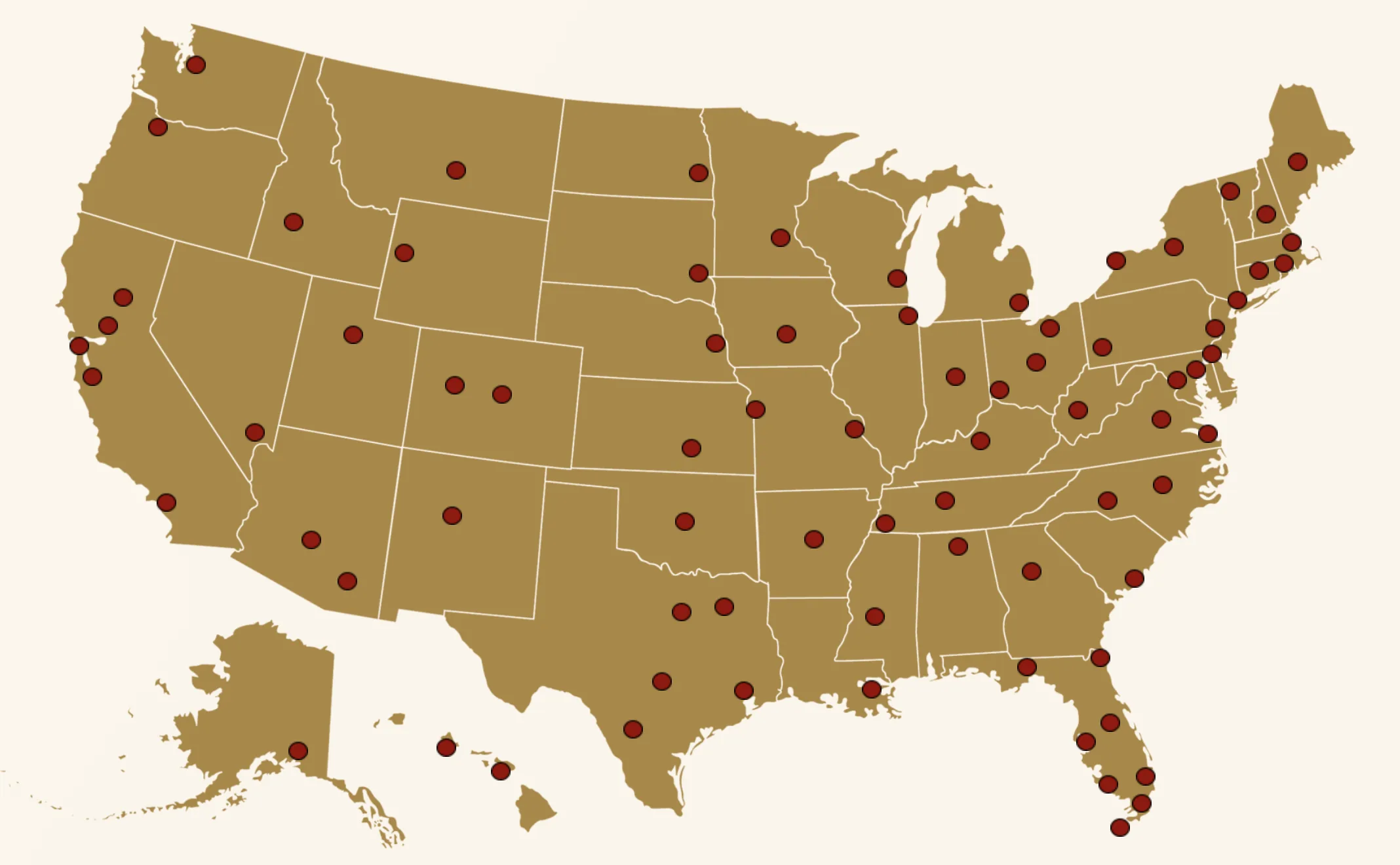
Prestige Estate Services Locations Map
Prestige Estate Services provides personal property appraisal services across the United States. Our team coordinates estate contents, collections, and multi-location assignments with executors, trustees, attorneys, CPAs, fiduciaries, and authorized family representatives.
Related but Distinct Estate Needs
When Is a Date of Death Appraisal Needed?
The date of death identifies the effective valuation date; it does not by itself identify the report’s legal, tax, fiduciary, or administrative purpose. The estate’s attorney, CPA, executor, trustee, or other advisor should confirm the intended use before the assignment begins.
Estate and Fiduciary Records
Executors, trustees, and fiduciaries may need a documented historical value for administration, accounting, asset decisions, or communication with beneficiaries and professional advisors.
Federal Estate-Tax Reporting
When an estate-tax filing is involved, the appraisal may support personal property reported with IRS Form 706. Our dedicated estate tax appraisal service explains that separate intended use in greater detail.
Probate Administration
A court or attorney may request historical values for an inventory or another probate purpose. Requirements vary, so the estate should follow counsel’s direction and use the dedicated probate personal property appraisal resource when probate is the dominant need.
Reference materials are provided for general information. Filing, legal, and tax decisions should be reviewed with the estate’s attorney, CPA, executor, trustee, or other appropriate advisor.
Estate Contents and Collections
What Personal Property Can Be Included?
A date of death appraisal may address a full household, selected categories, a private collection, or individual objects. The included property and level of detail should match the intended use, the significance of the assets, and the evidence available for the historical date.

- Fine art, sculpture, prints, photography, and works on paper
- Antiques, period furniture, clocks, and historical objects
- Household furnishings, decorative arts, lighting, and rugs
- Jewelry, watches, silver, and personal accessories
- Porcelain, glass, ceramics, books, and archival material
- Collectibles, memorabilia, musical instruments, and specialty collections
- Vehicles, tools, equipment, and other tangible personal property
- Ordinary household contents organized individually or in logical groups when appropriate
A Documented Valuation Process
How Is a Historical Personal Property Value Developed?
The appraiser begins with the intended use and effective date, then develops the scope, documentation, research, and reporting needed to produce credible assignment results. Retrospective work also requires careful attention to what was known about the property and relevant market on the date being valued.
Confirm the Assignment
We review the intended use, intended users, date of death, property categories, locations, deadlines, available records, and advisor instructions.
Select the Documentation Pathway
The appraiser determines whether on-site inspection, remote documentation review, or a combined approach can support the intended use and property involved.
Identify and Document
Property is photographed, described, measured, categorized, and evaluated for identifying marks, materials, maker or artist information, condition, completeness, and provenance when available.
Research the Relevant Market
Comparable evidence is evaluated in the appropriate market context, with attention to the effective date, item identity, condition, quality, rarity, demand, provenance, and sale terms.
Develop the Report
The written report communicates the assignment conditions, property documentation, valuation approach, relevant research, assumptions, limitations, and supported value conclusions.
Clear Assignment Results
What Does the Appraisal Report Include?
The report is structured around the defined assignment and the evidence available. It should identify what was appraised, explain how the effective date and value definition were applied, and provide enough analysis for the intended users to understand the value conclusions.
- Client, intended users, and intended use
- Date of death and applicable value definition
- Scope of work and inspection conditions
- Property descriptions, photographs, and logical groupings
- Market research and valuation methodology
- Supported individual, grouped, or category-level conclusions
- Assumptions, extraordinary assumptions, and limiting conditions when applicable
- Appraiser qualifications and certification
Preparing for the Scope Review
What Information Should You Send Us?
A concise overview helps us evaluate the assignment before scheduling. You do not need a finished inventory to begin the conversation, but the following information can clarify the property, evidence, access, and reporting needs.
- The date of death and requested intended use
- City and state for each property location
- Estate or advisor deadline
- General property categories and approximate volume
- Available photographs, inventories, or room lists
- Receipts, prior appraisals, insurance schedules, and provenance records
- Items already sold, distributed, moved, donated, damaged, or unavailable
- Attorney, CPA, executor, trustee, or court instructions when applicable
What Happens Next?
Prestige Estate Services reviews the intended use and general scope, identifies the appropriate inspection and documentation pathway, provides the applicable engagement and project information, and begins scheduling after the engagement requirements are completed.
Common Assignment Questions
Frequently Asked Questions
Can an appraisal be completed after property has been sold or distributed?
Sometimes. Historical photographs, inventories, receipts, prior appraisals, insurance records, correspondence, sale records, and knowledgeable contacts may provide enough evidence for selected property. The appraiser must evaluate the available information and disclose material limitations or assumptions.
Must every household item be listed individually?
Not in every assignment. Significant, unusual, independently marketable, or higher-value property may require individual identification and research. Ordinary household contents may sometimes be organized into logical groups when that treatment is appropriate for the intended use and clearly explained in the report.
Is an on-site inspection always required?
The appropriate pathway depends on the intended use, property category, value level, condition, available records, access, and reporting requirements. The appraiser determines whether on-site inspection, remote documentation review, or a combined approach can produce credible results for the assignment.
Can one appraisal automatically satisfy every estate purpose?
No. A report developed for federal estate-tax reporting, probate administration, trust accounting, beneficiary decisions, or another use may require different intended users, value definitions, property detail, research, and disclosures. The purpose should be confirmed before the engagement is structured.
What qualifications should a date of death appraiser have?
The appraiser should have education and experience relevant to the personal property being valued, understand retrospective market research, apply recognized appraisal methodology, communicate assignment limitations clearly, and meet any qualification requirements connected with the stated intended use.
Begin with the Intended Use and Scope
Discuss Your Date of Death Appraisal
Tell us the date of death, property location, intended use, deadline, general property categories, approximate volume, and records currently available. We will review the assignment and explain the appropriate next steps.