Fine art and collection valuations
Art Appraisals for Fine Art and Collections
Art appraisals help owners, collectors and families understand the value of paintings, prints, sculpture and fine art photographs. Prestige Estate Services researches the artwork and its market, then prepares a written report for the purpose you identify. Whether you need values for insurance, an estate, a charitable gift or a shared collection, we begin with the works and the decision ahead. To begin, tell us what you own and how the report will be used.
Your in-house appraiser handles the research and report. Our ISA CAPP appraisal review department checks each formal report before delivery, and routine report questions are included.
Meet Prestige Estate Services
We appraise tangible personal property. Real estate appraisals are outside our scope.
The people behind the appraisal
Meet Our Personal Property Appraisers
Our fine art appraisers examine the work and research the market that fits it. First, we review your photographs and needs to match the project with suitable expertise. Your assigned appraiser remains your main contact, with support from our Head of Appraisals and office staff. That contact continues through intake, research and delivery.

All Prestige Estate Services appraisers are in-house W-2 employees. We do not use contract appraisers as members of our appraisal staff.
Our work follows the Uniform Standards of Professional Appraisal Practice (USPAP). These ethical and performance standards guide appraisal development and reporting, including personal property.
Featured Story
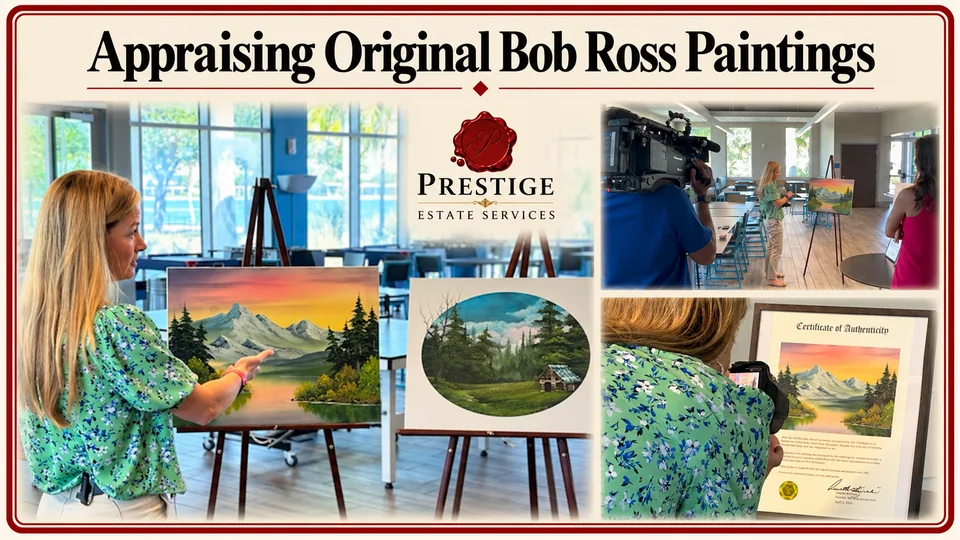
Appraising Original Bob Ross Paintings
Alicia Weaver’s appraisal experience spans everyday collectible art and high-end, highly valuable works. As Prestige Estate Services’ owner and Head of Appraisals, she occasionally donates her time to a story that captures her interest—and this feature was one she couldn’t pass up.
Alicia Weaver and the Prestige Estate Services team have appraised thousands of works of art, from individual pieces and Florida Highwaymen collections to private collections held by high-net-worth individuals. Their experience spans pencil drawings on paper, 19th-century oils on canvas, fine art prints, and modern and contemporary works, including pieces by Pablo Picasso, Salvador Dalí, Marc Chagall, Andy Warhol, and LeRoy Neiman.
For this Southwest Florida story, a man who owned two original Bob Ross paintings wanted to know whether they might be worth millions. Because Alicia shared his affection for Bob Ross and his “happy little trees,” she welcomed the chance to explore what the current market would support. Watch the video below for a heartwarming look at the paintings, their owner and the artist so many of us came to know and love.

What Is a Formal Art Appraisal?
A formal art appraisal is a researched opinion of value for a specific work or collection. The written report identifies the art, explains the value and shows the evidence behind it. Before research begins, we ask what decision the report needs to support.

Valuation Scope
First, we agree on the scope: which works are included and what work is needed. We also identify the intended users—the people the report is prepared for. The purpose, value date and required detail guide the inspection, research and report.
Independent Values
Our values follow the evidence. We study the artwork and relevant market information, then explain how those findings support the result. An owner’s hopes, a buyer’s offer or an advertised price can raise useful questions, but none sets the appraisal’s conclusion.
The effective date tells the reader when the appraised value applies. It can be today or an earlier date needed for an estate or another purpose. An appraisal for a past date uses evidence about the work and market at that time.
For example, a family may need to insure an inherited painting and also document its value for an estate. However, those requests can call for different value definitions and reports. Tell us both needs at intake so we can plan the work together.
Match the Value Basis to the Question
Fair market value asks what a willing buyer and willing seller would agree to, with relevant facts known and neither forced to act. Insurance replacement asks a different question: what would it cost to replace the work on the agreed basis? Neither figure automatically equals the seller’s proceeds after fees.
What Types of Artwork Can Be Appraised?
Art appraisals can cover one piece, selected works or a full collection. Paintings, prints, drawings, sculpture and fine art photographs each raise different questions. Send an initial list and sample images so we can review the materials, artists and research needs.

Paintings
Oil and acrylic paintings may be on canvas, wood panel or other surfaces. Watercolors, by contrast, are often on paper. The materials, size, subject, signature and condition help us identify the work and find useful market comparisons.
Prints and Drawings
Print and drawing appraisals consider the printing method, paper, marks and condition. For prints made in a stated edition, we also review the edition size and the work’s number or proof marks. A hand-drawn image and a printed copy require different research.
Sculpture
Sculpture may be cast, carved or built from bronze, stone, wood, glass or mixed materials. Casting details, foundry marks, size and condition can help distinguish one version from another. Tell us about heavy pieces or outdoor installations before arranging access.
Photo Collections
Fine art photographs may differ by print date, process, size, edition and condition. For example, a later print of an image may belong to a different market from an earlier print. We examine the actual print and its records, not only the image it shows.
A collection can contain works with very different markets, even when one artist made them. Accordingly, we plan item records and any grouping around those differences. Each entry also describes frames, mounts and related parts so the reader can see what its value includes.
For collections that include furniture, silver or decorative objects, our antique appraisal services can help address those belongings within a shared project plan.
Why Does the Purpose Change the Appraisal?
Art appraisals start with your next decision. Insurance, estate administration, a gift and division among owners can ask different questions about the same work. We confirm the value basis and date with you and review any written requirements from the report’s recipient.

In addition, collection management and legal disputes can require other types of work. If you question an existing report, appraisal review may address that document’s analysis. Explain the issue first so we can distinguish a new valuation from a review of prior work.
How Is Artwork Researched and Valued?
Art valuation brings together the work’s identity, condition, history and market. We first identify the subject of the appraisal, then look for useful evidence. However, a sale of a similar-looking image may involve different materials, a different print date, edition or state of repair.

Identify the Work
We examine signatures, labels, materials and other clues. An attribution is a statement about who made the work; its strength depends on the evidence. Therefore, a familiar name on a label or frame does not, by itself, establish the artist.
Record Its Condition
For example, fading, tears, surface wear and repairs may affect value. We document what can be observed and review available treatment records. If a hidden repair or fragile surface needs closer study, a conservator’s findings can help explain the condition.
Provenance and History
Provenance means the work’s ownership history. For example, receipts, gallery records, older photographs and exhibition records may help trace it. We check what each record supports and whether it belongs to the same work. Although a family story provides useful context, it needs supporting evidence.
Market Evidence
We compare relevant sales and other market evidence. Artist, materials, size, quality, condition, history and date can all affect the fit. For example, a small study on paper may not be a sound comparison for a large finished oil painting by the same artist.
Attribution and Further Research
Authentication and value are different questions, but reliable identification matters to the appraisal. We investigate the evidence for the stated artist and explain that basis in the report. Where relevant, research may include a catalogue raisonné—a scholarly record of an artist’s known works—or a recognized specialist’s opinion.
If an artist’s identity remains uncertain, we discuss what further evidence or specialist work may be needed. The report states the identification the evidence supports and explains important assumptions or limits. That keeps an uncertain claim from appearing as a settled fact.
Read Sale Results in Context
Auction figures need context. We therefore check whether a result includes the buyer’s premium—the auction house’s charge added to the winning bid. The sale date, currency, market and condition also matter. These details help avoid comparing prices that reflect different terms.
What Does an Art Appraisal Report Include?
Your formal art appraisal report arrives as a digital PDF. It links photographs and descriptions to researched values and the reasons behind them. Clear item references help you match each entry to the right painting, print or sculpture, including works that look alike.

Define the Engagement
First, we confirm the client, report users, purpose, value date and artwork. We then plan the inspection, research and report detail. Tell us about your deadline and any written instructions before we agree on the work.
Document the Artwork
We record identifying details, relevant condition and available labels or marks. We also use photographs to connect those details to the correct work. The report explains important information supplied by the client or another source.
Analyze the Evidence
We research the relevant market and assess useful comparisons. The report explains the evidence and differences that matter to the value. Its level of detail follows the purpose and reporting needs agreed at intake.
Write the Report
Finally, the PDF presents the values, reasoning, important assumptions and limits of the work. It also includes supporting sources, the appraiser’s relevant qualifications and signed certification as appropriate to the assignment.
The date of our visit, the date of the report and the value date may differ. Your report makes those dates clear. It also explains missing records, restricted views or other limits that affect the conclusions.
Internal Review and Help After Delivery
Before delivery, every formal report passes through our internal quality review. The ISA CAPP appraisal review department examines the research, conclusions and appropriate USPAP reporting. After delivery, your assigned appraiser can explain the findings and answer routine questions about the completed report.
If you later add works or need a different purpose or value date, contact us. We will discuss the added research, any separate report and the cost before proceeding. As a result, you can plan new work with a clear understanding of what is involved.
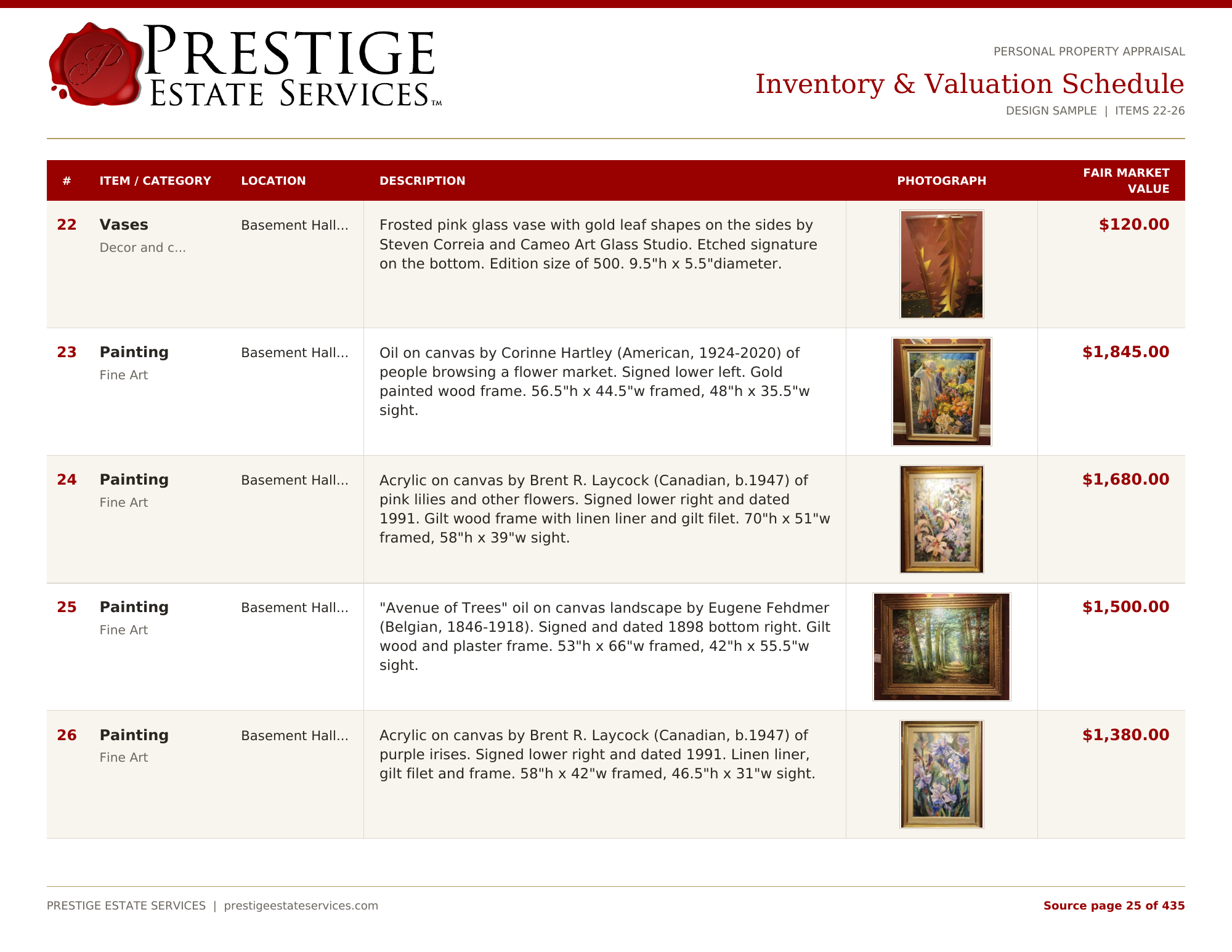
The example below shows an item schedule with photographs, descriptions and fair market values from a recent art appraisal. Your art report uses the value basis and date agreed for your purpose. The schedule is one part of the full report, alongside the research and explanations.
Formal Report or Informal Photo Estimate?
Formal art appraisals and informal photo opinions serve different needs. Start with what you plan to do with the answer. A written report for insurance, an estate or another formal purpose calls for research and reporting suited to that use.

Formal Remote Appraisals
A formal remote appraisal may be suitable when photographs and records provide enough detail about the work, its marks and condition. We also consider the report recipient’s requirements. Remote work still follows the agreed formal research and reporting process.
Photo Opinions
Our Online Photo Appraisal service offers a separate informal opinion from submitted information. It can help with initial curiosity about an item. The formal PDF report described on this page is a different service.
However, a clear front image may not reveal a covered label, a repair beneath glass or the back of a sculpture. We may need further images, records or an in-person inspection. Discuss remote suitability through intake; buying an informal photo opinion is not required for a formal project estimate.
How Should You Prepare for an Art Appraisal?
Start with a short list of the artworks and any records you already have. Clear images and the reason for the appraisal help us plan. You can begin the discussion with incomplete records; we will explain what else may be needed.

Keep the Work Safe
Photograph only what can be reached safely. Leave fragile work in place and avoid cleaning, repairing, opening frames or removing backing materials just for the appraisal. Tell us about loose surfaces, heavy frames and blocked access before the visit.
Discuss Fees and Timing
The number and types of works, research needs and access affect the fee. Organized records help us assess the project. Review the appraisal fee schedule and share any deadline when you contact us.
Photos and Records to Gather
- Give the purpose, property location, required value date, deadline and report recipients.
- List each work’s artist, materials, size and edition details, where known.
- Send clear front and back images, plus safe views of signatures, labels and condition.
- Include receipts, ownership records, earlier reports, exhibition details and treatment records.
- Use matching item numbers or filenames to connect each work with its photos and records.
For example, a collection of similar-looking prints may contain different editions and print dates. Good records help us sort those differences, but the number of works alone does not set the research time. A single work with uncertain history can need substantial study.
Arrange Access and Handling
You do not have to attend if an authorized person can provide access. Readily accessible works and organized records can reduce handling time. Let us know about packing and crating, since unpacking and repacking add time when the appraiser must do them.
Our appraisers cannot lift or move heavy or oversized objects. If a work is partly blocked, we assess whether the visible evidence is enough. As a result, more photographs, records or safe access may be needed; some works cannot be included on limited evidence.
Estimates and Changes to the Work
Our written estimate covers the time expected for the agreed project and its report. A detailed list, photographs and records help us assess that time. For a larger property, approximate floor area and the amount of art in each room or storage area can help.
If the project moves beyond the agreed scope, we pause the affected work and discuss the change with you. We obtain written client approval before continuing. This way, you can review the added work and its effect on cost.
Turnaround and Expedited Requests
Most formal projects take about two to four weeks after intake, depending on size and complexity. However, unclear artist records, many works or specialist research can affect timing. Share any planned move, filing or other hard deadline at the start.
Tell us if you need an expedited report. We review appraiser availability and current projects before committing to a date. An expedited deadline requires written approval from Prestige Estate Services. Early notice gives us more opportunity to assess your schedule.
Practical questions
Art Appraisal Questions
Artwork and Appraisal Options
Can You Appraise a Single Artwork?
Yes. Art appraisals may cover one painting, print, sculpture or fine art photograph. We plan the research and report around that work and your purpose. A single unfamiliar piece can require more study than its size suggests.
Do You Authenticate Artwork?
We investigate the work’s identity and explain the evidence for its attribution. However, authentication is a separate question from value. When more evidence, testing or a recognized specialist’s opinion is needed, we discuss that work and how it affects the appraisal.
Can Photos Support a Formal Appraisal?
Yes, when the photographs and records provide enough evidence and suit the report recipient’s needs. However, covered areas, uncertain repairs or unclear markings can call for more information or an inspection. We assess the right approach during intake.
What If the Artist Is Unknown?
An unknown artist does not end the discussion. The materials, period, subject, condition and available records may still support research. In the report, we use the identification that the evidence supports and explain any uncertainty that matters to the value.
Values, Records and Service Scope
Are Frames Valued Separately?
It depends on the frame and the purpose. A frame may be part of the artwork entry or may need separate research. For example, a historic carved frame can raise different questions from a recent standard frame. The report explains what the value includes.
Can an Older Appraisal Be Reused?
An older report can provide useful photographs and records. We review its purpose, date, identification and condition details before planning new work. However, a later repair, new artist evidence or a different report use may call for fresh research.
Does a High Asking Price Establish Value?
An asking price shows what a seller hopes to receive. We compare it with other relevant evidence and consider the sale terms. Therefore, one advertised figure does not establish value or show what a seller would keep after costs.
Does This Service Include Real Estate?
No. This service covers artwork and other agreed tangible personal property. We do not provide real estate appraisals. Tell us about paintings, prints, sculpture or related objects within the home, collection or estate.
Choosing the right appraisal service
Finding Art Appraisal Services Near Me
Searching for art appraisers near me is most useful when the firm’s expertise fits the actual works. Location helps plan access, but the artist, materials and report purpose also matter. A useful proposal explains the research, evidence and deliverable.
Match Experience to the Art
An owner should confirm experience with the relevant artists, types of art and markets. For example, a group of prints can require different evidence from a large bronze or an artist’s estate. Sample photographs help a firm assess the needed expertise before scheduling.
Clarify the Decision and Date
A proposal should name the report’s purpose, value date and expected users. Insurance documentation, an estate value and a donation are separate needs. Written recipient requirements help the firm plan a report that addresses the right question.
Plan the Examination
The plan should explain inspection access, records, any specialist needs and how costs will be estimated. Owners can compare what each proposal includes, from research through report delivery. Clear terms also explain what happens if new work is needed.
Start with a scope discussion
Discuss Your Artwork and Appraisal Needs
Tell us about the art, where it is located and why you need values. Share a few photographs, any known artist or history, and your deadline. We will then review the request with you and discuss the research, access and report that fit your next step.
Nationwide personal property appraisal support
Find a Personal Property Appraiser by Location
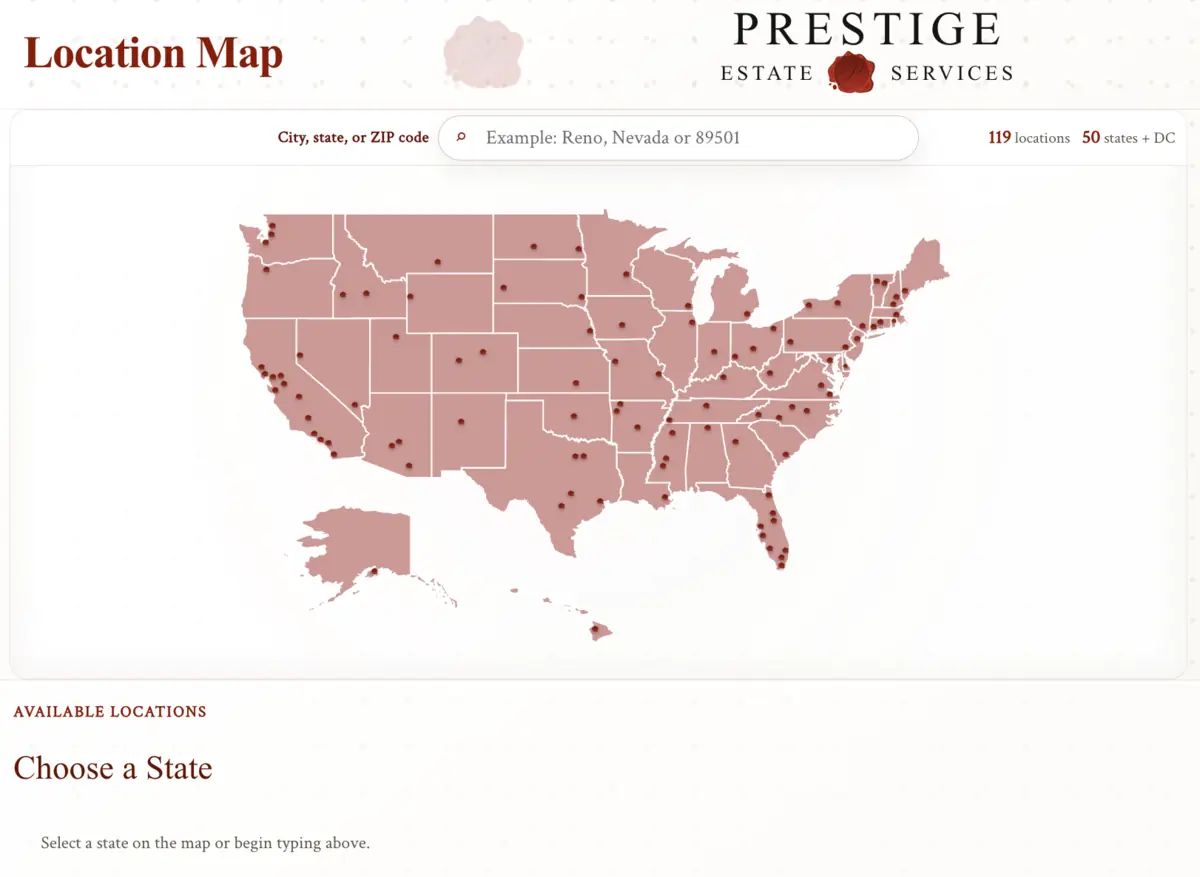
Prestige provides personal property appraisals nationwide. Explore our appraisal locations to plan access to your artwork. We can also discuss formal remote work when the evidence supports it. Our broader personal property appraisal services cover other belongings within a mixed collection.