Federal, state and local agency support
Government Property Appraisals for Equipment, Art and Collections
Government property appraisals help public agencies make informed decisions about personal property such as equipment, art, furnishings and collections. Prestige Estate Services researches values for property an agency owns or holds, including seized assets and surplus items. We start with your decision, the property and the date the values must reflect. You receive a written report that connects the assets to the research and explains the findings.
Our in-house appraisers prepare your report, and our ISA CAPP appraisal review department checks it before delivery. Your assigned appraiser supports you throughout the project and answers routine questions after delivery.
Meet Prestige Estate Services
We do not provide real estate appraisals.
The people behind the appraisal
Meet Our Personal Property Appraisers
You may need values for a few objects or a warehouse full of equipment. Our government property appraisers help define the scope: the items and work included in the project. Your assigned appraiser is your main contact, with support from our Head of Appraisals and office staff.

All Prestige Estate Services appraisers are in-house W-2 employees. We do not use contract appraisers as members of our appraisal staff.
Standards Behind the Work
The Uniform Standards of Professional Appraisal Practice (USPAP) guide appraisal development and reporting. We apply those standards to the property, evidence and report purpose agreed with the agency.
When Does an Agency Need an Appraisal?
Government property appraisals explain what assets are worth when an item list or receipt does not answer your question. You may need values for goods held during a case, surplus equipment or a public collection. We agree on the items and work needed before research begins.

Seized Asset Values
Seized asset appraisals help assess property held during a case. Seizure does not by itself establish that the government owns the assets; forfeiture is a separate legal process. Your agency confirms the legal status, who may inspect the items and how the report will be used.
Surplus and Collections
Surplus equipment valuation can help you plan what to do with assets you no longer need. For example, a public works team replacing its tools may need values for the old ones. A collection kept for public use may instead need values for insurance or long-term planning.
For federal context, the Department of Justice explains types of federal forfeiture. GSA’s personal property policy addresses federal asset management and disposal. State and local agencies should supply the rules that apply to their own project.
What Personal Property Can Be Included?
Government personal property appraisals can cover a few objects, one type of asset or items at several sites. Send a rough count of each group at intake. We review the skills, records and site visits needed, then explain how to plan the work.

Equipment and Tools
For office furnishings, electronics, tools and machinery, model details and condition often matter more than age alone. Our furniture, fixtures and equipment appraisal service covers that property focus. A list of working items, missing parts and known faults helps us plan the inspection.
Tell us about jewelry, watches, collectible vehicles or other unusual assets at the start. We review the skills needed and identify any specialist work before agreeing to the project. This service values physical items. A business or its financial rights would need a different type of appraisal.
Which Value Does the Agency Need?
The type of value must fit the decision ahead. Government property appraisals for a planned sale can ask a different question from a report for insurance. Share any written instructions so we can define the value and choose relevant market evidence.

The effective date tells readers when the values apply. It may differ from the inspection date and the date we issue the report. For example, a current inspection of stored equipment may need earlier condition records if the agency asks for values as of a prior date.
What Will the Written Report Explain?
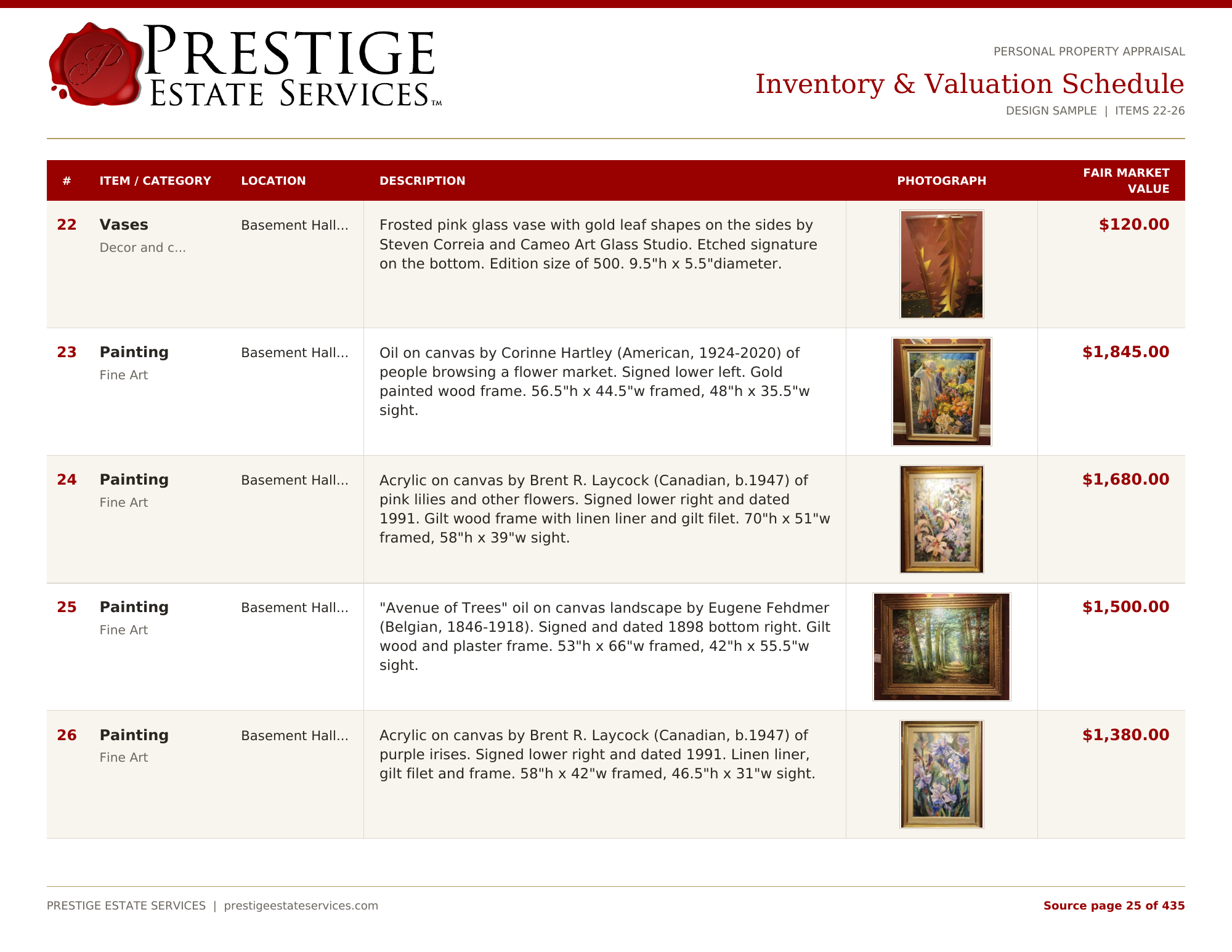
You receive a digital PDF that explains the items, appraised values and research behind the findings. We agree on the format, schedules and report users during intake. Item numbers and your own inventory codes help readers match the report to their records.

An inventory records what is present. An appraisal adds a supported opinion of value. The sample below links photographs and descriptions to fair market values. It shows one part of a report. Your agency’s schedules and type of value will follow the agreed purpose.
Review and Questions After Delivery
Our ISA CAPP appraisal review department checks each formal report and its supporting work before delivery. This review covers the research, conclusions and appropriate USPAP reporting. Routine questions about the completed report are included; your appraiser can explain the findings and how to read them.
If another department later needs the values for a different purpose, contact us about that use. Further research or a separate report may be needed. We discuss the added work and cost before proceeding.
How Does the Appraisal Process Work?
Start with the decision, the assets and any required report details. We then agree on the work and access plan. Your appraiser records the items, studies the market and writes the report, keeping you informed as questions arise.

Define the Request
Name the main contact, intended users, value date and deadline. Share the report format and any procurement or purchase-order steps needed to start the project.
Confirm Site Access
Review asset lists and photographs with us. We discuss the sites, escorts and handling rules, then decide what site visits or further records the work needs.
Record the Assets
The appraiser records the agreed items, counts, marks and condition. We flag gaps between the list and the items at the site so you can help resolve them.
Study Market Evidence
We study sales and other market evidence for each asset group. Condition, missing parts, sale terms and the value date help us assess which comparisons fit.
Develop the Report
Your appraiser explains the values and the reasons behind them. We prepare the agreed schedules and exhibits, then complete our internal review before sending the report.
Explain the Findings
We deliver the PDF to the agreed recipient. Ask your appraiser about the findings or any entries you need help matching to agency records.
A formal remote appraisal may fit when photos and records show the identity, dimensions, markings and condition of the assets. Discuss this option through our intake process. The informal Online Photo Appraisal is a separate product; it does not provide the formal report described on this page.
What Should the Agency Send First?
Start with the asset types, rough counts, sites and deadline. A current inventory and a few clear photographs help us estimate the work. For detailed or sensitive records, use the sharing process agreed with your agency.

- Agency name, main contact and people who will use the report.
- The decision the appraisal supports and any written reporting instructions.
- The value date, report deadline and key procurement dates.
- Asset lists, photographs, prior reports and condition or maintenance records.
- Site access, escort, handling and information-sharing requirements.
Arrange access through authorized staff; the main contact need not attend every visit. Tell us about sealed containers, restricted areas and machines that need an operator. Staff should plan any permitted opening, moving or use of these items before we arrive. Our appraisers cannot lift or move heavy or oversized items.
Make the Items Easier to Inspect
Accessible property can reduce billable handling time. When an appraiser must unpack, unwrap and repack objects, that work adds time to the project. Arrange safe access through agency staff rather than moving fragile or heavy objects solely to prepare for the visit.
For example, a pallet may block the maker’s plate on a stored machine. Staff may need to arrange safe access or provide clear records and photographs. The appraiser decides whether that evidence is enough and explains any relevant assumptions or limits.
What Affects Timing and Appraisal Fees?
Government property appraisal fees reflect the time needed for the full project. The items, records, travel and access all matter. A small group of rare objects can need more research than many similar tools with clear model and condition records.

Our written estimate covers the time expected for the agreed site work, research and report. The published appraisal fee schedule explains our billing terms. For a large storage area, tell us its size and how much it holds. Photos and item lists also help.
If the project moves beyond the agreed scope, we pause the affected work and discuss the change with you. We obtain written client approval before that work resumes. You can then assess the added items, research or report needs and the effect on cost.
Timing and Expedited Requests
Most formal projects take about two to four weeks after intake, depending on size, complexity and the work required. Share hard deadlines early, including any procurement or access dates that affect the schedule. Expedited work depends on appraiser availability and current projects. An expedited deadline requires written approval from Prestige Estate Services.
Practical questions
Government Appraisal Questions
Can Property Be Appraised Before Forfeiture?
Yes. An agency can request an appraisal before a final forfeiture decision. Its authorized staff must confirm access and permitted report use. Seized asset appraisals address value under the agreed terms; agency counsel handles legal status and ownership.
Does Purchase Price Establish Current Value?
A receipt shows what someone paid at an earlier time. Current value also depends on the market, condition and the required value date. Purchase cost and book value can help explain an asset’s history, but neither replaces the appraiser’s research.
What If Some Assets Cannot Be Inspected?
Tell us which items we cannot reach and what records you have. We may need better photographs, a later visit or a shorter property list. Assumptions must have a sound basis. If key evidence is missing, the item may need to stay outside the report.
Does an Appraisal Prove Who Owns the Property?
No. A value opinion does not establish title or settle an ownership dispute. Agency counsel handles those questions. Past records or a specialist’s findings may help identify an object, but the appraisal’s purpose remains the value question.
Can Another Party Rely on the Report?
The report identifies its intended users and purpose. Sharing a copy does not by itself make a buyer or another agency an intended user. Tell us about a new use so we can discuss any added research or separate report.
Do You Appraise Government Land or Buildings?
We appraise movable personal property, such as art, equipment and furnishings. We do not provide real estate appraisals. If your project includes buildings and their contents, identify the personal property that needs values.
Choosing the right appraisal service
Searching for “government property appraisers near me”?
An agency choosing government property appraisers should look at the assets, the skills needed and the planned report. Local access matters, along with a clear plan to inspect and record the items. These questions help staff compare providers.
Match Expertise to Agency Assets
The agency should describe each asset group and ask who will handle the work. Tools, fine art and jewelry can need different research. The proposed team should explain any specialist role before staff agree to the project.
Confirm the Reporting Requirements
The agency should supply its report instructions and explain the decision ahead. A provider should identify the value basis, date and intended users. Those details help the agency compare proposals for the same work.
Check Access and Engagement Details
Before booking, staff should confirm site access, escort needs and the planned report. The estimate should cover the full project and explain how to approve changes. Clear procurement and delivery steps help both sides plan the work.
Start with a scope discussion
Discuss Your Agency’s Appraisal Needs
Send the asset types, sites, rough counts and the decision your agency needs to make. Include a few photos, report instructions and your deadline. We will review the details with you, explain the proposed work and help you plan the next steps.
Nationwide personal property appraisal support
Find a Personal Property Appraiser by Location
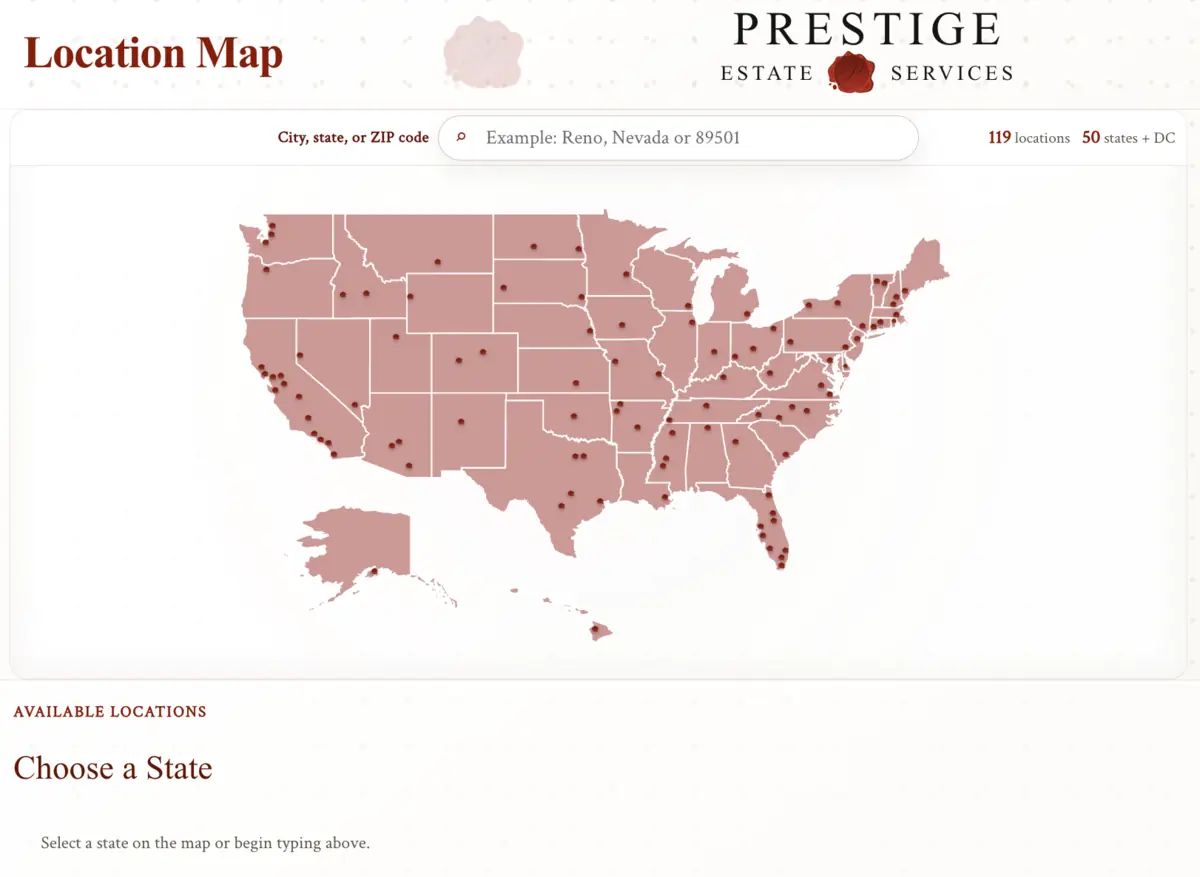
Prestige Estate Services provides government personal property appraisals nationwide. Explore our locations, then contact our team about the assets and sites involved. We can discuss access, site visits and whether a remote approach fits the work.