Probate Appraisals for Personal Property
Probate appraisals give executors, families and attorneys researched values for an estate’s art, antiques, furniture and collections. Our probate appraisers prepare digital PDF reports that support estate inventories and settlement, whether the work covers selected belongings or a home’s contents.
Work directly with our in-house team, with every formal report checked by our ISA CAPP appraisal review department. Support continues after delivery for routine questions about the findings.
Meet Prestige Estate Services
We do not provide real estate appraisals.
Our Appraisers. Our Standards. Our Name on Every Report.
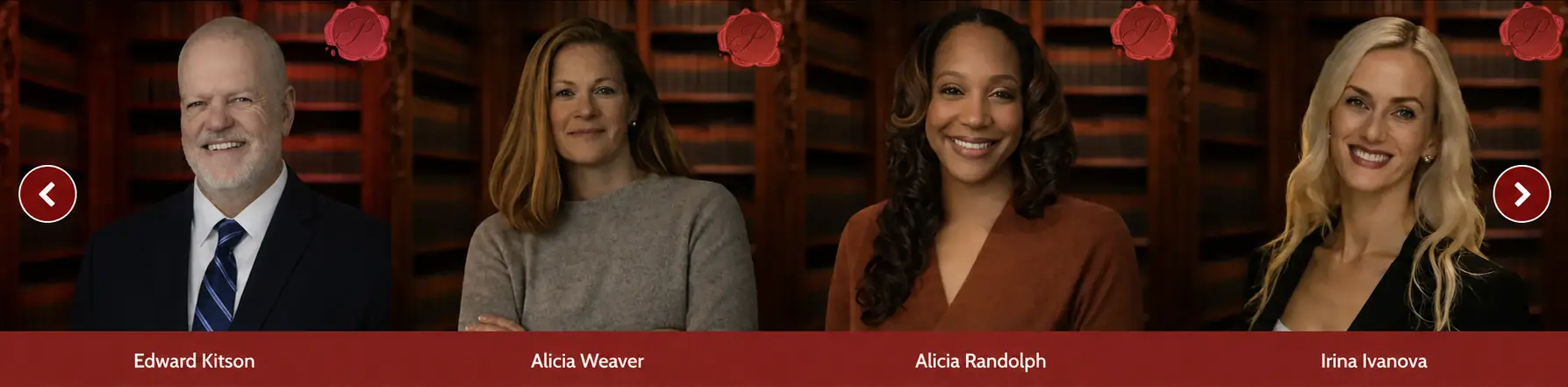
All Prestige Estate Services appraisers are in-house W-2 employees. We do not use contract appraisers as members of our appraisal staff. Each appraiser works directly for Prestige Estate Services and is IRS-qualified and USPAP-compliant.
Your assigned appraiser leads the appraisal work, with support from our Head of Appraisals and office staff. When an object needs specialist knowledge, an outside specialist may help with a defined part of the project. Prestige remains responsible for the work, its review and the final report.
Meet our personal property appraisers to learn about the backgrounds and specialties within our firm.
What Does a Probate Appraisal Help You Do?
A probate appraisal gives the estate a documented basis for the values assigned to its belongings. The report connects the property to descriptions, relevant research and the appraiser’s conclusions, so you can explain where the figures came from.

That record can support an estate inventory and help the people handling the estate match values to specific objects. It may also help heirs discuss which belongings they want to keep. The appraisal supplies values. Your attorney can guide the estate’s decisions about ownership and distribution.
Start with the estate’s actual requirements
Ask the attorney handling the estate what property needs a value, which date to use and what filing format applies. Share those instructions during intake. They help us decide whether you need a full contents appraisal, selected items or a more limited inventory.
An item list and an appraisal answer different questions. The list records what is present; the appraisal develops supported opinions of value. You may need both, but a room-by-room list alone does not explain what the listed belongings are worth.
What Personal Property Can Be Included?
The work can cover a home’s contents, a collection or selected pieces. We review the types of property before planning the inspection and research, including belongings kept outside the main residence.

Art, antiques and furnishings
Paintings and sculpture, antiques, rugs and furniture may all be part of the estate. Labels, signatures, materials and condition can guide the research. For example, a maker’s label on a cabinet may help distinguish it from a later piece made in a similar style.
Silver, jewelry and collections
Watches, silver, jewelry, books, instruments and memorabilia can call for different expertise. A collection’s size alone does not show the work involved. Clear photos of sample pieces, marks and earlier records help us assess how to approach it.
Everyday household belongings
Ordinary contents may be grouped by room or type when that approach suits the report. An unusual piece may need its own description and research. We discuss the level of detail so the inventory remains useful without treating every household object as a separate research project.
Flag items that may belong to someone else, including loans or belongings stored for relatives. Your attorney can resolve ownership questions while we confirm which property to include.
Probate, Estate Tax or an Inventory: Which Do You Need?
The same belongings can be involved in several estate tasks. Explain who needs the information and how they plan to use it before the work begins.
| Estate need | What to discuss with Prestige |
|---|---|
| Probate appraisal | Values and descriptions of estate belongings for the estate’s agreed reporting needs. |
| Date-of-death appraisal | Values as of the person’s death, which may form part of a probate or tax assignment. |
| Estate tax appraisal | Personal property reporting for the estate’s tax needs, discussed with its tax adviser. |
| Estate inventory and valuation | A record of the belongings, with valuation work defined around the reason the record is needed. |
If you need more than one use, involve the attorney and tax adviser early. We can assess whether the dates, people using the report and reporting needs fit within one project. This helps bring any extra needs to light before we complete the report.
Why Do the Date and Type of Value Matter?
The effective date is the date the appraised values apply to. It may be the date of death even when the inspection takes place months later. Tell us which date the estate requires when you begin intake.

A later visit shows the belongings as they exist now. Earlier photos, repair records and other documents can help show their condition on the required date. Let us know if an object has been repaired, damaged or moved since then.
Use the right value for the task
Fair market value considers a willing buyer and seller who know the relevant facts and are not forced to act. Insurance replacement value addresses a different question: the cost to replace property under the stated terms. An old insurance schedule may help identify an object, but its figures should not simply become the probate values.
Your report states the value definition used and explains the basis for the opinions. It also distinguishes market value from a belonging’s meaning to the family. An heirloom with a modest market value can still be the object an heir most wants to keep.
How Does the Probate Appraisal Work?
We define the work, document the belongings, research the market and prepare the report. From intake through report writing, your assigned appraiser is the main contact for appraisal questions, supported by our Head of Appraisals and office staff.

Agree on the work and access
Intake establishes the scope, meaning the work included in the project. We discuss the property, required date, deadline and intended users—the people the report is prepared for. We also confirm who can provide access and which records are available.
Inspect, document and research
The appraiser records photographs, condition and identifying details within the agreed scope. During research, those observations help identify relevant market evidence. If a label is unclear or an earlier repair needs context, the appraiser can explain what further records would help.
You do not have to attend the inspection, but someone must arrange access to the belongings. Tell us if the estate contact lives elsewhere so we can plan with the person who holds the keys.
Allow time for research and report preparation
Most formal projects take approximately two to four weeks after intake, depending on size, scope and complexity. The time needed on site also varies. Research, report writing and internal review continue beyond the inspection itself.
Tell us about a filing date or other firm deadline at the outset. Expedited work is often possible, depending on the appraiser’s availability and existing projects. Prestige must approve an expedited deadline in writing before it becomes a commitment.
What Should You Gather Before You Call?
Start with a brief description and clear photos. You do not need an expert opinion about every piece, but a fuller picture of the contents helps us plan the work and prepare a useful estimate.

- List the locations, including other homes and storage units, and describe how much property each contains.
- Share any existing inventory, prior appraisal, purchase record or document connected to a particular object.
- Photograph whole objects, identifying marks and visible damage; include room views for a larger project.
- Provide the estate’s deadline, attorney instructions and contact details for the person providing access.
Make the belongings accessible
Easy access to the contents reduces time spent handling boxes and wrapping. If the appraiser needs to unpack, unwrap, document and repack belongings, those steps add time to the project. Discuss access and preparation before the visit, especially for fragile collections.
Appraisers cannot lift or move heavy or oversized items. Tell us about blocked shelves, crowded storage or objects that are difficult to reach. We can then discuss what access or supporting records the inspection needs.
Hypothetical Example: A painting sits behind heavy furniture in a storage unit. The appraiser assesses what the available view and records can support. More photos or access may be needed; limited evidence may prevent including the painting. Any relevant assumptions and inspection limits belong in the report.
What Will Your Written Report Include?
You receive a digital PDF report with the appraised values and the reasons for them. Photos and descriptions link the findings to the belongings. The research explains how the appraiser reached the conclusions.

A record the estate can work with
The report identifies its purpose, the people it is prepared for, the valuation date and the work included. It explains the value definition and approaches used, along with relevant assumptions and limits. Supporting material includes market research, sources, appraiser qualifications or CV, and the applicable certification statement and signatures. Share any request from the estate’s attorney for a particular schedule or attachment during intake.
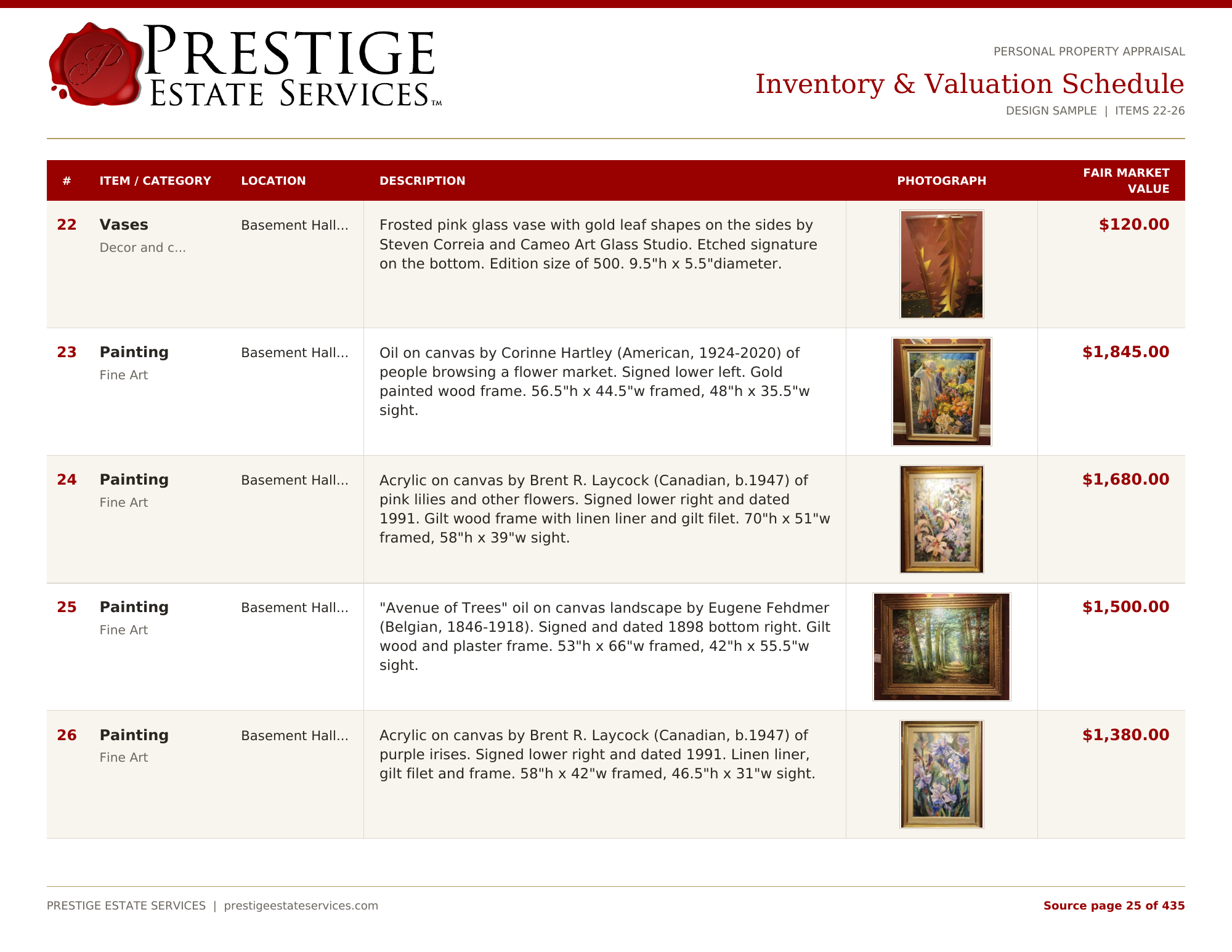
The details reflect the agreed assignment. Some contents may appear in groups, while significant objects may need individual entries. The hypothetical sample below illustrates an item schedule with photographs, descriptions and fair market values; that schedule is one part of a complete report.
Internal review before delivery
Every formal appraisal report goes through Prestige’s internal quality assurance and quality control process before delivery. Appraisers in our review department hold the ISA CAPP designation. They examine the report and its supporting work for quality and appropriate USPAP reporting.
Prestige develops its appraisals in accordance with the Uniform Standards of Professional Appraisal Practice (USPAP). These standards address ethics and the development and reporting of appraisal opinions. Our review process focuses on supported conclusions and clear reporting for the agreed purpose.
Support continues after the PDF arrives
Routine questions about the delivered report are included. Your assigned appraiser can help explain the findings as you work through the document.
If you later want to insure selected inherited pieces, discuss that new purpose with us. A separate report may be appropriate. We will explain the extra work and relevant fees before proceeding, so you can decide what you need.
What Affects the Probate Appraisal Fee?
The fee reflects the belongings, inspection, research and report the estate needs. You can obtain a written project estimate through our intake process. It explains the time expected to complete the agreed work and the appropriate report.

A detailed intake form, photos and supporting records help us estimate that work. For a larger estate, tell us the property’s approximate square footage and how full the rooms and storage areas are. Floor area alone does not show the amount or complexity of the contents.
Know what the estimate covers
A compact collection with varied makers and limited records may need more research than a larger group of familiar household items. Access and handling also affect the time involved. Review our personal property appraisal fee schedule alongside the proposed scope to understand the billing approach.
Share a project budget or court-imposed cost limit before authorizing work. Complete information helps us prepare a useful estimate, while newly discovered items or records can change the work required.
Approve changes before work resumes
If a project appears to move beyond its original scope, Prestige pauses the work and discusses the change with you. We obtain written client approval before proceeding with the changed work. That gives you an active role in decisions that affect the project’s cost.
Can a Probate Appraisal Be Completed from Photos?
A formal remote appraisal may be suitable when photos and records provide enough evidence for the work. We assess that option through intake, considering the belongings, their condition and the report the estate needs.

Useful images show dimensions, identifying marks and condition as well as the complete object. A front view of a silver coffee pot may leave questions that photos of its base, hallmarks and damage can answer. The appraiser may ask for more views or records before deciding how to proceed.
Choose the service that matches the purpose
Our Online Photo Appraisal provides a separate, informal opinion about an item. It serves a different purpose from a formal probate report. You do not need to purchase it to discuss a formal project or obtain an estimate through intake.
If an attorney or another intended recipient has inspection or record requirements, share them with us. Those instructions help determine whether remote work fits the project or an on-site inspection is needed.
More Questions About Probate Personal Property Appraisals
What if the belongings have already been moved or distributed?
Send any item lists, dated photos and transfer records, and explain where the property is now. The appraiser will assess whether those records and any remaining access provide enough evidence. Keeping each object’s records together helps connect earlier photos to its current location.
Does every object need a separate appraised value?
No. The level of detail depends on the estate’s needs and the agreed work. Some ordinary contents can be grouped, while particular objects may need separate entries. Tell us whether your attorney needs a full contents record, values for selected pieces or both.
Can an old insurance appraisal help?
Yes. It may contain photos, descriptions and ownership records useful to the new research. Its date and value basis may differ from those needed for probate. Share the entire document so the appraiser can assess what remains relevant.
What if we find more belongings after the project begins?
Contact your appraiser with photos and a description of the new property. We will assess how it affects the agreed work. If it adds to the scope, Prestige pauses and discusses the change, then obtains your written approval before proceeding.
Searching for “probate personal property appraisers near me”?
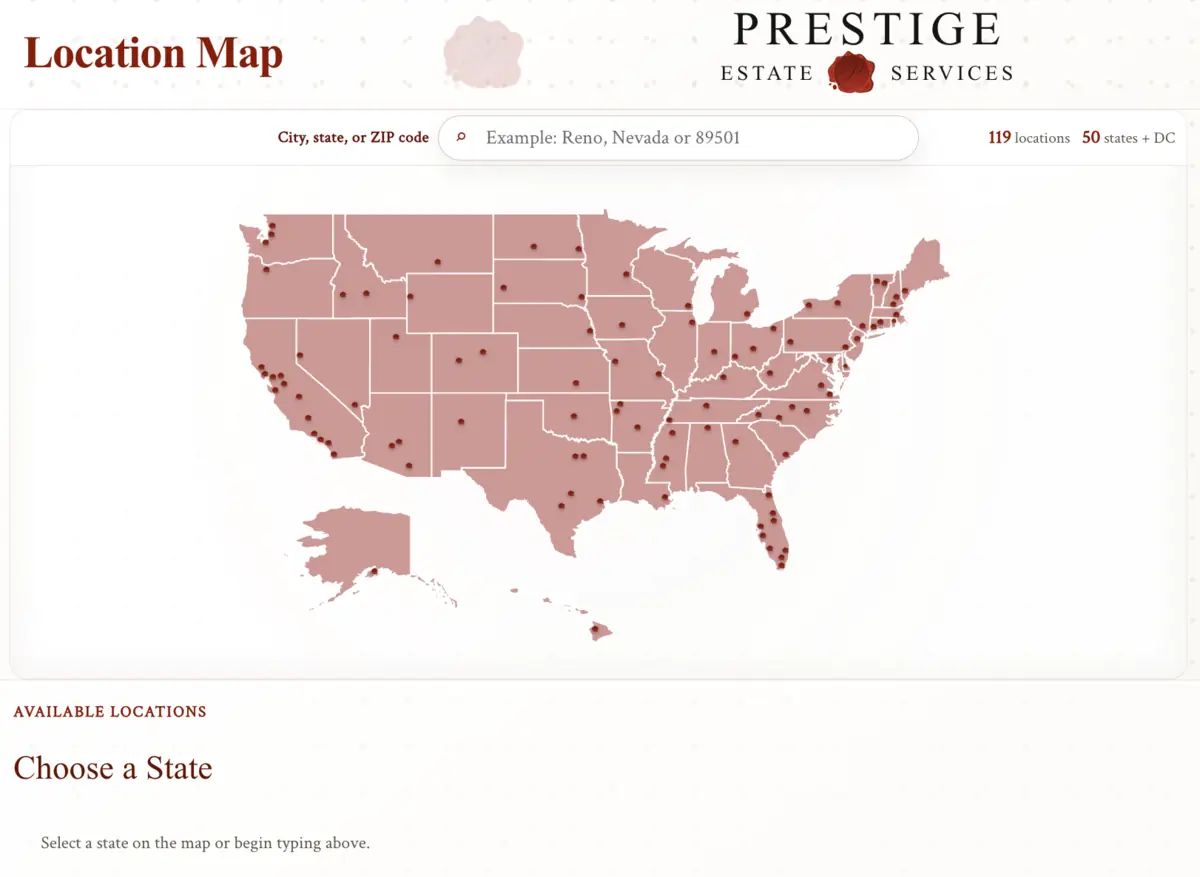
The location of the belongings and the type of report help define the search. Prestige coordinates personal property appraisal work nationwide, including projects managed by an executor who lives in another state.
An executor managing the estate from elsewhere
An executor can name a local contact for access and explain whether belongings are packed or scheduled to move. The assigned appraiser answers appraisal questions while the office helps coordinate the project.
An attorney comparing appraisal proposals
Attorneys can compare the property covered, inspection method, research and written deliverable. A lower estimate may reflect a narrower project. Clear scope and communication about changes make the proposals easier to assess.
A family with belongings in several locations
A family can provide a list of locations, including property outside the main residence. Paintings with relatives and furnishings in storage may need separate plans for access. The firm uses that information to plan work across the belongings included.
Let’s Make the Next Step Clear
Tell us where the belongings are, what they include and when you need the report. Share any instructions from the estate’s attorney. Our firm will explain the proposed work, discuss your timeline and help you begin intake.
Find a Personal Property Appraiser by Location
Explore our nationwide personal property appraisal locations for regional information. If you are unsure which area to select, contact us with the belongings’ city and state.