Estate Tax Appraisals for Personal Property and Form 706
Meet Prestige Estate Services
Estate tax appraisals show what personal belongings were worth on the date needed for tax reporting. Prestige Estate Services helps executors, trustees, attorneys and CPAs document art, antiques, furnishings and collections for Form 706 and federal estate tax reporting.
Our IRS-qualified estate tax appraisers use records and market research to explain the values in a written report. You receive a digital PDF, review by our firm and support throughout the project. We do not provide real estate appraisals.
Estate Tax Appraisers Supported by an In-House Firm
All Prestige Estate Services appraisers are in-house W-2 employees. We do not use contract appraisers as members of our appraisal staff. Each appraiser works directly for Prestige Estate Services and is IRS-qualified and USPAP-compliant.
Your assigned appraiser leads the work and answers questions about the values. Our Head of Appraisals and office staff also help from intake through delivery and follow-up. When an object needs outside expertise, Prestige may bring in a specialist for that part of the work. Our firm remains in charge of the project and final report.
When choosing IRS-qualified estate tax appraisers, look at their knowledge of the types of objects you own. Meet our appraisers to learn about the people and experience behind our work.
How Do Estate Tax Appraisals Support Form 706?
An appraisal gives your tax preparer personal property values and the reasons behind them. Form 706 is the federal estate tax return. Your attorney or CPA decides whether the estate must file, which tax choices apply and which assets to report.
Because filing needs depend on the estate, start with the adviser’s request. Our work focuses on the belongings and the value evidence needed for the agreed tax purpose. Tell us who is preparing the return so we can clarify any specific report needs at the outset.
Household goods and personal effects may appear on Schedule F, which covers property not reported elsewhere on the return. However, who owns the property and other facts can affect the proper schedule. Your preparer makes that choice. Clear item references help connect the appraisal to the estate’s records, wherever the return reports them.
An object found in the home may belong to a surviving spouse, a trust or someone else. For that reason, the inventory should distinguish the objects from the ownership information supplied. Your adviser resolves legal ownership and the interest to include in the return.
Which Personal Property Belongs in the Appraisal?
Estate tax appraisals can address a few important objects or the contents of several properties. We first review what the estate holds and list the belongings covered by the work. This agreed work is the scope.

Art, Antiques and Collections
Fine art, antiques, silver, jewelry and collections may need detailed descriptions and their own research. An artist’s signature, maker’s mark or old receipt can help establish what an object is. Its condition and past history also help us assess value.
Furnishings and Everyday Contents
Furniture, rugs, tableware and other household belongings need a useful record too. Some items may be described and valued as suitable groups. Unique or valuable objects should still be easy to find in the report, instead of lost within a broad contents total.
Tell us about items in storage, loans to others and property held at another residence. Your estate adviser can resolve who owns them before we agree to include them.
The Right Value for the Right Date
Estate tax appraisals use fair market value. Under the IRS fair market value definition, this is a price agreed by a willing buyer and seller, neither under pressure, with both knowing the relevant facts. A receipt or insurance value may offer useful background. However, the price once paid or cost to replace an object is not the same as its estate tax value.

The effective date means the date the value applies to. This is often the date of death, even when we inspect the items later. Research must therefore address the market and the object’s condition on that earlier date.
An alternate valuation election is a tax choice with specific rules on when and how it applies. It does not simply let the estate select whichever date produces the lowest value for each object. Your tax adviser confirms the required date or dates under the IRS Instructions for Form 706.
Hypothetical example: A painting restored after the owner’s death may differ from its earlier condition. Photographs from each period help show what changed, so the research reflects the item as it was on the required date.
Keep the Property and Its Records Connected
For estate tax appraisals, it helps to gather records before belongings move. Preserve room photographs, item lists, receipts, earlier appraisals and records of repairs. Together, they help show which objects the estate held and what they were like on the required date.

Keep existing item numbers attached to the records when possible. If a painting moves from the home to storage, note the new location against the same entry. This helps your preparer follow the property without treating it as a new asset.
If items have already been sold or distributed, share dated photographs and sale or transfer records. The appraiser will assess whether those records support the work. A later sale can be useful evidence, but we still need to consider when it occurred, its terms and the market.
Arrange Access Before the Visit
You need not be present if someone can arrange access. Items that are easy to reach take less time to inspect. Unpacking, unwrapping and then repacking items adds time when the appraiser needs to handle those tasks. Avoid cleaning or restoring an item merely to prepare for the visit; ask about any handling concerns first.
Appraisers cannot lift or move heavy or oversized objects. If an item is hard to reach, we may need more photographs, records or better access. The report explains any relevant limits or assumptions. Some items may need to remain outside the work until there is enough evidence to assess them.
Estate Tax Appraisals from Intake to Delivery
We plan the appraisal around your estate’s reporting needs, then move through inspection, research and report review. Each stage builds on the records and access agreed during intake.

Define the Assignment
During intake, we confirm the estate contact, tax purpose, property sites and required dates. We also identify the intended users: the people the report is prepared for. Sharing your adviser’s request at this stage helps us plan the visit and report.
Inspect and Research the Property
The appraiser records key details, photographs and condition, then studies market evidence. Sales used for comparison must relate to the actual objects. Differences in maker, age, quality or condition may reduce the usefulness of a sale as a comparison.
An asking price alone does not show what a buyer paid. We assess the evidence behind the price, the market in which it arose and its relevance to the required date. The report then explains how that research supports the appraised values.
Plan Around the Reporting Deadline
Most projects take about two to four weeks after intake, depending on the size and type of work. On-site intake time also varies. Tell us early if the estate has a hard deadline so we can assess the schedule.
Expedited work is often possible, based on the appraiser’s schedule and other projects. Prestige must approve an expedited deadline in writing before it becomes a commitment. Your appraiser stays in touch as research, report writing and review move forward.
What Your Estate Tax Appraisal Report Explains
Estate tax appraisals should give the reader a clear path from the property to the value. Your digital PDF states the agreed tax purpose, intended users, effective date and work performed. Photographs and item details link the findings to the belongings.
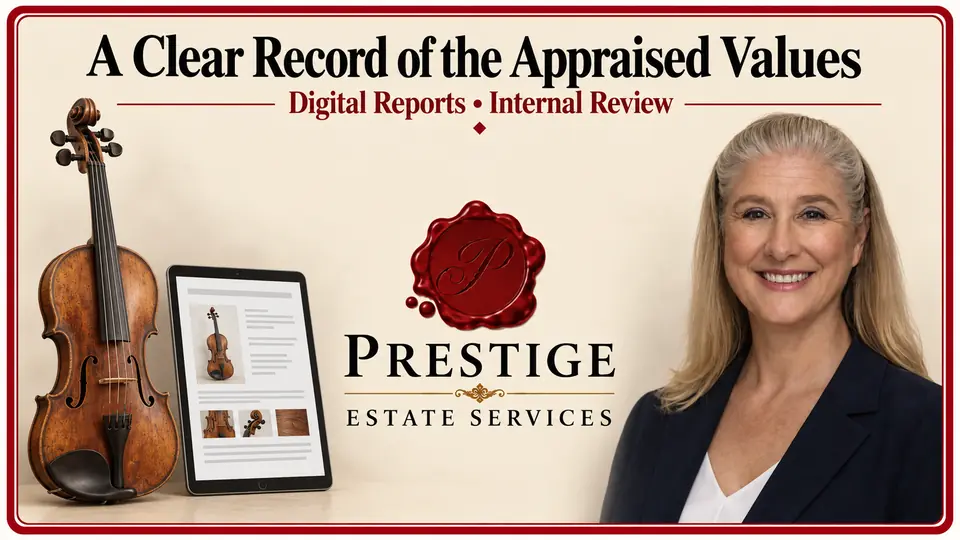
The report explains what the value means and how research and appraisal methods support it. It also sets out relevant assumptions and limits, sources and the appraiser’s qualifications. The appraiser’s certification and required signatures form part of the completed report.
Internal Review Before Delivery
Every formal report passes through our internal quality assurance and quality control process. The review department consists of appraisers holding the ISA CAPP designation. They scrutinize the research, reasoning and report before delivery. The Uniform Standards of Professional Appraisal Practice (USPAP) address ethics and appraisal performance, including personal property work.
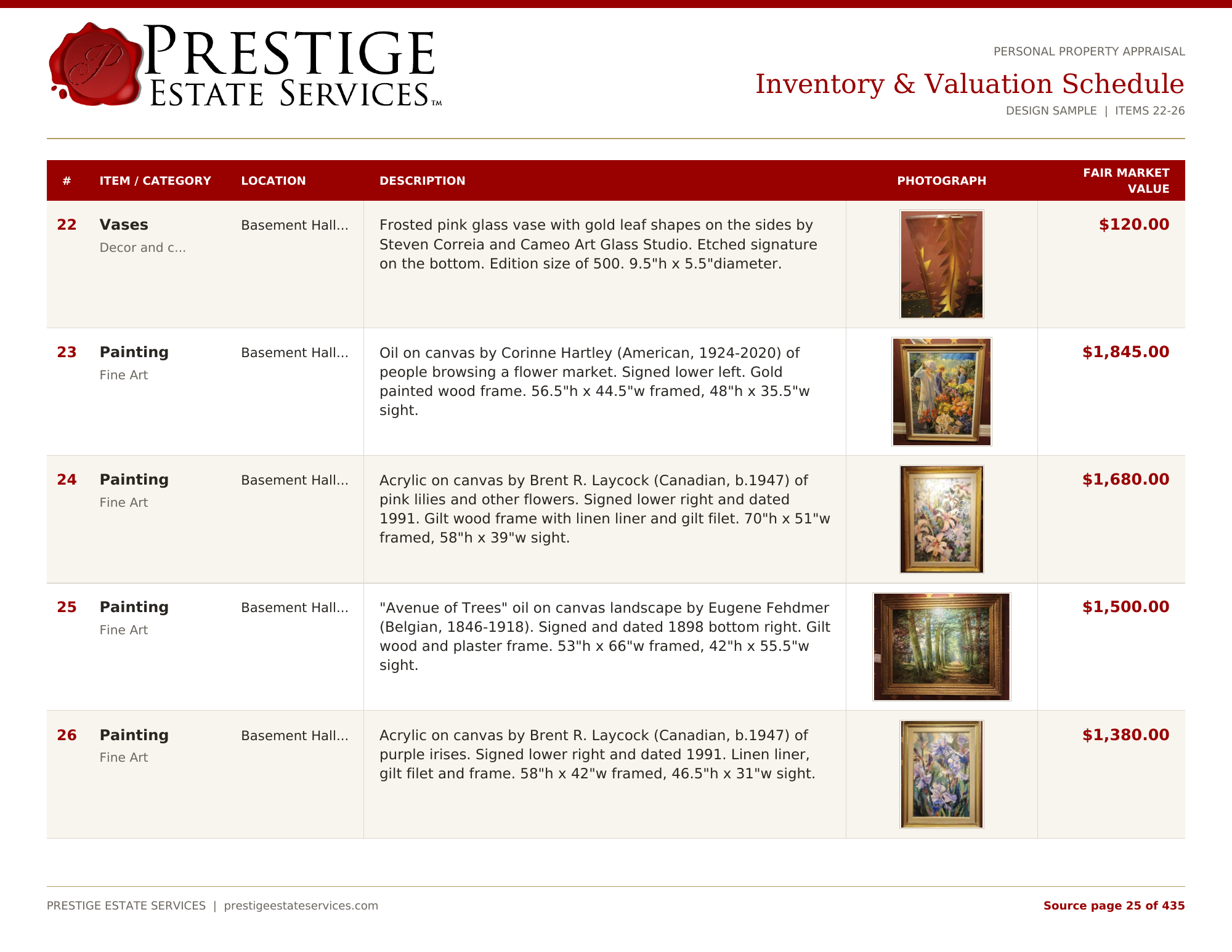
In the hypothetical item schedule, photographs and descriptions appear alongside fair market values. The full report provides the background and research that an item schedule alone cannot show.
After delivery, we include support for routine questions about the findings. If an heir later needs insurance values for some items, we can discuss a separate report for that purpose and any added fees.
Clear Estimates for Estate Tax Appraisals
You can request a project estimate through our intake process. It explains the time expected for the agreed appraisal work and report. Our published appraisal fee schedule provides the billing structure, so you can consider the estimate alongside the rates.

Useful intake details include photographs, records, the property’s location and how much fills each room or storage area. Square footage can help, but the amount of property, types of objects and research needs drive the work. For example, a small room of rare books may need more research than a larger room of common household furniture.
If the work appears to go beyond the original scope, we pause and discuss the change. Work on the changed scope resumes only after your written approval. This gives you a clear choice when new items or facts affect the project.
Can Estate Tax Appraisals Be Completed Remotely?
A formal remote appraisal may work when photographs and records provide enough evidence. The appraiser needs to know what the item is, its size, marks, condition and other facts relevant to the tax work. Clear images of the back, underside or labels can be as useful as a front view.

Ask about this option during intake, especially if you manage the estate from another state. Our guide to remote and in-person appraisals explains the options. An inspection or more records may still be needed to support the work.
The informal Online Photo Appraisal is a separate service. It does not replace a formal estate tax report, and purchasing one is not required to request a project estimate.
Other Questions About Estate Tax Appraisals
Does every estate need to file Form 706?
No. Some estates must file, while others may choose to file to make a tax election. Your attorney or CPA determines the filing requirements and the value records needed.
Can a probate inventory serve the same purpose?
An inventory lists the property. A tax appraisal develops values for a specific purpose and date. Existing records may help, but the appraiser must check whether they meet the tax assignment’s needs. Our probate appraisal service addresses the separate needs of probate and estate administration.
Does the property’s value determine how much detail the report needs?
The value and type of property can affect how much detail the report needs. IRS instructions include specific appraisal requirements for certain artworks and collectible items. Point out art and major collections during intake so we can plan the research and report.
Can one report cover several homes or storage locations?
Yes, when those sites are part of the agreed work and we can obtain the access needed. Provide a list and a contact for each site. Keeping the same item numbers helps prevent double counting when belongings move from one site to another.
Finding Estate Tax Appraisers Near Me
Prestige coordinates estate tax appraisals nationwide. Executors need a firm with the right property knowledge and a clear plan for the work.
Match Expertise to the Estate’s Belongings
Executors comparing IRS-qualified estate tax appraisers should ask about experience with the types of objects involved. A firm’s knowledge of paintings, antiques or rare collections helps shape its research plan and spot the need for specialist input.
Confirm the Report’s Tax Purpose
The estate’s adviser should explain the valuation support needed for Form 706 before the engagement begins. The proposed work should state the property, required date, people using the report and what they will receive. This makes it easier to compare services on the same basis.
Coordinate People and Property Locations
A local contact can arrange entry even when the executor lives elsewhere. Listing each home or storage site early helps the firm plan access and estimate the work. The provider should also explain who answers questions as the report develops.
Plan the Estate’s Personal Property Appraisal
Send the date of death, property locations, a broad list of belongings and your adviser’s reporting deadline. We can review the work, discuss the records you have and explain how to obtain an estimate.
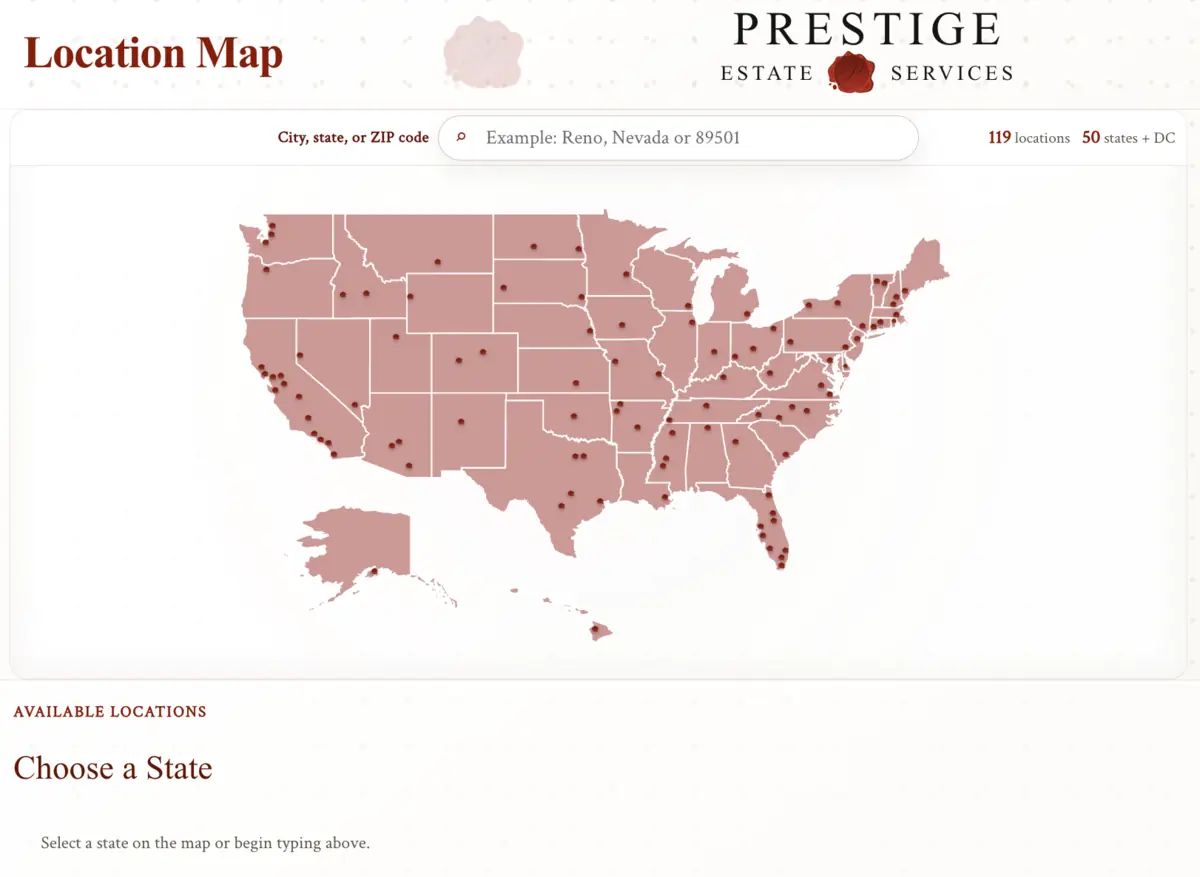
Personal Property Appraisal Locations
Use our locations directory to find appraisal support for the estate’s belongings. Tell us where the property is, especially when the contents are spread across more than one state.