Divorce Appraisals for Personal Property
Divorce appraisals give spouses and attorneys researched values for art, antiques, furnishings and collections. Prestige Estate Services identifies the belongings, studies the market and explains the values in a PDF report. Use it to inform property division during divorce or dissolution of marriage. When values are disputed, that report gives the discussion a clear basis in market evidence.
Work directly with our in-house divorce appraisers. Our ISA CAPP appraisal review department checks every formal report before delivery. Routine questions about your report are included in our support.
Meet Prestige Estate Services
We do not provide real estate appraisals.
Meet Our Divorce Appraisers and the Standards Behind Every Report
All Prestige Estate Services appraisers are in-house W-2 employees. We do not use contract appraisers as members of our appraisal staff. Each appraiser works directly for Prestige Estate Services and is IRS-qualified and USPAP-compliant.
Our firm directs your project through research, report writing and internal review. When certain objects need special expertise, a specialist may help with that part of the work. Prestige remains responsible for the appraisal and final report.
Explore the backgrounds of our personal property appraisers and the types of collections they study.

How Does an Appraisal Help with Property Division?
Divorce appraisals separate the question of value from the question of who keeps each belonging. For equitable distribution discussions, the findings help spouses and their advisers compare proposed divisions using the same documented figures. Your attorney handles legal questions about ownership and how the property will be divided.

A purchase price, a family story and an online listing can each suggest a different amount. The appraiser studies the object and selects market evidence that fits the work. Readers can then assess the value beyond either party’s first estimate.
Connect the values to an agreed item list
The property list shows what the appraisal covers. Descriptions and photos help everyone recognize the same cabinet, painting or set of chairs. Where the parties have different lists, flag the differences so the work does not omit or count an object twice.
Personal meaning is separate from market value. A family heirloom may be someone’s first choice even when its appraised value is modest. Your attorney can help weigh those wishes alongside the figures.
Which Belongings Can We Appraise?
Divorce appraisals can address selected pieces, a collection or household contents. Start by describing the objects that need values, including anything kept at another home or in storage.

Artwork, antiques and distinctive furnishings
Paintings and sculpture, antique furniture and rugs often need close attention to maker, materials and condition. Marks on a bronze sculpture, for example, can give clues about the casting process. Earlier records may also show provenance, meaning the documented history of ownership.
Jewelry, silver and specialty collections
Watches, silver, jewelry, instruments and memorabilia may require different research. Tell us about these categories during intake so we can assess the expertise and records needed. A few clear examples are useful when a collection contains many similar pieces.
Everyday contents and grouped items
We can describe and value some household belongings in groups when that suits the agreed work. Others need separate entries. Tell us which pieces need their own figures or cause disagreement. The report’s level of detail should support the discussion you expect to have.
Which Value and Date Does Your Matter Require?
For divorce appraisals, the value definition and effective date must fit the assignment. The effective date is the date the appraised values apply to. Ask your attorney to provide the required date and any valuation instructions before we begin.

Compare values on a consistent basis
An insurance replacement figure answers a different question from a value based on resale. The price paid may also differ from what the market supports. We establish the right value definition for the work and state it in the report.
Fair market value generally considers a willing buyer and seller who know the relevant facts and are not forced to act. If that definition applies, the report explains it in context. An asking price alone shows what a seller wants; it does not show that a buyer paid that amount.
Keep evidence of an earlier condition
The inspection may take place after the required valuation date. Dated photos, repair bills and older records can help show how an object looked then. For a pair of figurines, an earlier photo might show damage that a later repair hides. Share any changes since the valuation date.
Who Retains the Appraiser and Shares Information?
One spouse may retain an appraiser, or the parties may arrange a joint engagement with their attorneys. We clarify the client, payment arrangements and intended users—the people the report is prepared for—before the work begins.

Our divorce appraisers exercise independent judgment regardless of who pays the bill. Research and evidence support the value opinions. Hiring the appraiser does not give either party control over the findings.
Set a workable communication plan
Agree with counsel on who sends records, receives updates and arranges access. This helps when belongings are in separate homes or the parties face limits on direct contact. Share any instructions affecting the visit before we schedule it.
Records from either party should name the object and show where the information came from. A receipt or dated photo can help the appraiser assess a claim about age, condition or history. Clear sources make it easier to check those details against what the appraiser observes.
From Inspection to a Researched Report
Divorce appraisals begin with an agreed scope, meaning the work included in your project. The appraiser then documents the belongings, researches their value and prepares the written findings.

Document what makes each object distinct
During inspection, the appraiser records photographs, identifying features and condition within the agreed scope. For example, a maker’s mark, a repair or missing parts can shape the research. Those observations help the appraiser select and assess relevant market evidence.
Your assigned appraiser is the main contact for appraisal questions throughout intake, research and report writing. Our Head of Appraisals and office staff also support the project. If the research raises a question, the appraiser can explain which records or views would help.
Plan around your deadline
Most formal projects take about two to four weeks after intake, depending on their size, scope and complexity. The time on site varies as well; research, writing and review continue after the visit.
Tell us about a mediation date, filing deadline or other firm deadline at the outset. Expedited work is often possible, depending on the appraiser’s availability and existing projects. Prestige must approve an expedited deadline in writing before committing to it.
Prepare the Records and Plan for Access
A useful starting packet connects each object to its location and available records. Use the same item names or numbers across photos and lists so we can follow what each record describes.

- Provide an item list or room overview that shows the belongings in their current locations.
- Include photos of whole objects, marks and visible damage, with dimensions where available.
- Share relevant receipts, earlier appraisals, insurance schedules and records of repairs or ownership.
- Identify objects that are missing, disputed, packed away or difficult to reach.
Make the visit efficient
You do not have to attend the inspection, but someone must arrange access. Ideally, a person on site can open the property and storage areas. A locked cabinet or a rolled rug may need a separate plan so the appraiser can see the contents or fabric.
When the appraiser must unpack, unwrap and repack belongings, those tasks add to the billable time. Making pieces and records accessible can reduce that handling work. Discuss fragile items before moving or unwrapping them.
Appraisers cannot lift or move heavy or oversized objects. Tell us about blocked areas so we can assess the evidence and access needed. Photos or other records may help, but some objects need better access before the appraisal can include them.
What Will the Digital Appraisal Report Explain?
Our divorce appraisals include a PDF report that links the appraised belongings to their values and supporting research. Photos and descriptions help you and the report’s intended users match each entry to an object or group.

The findings and their basis
The report states the purpose, intended users, effective date and property included. It explains the value definition and methods used to develop the opinions. Relevant assumptions and inspection limits show the conditions on which the findings depend.
Supporting sections include market research and sources, the appraiser’s qualifications or CV, and the applicable certification statement and signatures. Some belongings may appear in groups; others need individual entries.
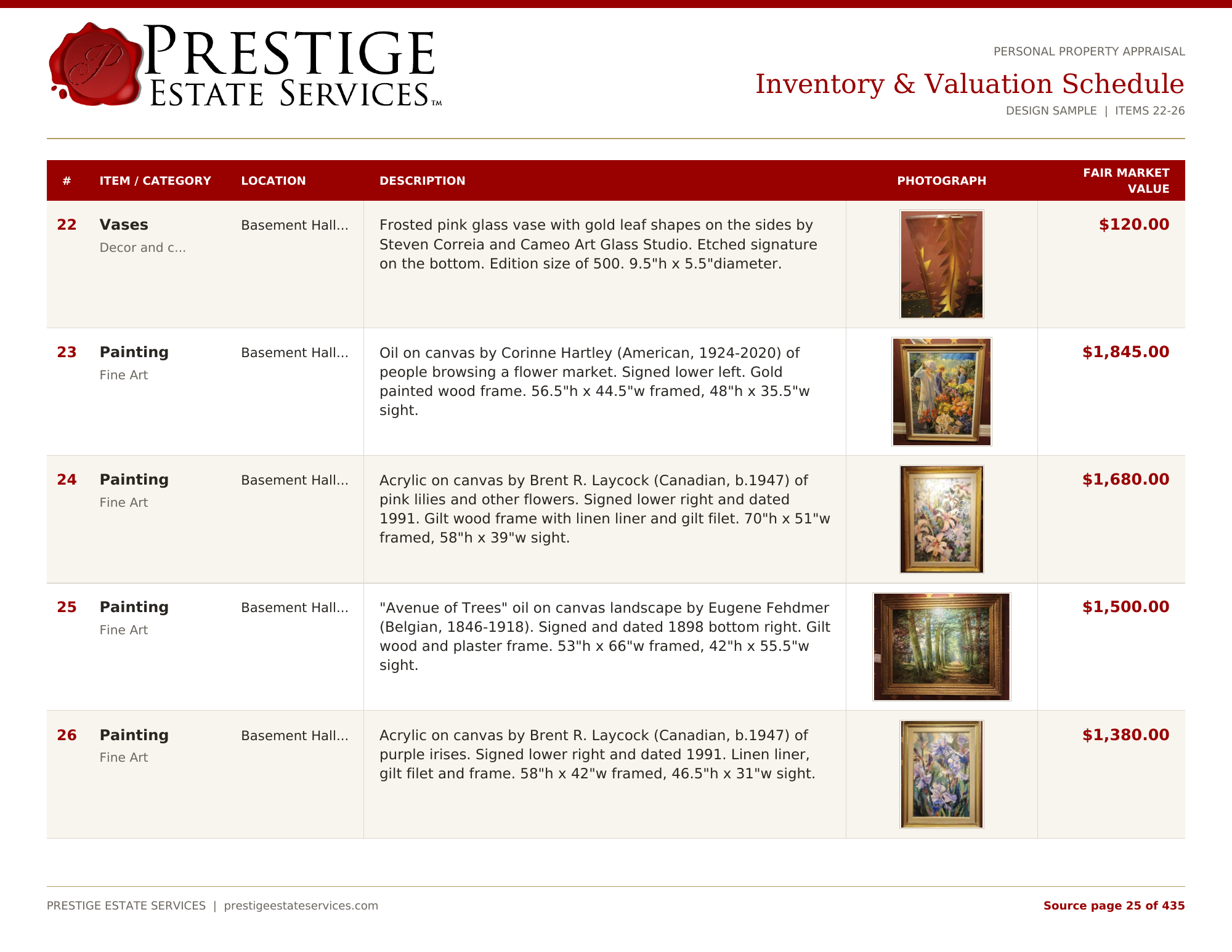
The hypothetical schedule below shows photographs, descriptions and fair market values as one component of a report. Your assignment determines the applicable value basis.
Review before client delivery
Every formal report passes through Prestige’s internal quality assurance and quality control process. Our appraisal review department consists of appraisers holding the ISA CAPP designation. They scrutinize the report and supporting work for quality and appropriate USPAP reporting before delivery.
Our appraisal work follows the Uniform Standards of Professional Appraisal Practice (USPAP), which address ethics, appraisal development and reporting.
Questions after delivery
Routine questions about the report are included, and your assigned appraiser can explain its findings. If you later need an insurance report for pieces you keep, ask us about that separate purpose. We assess the added work and discuss the fees before proceeding.
How Are the Work and Cost Estimated?
For divorce appraisals, you can request a written project estimate through our intake process. It explains the time expected to complete the agreed work and the report you need. The estimate draws on the property, available records, access and research needs.

For household contents, include the approximate square footage and how full the rooms, closets and storage areas are. A chest of drawers may be one object to appraise, while the collection inside adds further work. Photos and a detailed intake form help show the full project.
Keep decisions about cost in your hands
Review our personal property appraisal fee schedule and tell us about any budget or court-imposed cost limit before authorizing work. An estimate reflects the information available; newly identified property or added reporting needs can change the scope.
If the project appears to extend beyond its original scope, Prestige pauses work and discusses the change with you. We obtain written client approval before resuming the changed work. This gives you a clear view of the added cost before deciding how to proceed.
Can Photos Support a Formal Divorce Appraisal?
A formal remote appraisal may be suitable when photos and records provide enough evidence of the objects’ identity, dimensions, markings and condition. We assess that option through intake, based on the work needed and any instructions from the report’s intended recipient.
Good photos show more than the front of an object. The appraiser may need views of its back, base, labels or damage, as well as supporting records. However, if key details remain unclear, we can discuss more evidence or an on-site inspection.
The separate Online Photo Appraisal provides an informal item opinion. It does not serve as the formal divorce report described here. You do not need to buy that service to discuss a formal project or request an estimate.
Other Questions About Divorce Appraisals
What if an object is missing or has already been sold?
Identify it on the list and provide any dated photos, descriptions or sale records. Explain when it was last available. The appraiser will assess whether the evidence supports the requested work and which other records might help.
Why might two appraisal reports show different values?
They may cover different dates, items, value definitions or condition information. Differences in market evidence can also matter. If you need an existing report examined, discuss our appraisal review service and the questions you need it to address.
Is testimony or mediation attendance included?
Discuss these needs when arranging the assignment. Attendance, preparation and testimony involve work beyond writing the appraisal report. Prestige can review the request and address availability, scope and fees before you rely on that support.
Can Prestige also appraise the marital home?
We do not provide real estate appraisals. This service values the tangible belongings, such as artwork and furniture. Your attorney can coordinate a separate appraisal of the house or other real property.
Searching for “divorce appraisers near me”?
Prestige coordinates divorce appraisals for personal property nationwide. Spouses and attorneys comparing firms can assess how the proposed work fits the belongings and the decisions the report needs to support.
For a spouse starting the search
A spouse can start with a brief overview, even without a complete inventory. Selected disputed pieces may call for different work from a home’s full contents. Defining that need gives the first conversation a useful focus.
For an attorney comparing proposals
An attorney can check which property, research and written report each proposal includes. Any expected added work also belongs in that discussion. Comparing the same scope helps explain differences between estimates.
For belongings in separate homes
The parties can list each location, name the access contact and flag any planned moves. A consistent item list helps track belongings across homes or storage units. That record supports scheduling as well as the appraisal itself.
Start with the Belongings and Your Deadline
Need personal property values for a dissolution of marriage matter? Tell us what needs a value, where it is kept and when you need the report. Include any instructions from your attorney. We will review the project, explain the next steps and help you begin intake.
Find a Personal Property Appraiser by Location
Browse our nationwide appraisal locations for regional information. For property spread across several areas, include all cities and states in your inquiry.