Appraisal Review for Litigation Involving Personal Property
Appraisal review for litigation helps attorneys and clients assess the reasoning behind a disputed personal property value. Prestige Estate Services examines reports covering art, antiques, furnishings and collections. We trace the evidence and explain our findings in a digital report. The agreed work can address one appraisal, compare competing reports or include a new value opinion when needed.
Work directly with our in-house appraisers throughout the review. Our ISA CAPP appraisal review department checks our report before delivery. Your appraiser remains available to answer routine questions about the findings.
Meet Prestige Estate Services
We do not provide real estate appraisals. Our review service also excludes real estate reports.
Appraisers with the Property Knowledge the Review Needs
All Prestige Estate Services appraisers are in-house W-2 employees. We do not use contract appraisers as members of our appraisal staff. Each appraiser works directly for Prestige Estate Services and is IRS-qualified and USPAP-compliant.
Before accepting a review, we look at the objects, questions, possible conflicts and records on hand. Your assigned appraiser leads the work and answers appraisal questions. The Head of Appraisals and office staff also provide support. When part of the work needs outside expertise, Prestige arranges that help and stays in charge of the project.
Our appraiser profiles explain the experience within our firm. A suitable reviewer must understand both the objects and the issues raised by the report.

What Does an Appraisal Review for Litigation Do?
A personal property appraisal review examines another appraiser’s work and develops opinions about its quality. We name the report, agree on the questions and define the parts to examine. This is the review scope: the work included in the project.

Litigation appraisal review can help counsel assess a report before relying on it or prepare questions about a disputed value. A finding should show the evidence, explain the reasoning and state why the issue matters. A small typo and a material gap in research have different effects.
Review Findings and a New Value Are Different Tasks
A review does not by itself produce a new total. If the client needs our own value opinion, we include that work expressly in the scope. It may call for more records, market research or an inspection.
When the main need is a new value report, a divorce personal property appraisal or probate appraisal may be the right service. Tell us whether the goal is to assess a report, develop values or do both.
What Does the Reviewer Check?
We follow the agreed questions from the property description through the research to the findings. The work may concern one disputed item or a report covering many belongings. Each finding needs a clear link to the evidence considered during the review.

The Objects, Purpose and Value Date
A report should make clear what property it covers and why it was prepared. We examine the descriptions, photographs and condition details within the scope. The effective date—the date the values apply to—also matters when markets or the objects have changed.
Experience with fine art or antiques helps the reviewer assess the details that shape the research. A maker’s mark, restoration or missing piece can affect which sales offer a useful comparison.
The Evidence and the Reasoning
Depending on the scope, the review can check the math, sales used for comparison, adjustments and assumptions. The question is how these parts support the report’s findings. An online asking price, for example, is not the same evidence as a completed sale.
A missing explanation does not prove that a value is wrong. The reviewer may need more records to assess the issue. Findings show what the supplied records support and what remains unclear.
Why Do Two Appraisal Reports Give Different Values?
Different totals can reflect different tasks as well as different opinions. Before assessing the gap, we compare what each report covers. Dates, property lists, condition, value definitions and research can all affect the result.

Insurance replacement value and fair market value answer different questions. Likewise, a total for all household contents cannot be compared directly with one for selected items. We first sort out these differences so the discussion starts with the same property and purpose.
Hypothetical example: Two reports list the same silver service, but one shows a full set while the other notes missing pieces. The first question is which description the evidence supports. Comparing the totals alone would miss that issue.
When an Appraisal Rebuttal Report Is Requested
An appraisal rebuttal report responds to specific points in another appraiser’s work. We define those points with the client and explain the evidence behind the response. The findings may agree with some parts of the report while identifying concerns elsewhere.
Start with the Complete Report and a Clear Question
Send the full appraisal and explain the main questions in dispute. Include its exhibits, schedules and any later changes. A complete set of files helps us estimate the work and decide which other records we need.

- Name the report author and give the date and exact version the reviewer should examine.
- Provide item lists, photographs and other records the client can share.
- Note missing exhibits, disputed facts and any later changes to the property.
- Share the case location, reporting deadlines and expected need for expert support.
Preserve the original files and label later versions clearly. If an amended report arrives during the review, send it with an explanation of what changed. We can then assess whether the new material affects the work already agreed.
Counsel should state any limits on sharing case files before sending them. The review uses records supplied or otherwise properly available for the work. We do not assume access to another appraiser’s full research file.
Appraisal Review for Litigation: From Intake to Findings
We begin by confirming the client, the report under review and how the findings will be used. We also name the intended users—the people the report is prepared for. A clear scope keeps the work focused on the questions that matter.

Choose the Evidence and Inspection Approach
We can complete some reviews using documents and photographs. Others need more market research or an inspection to answer the agreed questions. During intake, we explain the approach and any need for more records or access.
If a visit is needed, someone should arrange access; the client need not attend. Accessible items can reduce handling time. Our appraisers cannot lift heavy or oversized belongings, so discuss any access problems before the visit.
Plan the Work Around the Case Schedule
Most formal projects take about two to four weeks after intake, depending on the size, scope and complexity. Reviews vary with the number of reports, the records and the questions involved. Tell us about disclosure dates, hearings and other firm deadlines at the start.
Expedited work depends on the appraiser’s schedule and other projects. Prestige must approve an expedited deadline in writing before it becomes a commitment. Your appraiser can answer questions as the research and report develop.
A Written Review with Findings the Reader Can Follow
Appraisal review for litigation produces a digital PDF of the findings. It names the work examined, the agreed questions and the evidence used. Findings connect to specific passages or exhibits and explain why they matter to the report’s reasoning.
The document describes the scope, key assumptions and limits, and the basis for the review opinions. It includes the reviewer’s qualifications and signed certification. A new value opinion appears only when that work is part of the agreed scope.
Professional Standards and Internal Quality Review
Prestige follows the Uniform Standards of Professional Appraisal Practice (USPAP) in its appraisal review work. These standards address ethics and professional appraisal performance, including personal property.
Your review also goes through our firm’s internal quality assurance and quality control process before delivery. Our appraisal review department consists of appraisers holding the ISA CAPP designation. They scrutinize our report and its supporting work. This internal check is distinct from the service of reviewing another appraiser’s report.
We include support for routine questions about the completed findings. If a revised source report or new evidence needs more study, we discuss that added work and its cost. The review remains tied to the records it actually examined.
Clear Estimates for Appraisal Review Work
The cost of appraisal review for litigation depends on the time needed to study records, research the issues and write the report. Our estimate explains that expected work. The published appraisal fee schedule sets out the billing terms. Fees reflect the work, rather than a requested conclusion.

A short report with complex research may take more work than a longer report with clear source records. Send complete files, state the disputed points and note whether a new value opinion or expert support is needed. These details help us prepare a useful estimate.
If the project appears to move beyond the agreed scope, we pause and discuss the change. Work on the changed scope resumes only after written client approval. This keeps the client involved when more reports, records or requests change the effort required.
Personal Property Expert Witness and Counsel Support
Tell us during intake if you need expert witness support, such as consultation, deposition preparation, a declaration or testimony. Those tasks need their own scope and schedule. A report-only engagement does not automatically include attendance at a hearing or trial.

A personal property expert witness explains appraisal opinions and the work supporting them. The attorney directs legal strategy and confirms the rules, orders and deadlines that apply. For federal cases, the Federal Rules of Evidence include the rules for expert testimony.
Litigation appraisal review can help counsel frame clear questions about evidence, methods or assumptions. If counsel needs an appraisal rebuttal report, state which opinions to address and when the response is due. Early planning lets us assess the full request before agreeing to the work.
Questions About Appraisal Review for Litigation
What if I need a valuation dispute appraisal rather than a review?
A valuation dispute appraisal can develop a new value opinion for the agreed purpose. A review examines another appraiser’s work. We can help define which task answers the question raised by the dispute.
Can a review agree with the opposing report?
Yes. The findings follow the evidence and may support all or part of the work examined. A review can also identify an issue that needs more records before a conclusion is possible.
Can an informal photo opinion serve as the review?
No. The Online Photo Appraisal is a separate informal service. It does not examine another appraiser’s work or replace a formal review prepared for litigation.
Do you review appraisals of homes or land?
No. We do not provide real estate appraisals or real estate appraisal reviews. Our work concerns personal property such as art, antiques, furnishings and collections.
Searching for “personal property appraisal review near me”?
Prestige considers appraisal review projects nationwide. Distance is one factor; the reviewer’s property knowledge, independence and ability to answer the case questions also matter.
Match Expertise to the Disputed Property
A painting, antique clock and list of equipment can raise different research questions. The proposed reviewer should understand the types of property and explain how that knowledge fits the work.
Distinguish Review from Original Valuation
A client seeking a valuation dispute appraisal may need new values, a report review or both. The written scope should state which work it includes and any need for inspection or further research.
Confirm Case Deadlines and Expert Support
Counsel and the reviewer should identify the materials, report deadline and any expected testimony at the outset. The records, property and proceedings may be in different locations, so those details belong in the initial discussion.
Discuss Your Appraisal Review for Litigation
Share the personal property involved, the report to be reviewed and the key deadlines. Tell us about any planned expert support. We can assess the work and explain the next steps for an estimate.
Personal Property Appraisal Review Nationwide
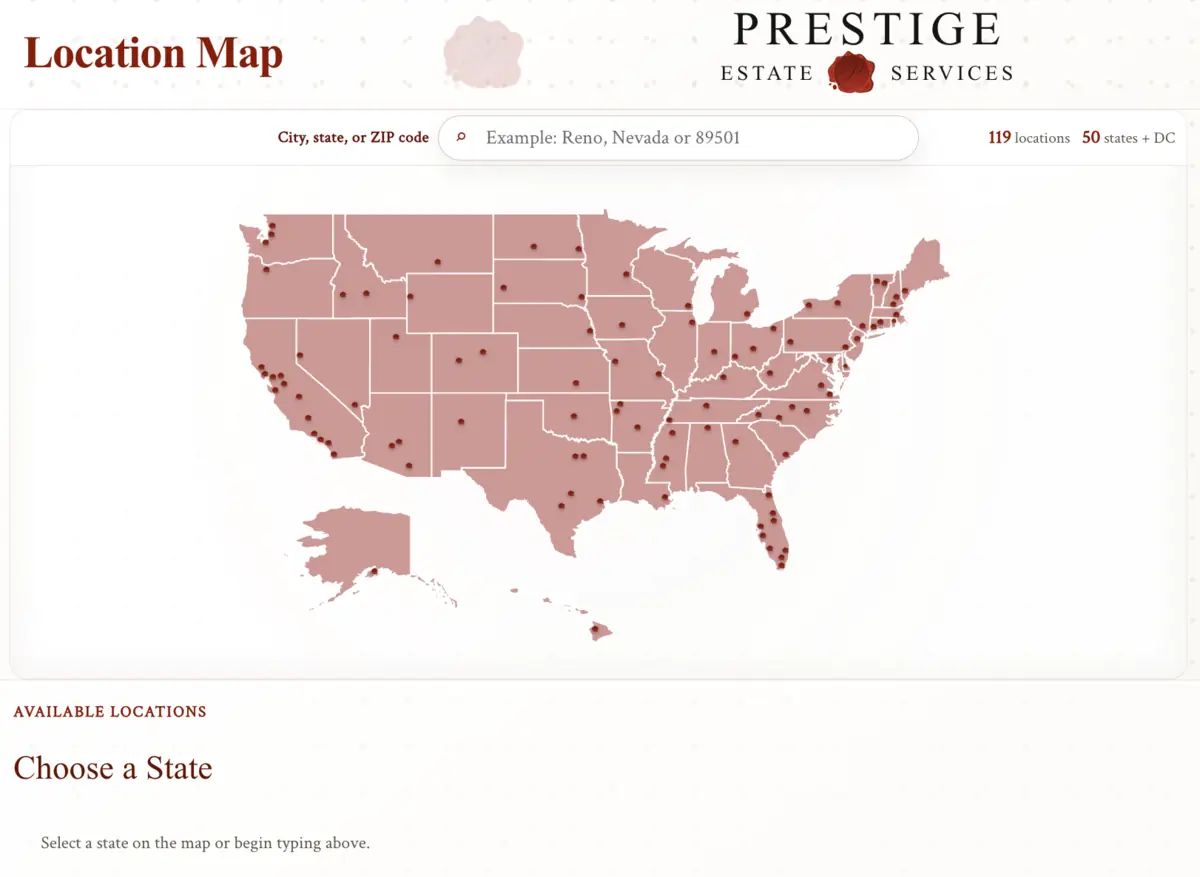
Explore our appraisal service locations and provide the locations of the property and any planned proceedings. Those details help us plan access and scheduling for the requested work.