Object knowledge and documented market research
Antique Appraisals for Furniture, Decorative Arts and Collections
Antique appraisals help you understand the value of inherited pieces, treasured collections and household furnishings. Prestige Estate Services researches antique furniture, silver, ceramics and other personal property for owners, families and advisors. We prepare written reports for insurance, estates, charitable gifts and other agreed purposes. Share what you own and why you need a value, and we will help you plan the research, inspection and report.
Your in-house appraiser researches the objects and prepares your report. Our ISA CAPP appraisal review department checks each formal report before delivery.
Meet Prestige Estate Services
We do not provide real estate appraisals.
The people behind the appraisal
Meet Our Antique Appraisers
Our antique appraisers study how an object was made, who may have made it and the market for similar pieces. We review your photographs and needs to match the work with suitable expertise. Your assigned appraiser answers questions throughout the project, with support from our Head of Appraisals and office staff.
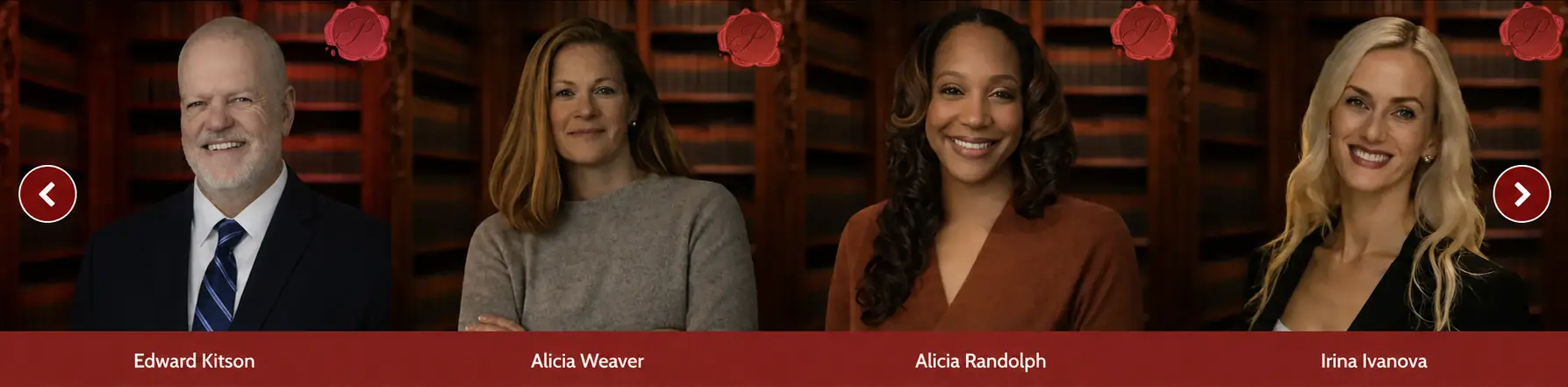
All Prestige Estate Services appraisers are in-house W-2 employees. We do not use contract appraisers as members of our appraisal staff.
Our work follows the Uniform Standards of Professional Appraisal Practice (USPAP). These ethical and performance standards guide appraisal development and reporting, including personal property work.
Do You Need a Formal Antique Appraisal?
Start with the decision you need to make. You may want to learn about an inherited vase, insure a collection or prepare an estate inventory. Tell us who needs the value and why, so we can discuss the right service and report.

Our Online Photo Appraisal service is a separate informal option. A formal remote appraisal has different research and reporting needs, even when photographs are part of the evidence. You do not need to buy a photo opinion to discuss a formal project estimate.
For example, an insurance appraisal of a silver tea service may address replacement cost. Probate appraisal work may need another value basis or date. Share the recipient’s instructions; the same set can answer different value questions.
What Types of Antiques Can Be Appraised?
Antique appraisal services can cover one object, a collection or antiques throughout a home. Send an overview of the belongings, including pieces whose maker or age is unknown. That helps us identify the research skills and records your project needs.

Furniture and Objects
Antique furniture appraisals may include tables, chairs, cabinets and mirrors. Clocks, lamps, ceramics, glass and silver can also be considered. Joints, materials, marks and past repairs help us understand each object.
Art and Paper Works
Paintings, prints, drawings and sculpture may sit within a wider collection. We examine the evidence for the artist, date, edition and ownership history. The research must fit the type of artwork.
Jewelry and Watches
Watches, jewelry and precious-metal objects can need close examination and specialist knowledge. Send clear photographs and any earlier reports. We review the items and the expertise needed before agreeing to include them.
Books and Collections
Books, toys, coins, stamps and memorabilia have different collecting markets. A familiar title or famous name does not settle the value. Edition, missing parts, condition and evidence of authenticity can change the research.
Textiles and Fashion
Rugs, quilts, garments and other textiles may need research into materials, design and maker. Wear, fading, repairs and missing sections affect how closely they match other examples in the market.
Mixed Estate Contents
An inherited home may contain both antiques and everyday furnishings. We identify pieces that need separate research and discuss suitable grouping for routine items. The report makes those groups and their contents clear.
For a collection centered on paintings or sculpture, explore our fine art appraisal service. Our broader personal property appraisal services can help when the project combines several types of belongings.
We can also consider vintage, modern and collectible pieces. An object does not have to fit an age label to deserve research. Age alone does not make an item rare, desirable or valuable.
How Does an Appraiser Determine Antique Value?
Antique valuation brings together the object’s details and evidence from the relevant market. A similar-looking online listing can offer a lead, but its price alone is not an appraisal. We investigate whether the comparison fits your object, purpose and value date.
Maker and Identity
Marks, labels and signatures are clues. We also examine materials, design and construction. A mark can be copied or added later, so it should fit the other evidence before we rely on it.
Condition and Repairs
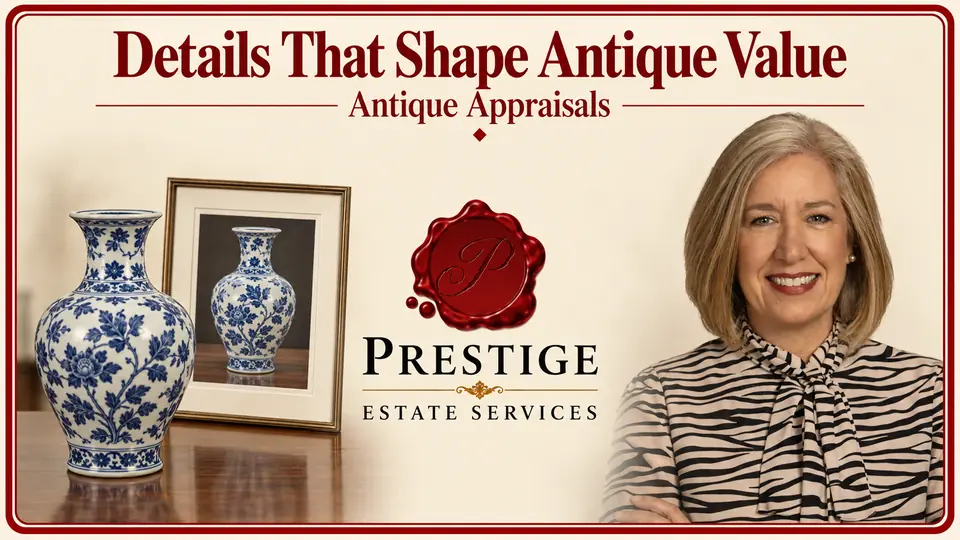
Chips, cracks, replaced parts and refinishing can affect value. For example, two similar porcelain vases may differ because one has a repaired rim. The effect depends on the piece, the repair and what buyers seek.
History and Records
Provenance means an object’s ownership history. Receipts, older photographs, letters and collection records may help support that history. We consider what each record actually establishes, rather than treating a family story as documented fact.
Market Evidence
We study relevant sales and other market evidence. Maker, size, materials, condition, date and sale setting help us assess the fit. A small decorative cabinet may have a different market from a much larger one of similar style.
Sale Prices, Dates and Uncertain Makers
Auction prices also need context. We check the sale date, terms and whether a quoted result includes the buyer’s premium—the auction house’s added charge to the buyer. Retail replacement and a possible resale can involve different markets and costs.
The effective date tells the reader when the appraised values apply. It may be today or an earlier date required for an estate or another purpose. It does not automatically match the inspection or report date.
If the maker or authenticity remains uncertain, we explain the evidence and what further work may be needed. A specialist opinion, scientific test or recognized reference may help. We do not treat an unresolved identity as a proven fact.
Match the Value to the Purpose
Fair market value concerns a willing buyer and seller under the defined conditions. Insurance replacement asks what it would cost to replace the item on the required basis. Neither figure should be assumed to equal the amount an owner would receive after selling costs.
What Does an Antique Appraisal Report Include?
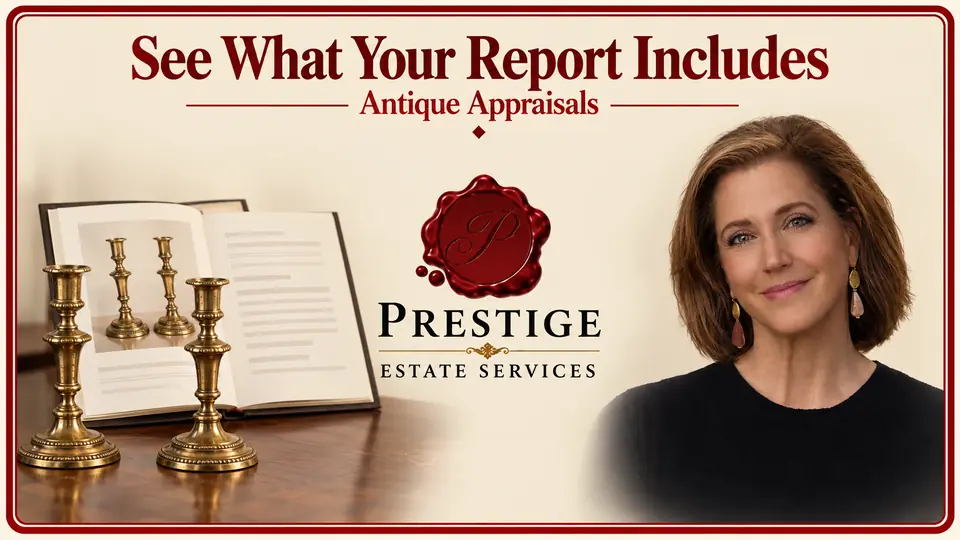
Your formal antique appraisal arrives as a digital PDF. It combines photographs, descriptions, researched values and the reasoning behind them. During intake, we identify the intended users—the people the report is prepared for—and the detail they need.
Reporting Purpose
The report identifies the client, purpose, report users and value date. It also defines the type of value used, so a reader can understand what the figures mean.
Object Identification
Descriptions and photographs connect each entry to the correct antique. Dimensions, materials, marks, known repairs and other relevant details help distinguish it from similar pieces.
Researched Values
The report explains the market research and approach used to reach the values. Relevant comparisons and their differences help readers follow the reasoning. The amount of detail reflects the agreed assignment.
Scope and Limits
The report describes the inspection, important assumptions and limits of the evidence. It includes the appraiser’s qualifications, signed certification and supporting sources as appropriate to the assignment.
An older report is useful background, but the item and date still matter. A pair of candlesticks may have a different value when separated. A damaged or restored piece may also differ from the object described in the earlier report.
For division among heirs or co-owners, the report helps compare the belongings under the agreed value basis. A charitable donation appraisal addresses a different purpose. Tell us about each intended use before we plan the report.
Internal Review and Help After Delivery
Every formal report goes through our internal quality review before delivery. The ISA CAPP appraisal review department examines the research, conclusions and appropriate USPAP reporting. Your assigned appraiser can explain the findings, and routine questions about the completed report are included.
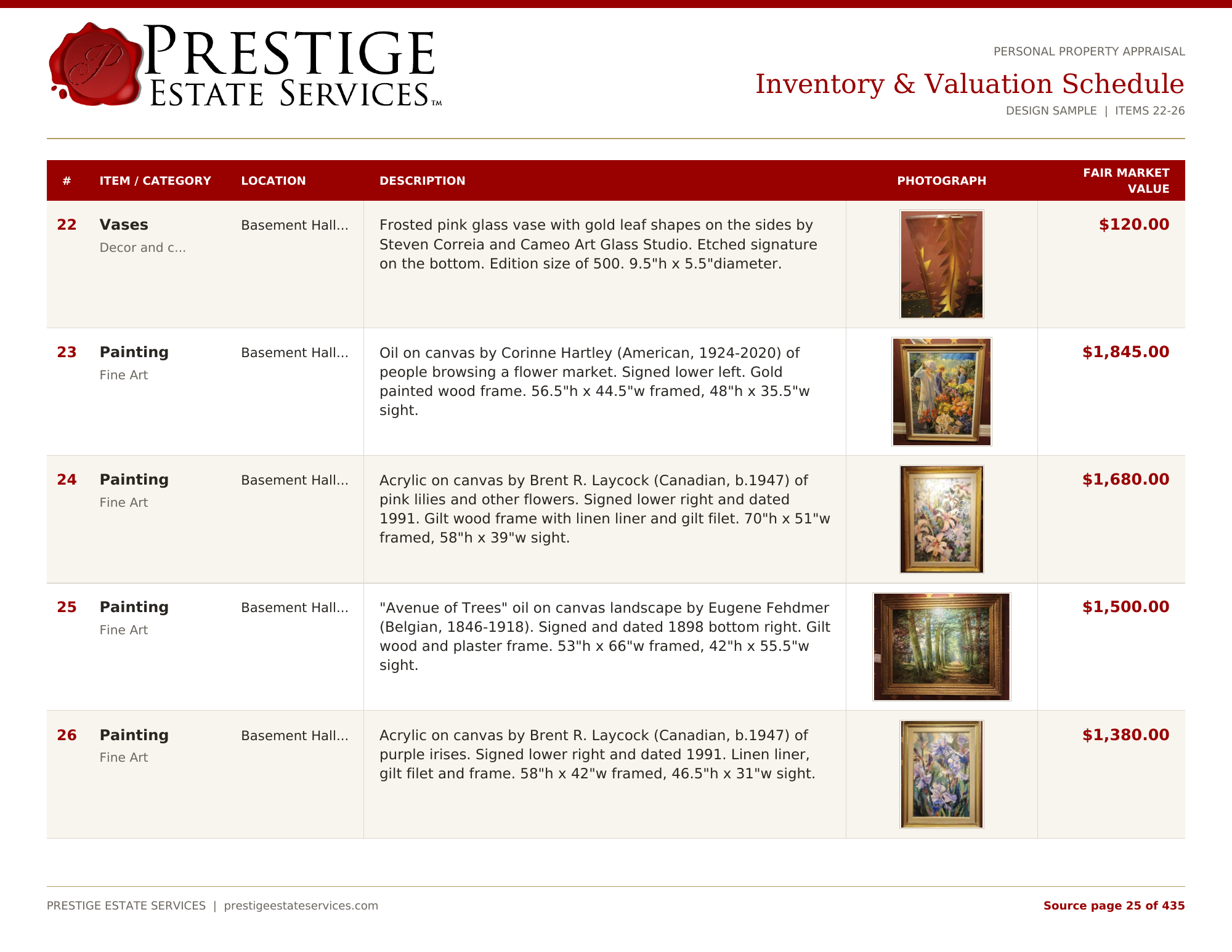
The image below is a hypothetical example of an item schedule. It shows how photographs, descriptions and fair market values connect. Your report uses the value basis and date agreed for your purpose; the schedule is one part of the full appraisal.
How Does the Antique Appraisal Process Work?
Our antique appraisal process begins with your objects and the decision ahead. You can start with photographs, a rough list and any known history. We then agree on the work, gather the evidence and prepare the report.
Define the Purpose
Tell us why you need values, who will use the report and when it is needed. Include the property locations and any required value date. This helps us plan around the actual decision.
Agree on the Scope
We agree on the objects, inspection method, research and report detail. We also discuss any specialist needs, access arrangements and estimated project time. The written agreement sets out the work to be done.
Examine and Document
Your appraiser records the agreed identifying features and condition. Measurements, marks, repairs and supporting records help tell one object from another. We explain any parts we could not inspect and how that affects the work.
Research and Analyze
We compare the object with relevant sales and other sources for the required date. The research considers meaningful differences in identity, quality and condition. We then explain how the evidence supports the conclusion.
Write the Report
Your appraiser brings the descriptions, research and values together in the report. Internal review takes place before we deliver the PDF. You can ask the assigned appraiser routine questions about the findings.
A formal remote appraisal may work when photographs and records show the object’s identity, dimensions, marks and condition in enough detail. We also consider the report recipient’s requirements. An unclear repair, hidden mark or fragile surface may call for an on-site examination.
What Should You Prepare for an Antique Appraisal?
Gather clear photographs and useful records while keeping the objects in their present condition. You do not need to polish, refinish, repair or take an antique apart for appraisal. Discuss any proposed treatment with a qualified conservator first.
- Overall photographs and close views of accessible marks, labels, signatures and damage.
- Measurements, approximate counts and the location of each item or group.
- Known repairs, restoration, missing parts and any changes since an earlier appraisal.
- Receipts, older appraisals, letters, collection lists and records of past ownership.
- The purpose, report users, required value date and any firm deadline.
- Access arrangements and details of fragile, boxed, heavy or blocked items.
If a label is beneath a heavy cabinet, leave the cabinet in place and tell us. Our appraisers cannot lift or move heavy or oversized items. We may need more photographs, safe access or other records; limited evidence can also mean leaving an item out.
Share family stories, but label them as recollections unless records support them. For example, a relative’s memory that a box came from a royal household is a research lead, not proof of that history. Tell us what is known and what remains uncertain.
Arrange Access Without Extra Handling
You do not have to attend if an authorized person can provide access. Accessible belongings and organized records can reduce handling time. Let us know if objects need unpacking and repacking, since that work adds time. Keep fragile pieces safely supported rather than moving them just for the visit.
What Affects the Cost and Timing?
The cost depends on the objects, the research and the report you need. You can request an estimate through intake by sharing photographs and a rough list. One unusual piece may need more research than several familiar household items.
Count and Variety
A varied collection can involve several research areas. The number and type of objects matter, along with any suitable grouping. A shelf of routine tableware may require a different plan from a rare signed piece.
Research Needs
Unclear makers, missing records and questions about authenticity can add research. Values for an earlier date may need older market evidence. We discuss these needs when defining the work.
Access and Timing
Tell us about several property locations, travel needs, moves and filing dates early. The time on site varies with the collection and how easily items can be examined. Research and report writing continue after the visit.
Our written estimate covers the time expected for the whole project and its report. Review the appraisal fee schedule for published fees. Our charges do not depend on a percentage of the appraised value or a requested result.
Contact us if you add objects, need a new value date or want to use the findings for another purpose. We will discuss the extra work and any cost before proceeding. A separate report may be needed; routine questions about the delivered report are included.
Keeping the Estimate Useful
For a household or large collection, include the floor area and a sense of how much property fills the rooms or storage spaces. Useful photos and records help us estimate the work more accurately. New objects or missing information can change the research needed.
If the project moves beyond the agreed scope, we pause the affected work and discuss the change. We obtain your written approval before resuming. This gives you a chance to review the added work and its effect on cost.
Turnaround and Firm Deadlines
Most formal projects take about two to four weeks after intake, depending on size and complexity. Unusual objects, missing records and specialist research can affect that timing. Tell us about moves, filings or other hard deadlines at the start.
Expedited work depends on appraiser availability and existing projects. We can discuss a faster schedule, but Prestige must confirm the expedited deadline in writing before it becomes a commitment.
Practical questions
Antique Appraisal Questions
How can I learn what my antique is worth?
Start with the reason you need a value. An informal photo opinion may answer personal curiosity. A formal antique appraisal provides the research and report suited to an insurance, estate or other defined need.
Can an antique be appraised from photographs alone?
Sometimes. We need enough evidence of identity, dimensions, marks and condition, along with the report recipient’s requirements. Hidden details or uncertain repairs may require an on-site visit. We discuss the right approach during intake.
Does age alone make an antique more valuable?
No. Maker, quality, condition, ownership history and buyer demand also matter. An old item may attract little interest, while a newer collectible may have an active market. We assess the evidence together.
Is an appraisal the same thing as authentication?
No. Authentication concerns whether the object is genuine or correctly identified; appraisal develops a value opinion. Some identity questions require specialist evidence. The report explains any relevant uncertainty rather than treating it as settled.
Can a collection or full household be included?
Yes, when we can define the work and arrange the right expertise. Some objects need individual research, while suitable routine belongings may be grouped and clearly described. We appraise the contents. We do not provide real estate appraisals.
Should I clean or restore items before appraisal?
Keep the item as it is and describe any damage or past repairs. Send current photographs where it is safe to do so. Ask a qualified conservator before cleaning or treatment that could change the object.
Will the appraised value match a future sale?
A later sale may differ. Buyer interest, venue, timing, sale terms and costs all matter. The appraisal addresses the stated value basis and date. Discuss any planned sale so those circumstances are clear from the start.
Can an older report still support a new purpose?
An earlier report may provide useful descriptions and history. Its date, value basis and condition notes still need to fit the new purpose. Tell us what has changed so we can discuss any update or separate report.
Choosing the right appraisal service
Finding Antique Appraisers near me
Clients seeking antique appraisers should compare experience with the actual objects and the report needed. Nearby access can help with inspection, but the right research skills and a clear work plan matter too.
Look for Relevant Object Knowledge
A provider should explain its experience with furniture, ceramics, silver or other relevant objects. Sample photographs help identify specialist needs. The proposed work should address uncertain makers and any questions about authenticity.
Choose the Right Inspection Path
Clients should identify the property locations, fragile pieces and difficult access. The inspection plan should explain when photographs are sufficient and when a visit is needed. The appraisal locations page offers a starting point for those arrangements.
Explain Who Will Use the Report
Comparable proposals should cover the same objects, value date, purpose and report detail. Written terms should explain research, travel, handling and approval of changes. A formal report and an informal opinion are different services.
Start with a scope discussion
Plan Your Antique Appraisal
Tell us which antiques need values and what you plan to do next. Share photographs, the property location, any known history and your deadline. We will review the request and discuss the work, records and next steps with you.
Nationwide personal property appraisal support
Find a Personal Property Appraiser by Location
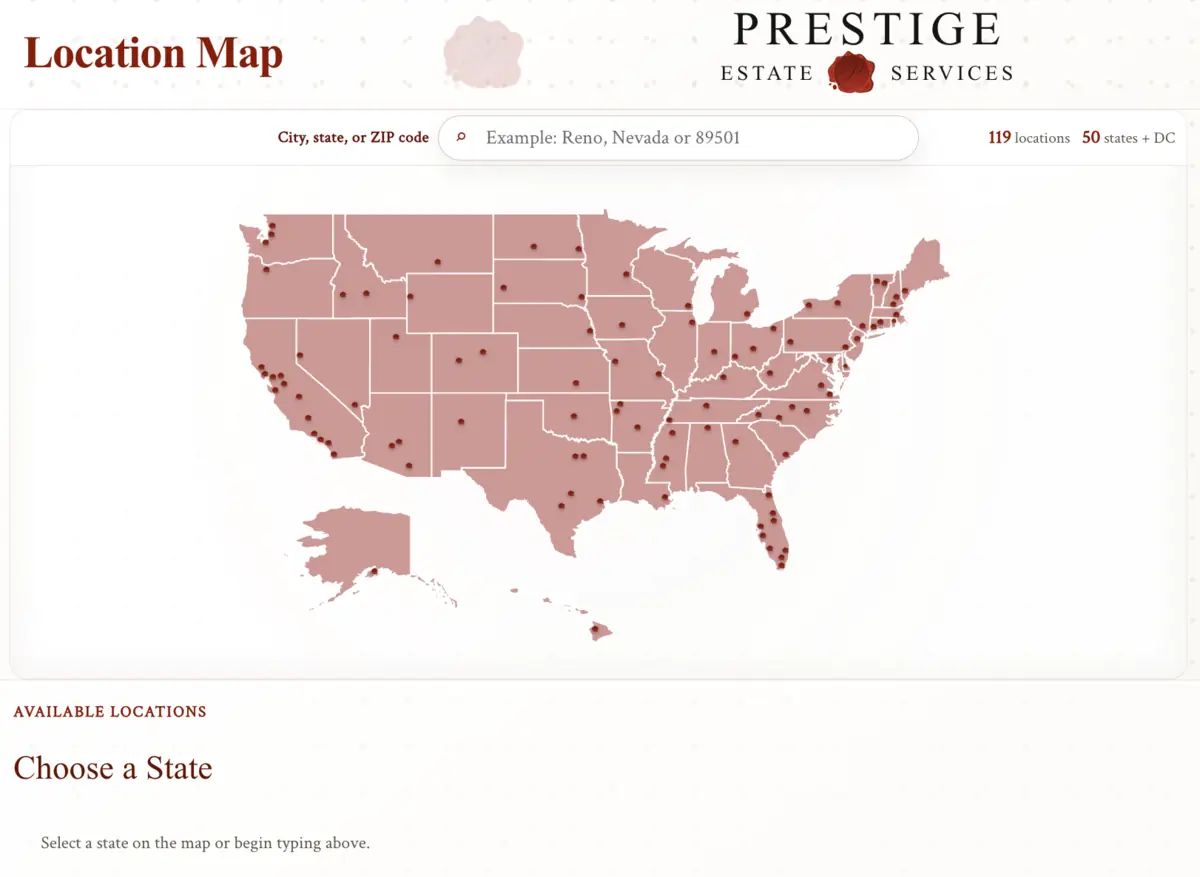
Prestige Estate Services provides antique appraisals nationwide. Explore our locations, then contact us about your collection and access needs. We can discuss a site visit or formal remote work when the objects, evidence and purpose make it suitable.