We Do Not Review Real Estate Appraisals — We Only Review Personal Property Appraisals.
Independent personal property analysis
Appraisal Review for Litigation Purposes
Meet Prestige Estate Services
An introduction to Prestige Estate Services and our nationwide personal property appraisal services.
Our Appraisers. Our Standards. Our Name on Every Report.
Our in-house appraisers are W-2 employees and dedicated members of the Prestige Estate Services team. Every appraisal carries our name and our reputation.
A personal property appraisal review examines the quality of another appraiser’s work. Prestige Estate Services helps attorneys, fiduciaries, insurers and parties assess the reasoning behind reports used in litigation. The review can address a complete appraisal, compare competing reports or answer defined technical questions. It explains the support for the conclusions and the limits of the analysis; a new value opinion requires an expressly defined scope.
Prestige Estate Services appraises tangible personal property. We do not provide real estate appraisals.
The people behind the appraisal
Meet Our Personal Property Appraisers
Choosing a reviewer starts with the property and the questions in dispute. Knowledge of art, antiques, jewelry, furnishings or equipment must fit the material being examined. Our team considers relevant experience, potential conflicts and the records available before accepting the work. A reviewer’s responsibility is to reach independent conclusions, even when those conclusions differ from the position of the retaining party.

All Prestige Estate Services appraisers are in-house W-2 employees. We do not use contract appraisers as members of our appraisal staff.
Define the work before it begins
What Is an Appraisal Review for Litigation?
The subject of a review is another appraiser’s work. The reviewer asks whether that work addresses its stated purpose and whether the analysis supports the opinions expressed. The scope identifies the report or materials to be examined, the authorized readers and the questions the review should answer.
Report review
A review may examine the full report or selected parts. The written scope identifies the material included so readers understand what the reviewer assessed.
Report comparison
Two reports may reach different totals for sound reasons. A comparison examines their dates, property lists, markets and assumptions before considering the value difference.
Technical questions
Counsel may need a focused analysis of calculations, market choices or missing support. The reviewer explains the evidence relevant to each agreed question.
Value opinion
A separate value conclusion adds appraisal development work. It must be expressly included and supported by sufficient property information, research and analysis.
An appraisal review does not automatically replace the original report or supply a new total. When the client needs an original valuation, the appropriate engagement may instead be a divorce personal property appraisal or a probate personal property appraisal. The purpose of the work determines that choice.
Understand a disputed valuation
When Is an Independent Appraisal Review Useful?
A review can help when a report will influence a case and its foundation needs closer examination. It may be requested before counsel relies on the report, while comparing opposing opinions or when preparing questions for an expert. The starting point is a clear issue that appraisal analysis can address.
Competing reports
A large difference between reports calls for careful comparison. The reviewer traces whether the gap comes from evidence, assumptions, scope or the reasoning applied.
Estate disputes
An estate or trust matter may involve disputed descriptions or values for a collection. Review helps identify how the existing report addresses those belongings.
Insurance disputes
A loss-related report may rely on photographs, earlier records or condition assumptions. The review examines whether those sources support the work that was requested.
Expert preparation
A technical review can organize points for counsel to explore. It connects questions about the report to specific passages, schedules and supporting materials.
The reviewer may agree with well-supported parts of a report while identifying weaknesses elsewhere. A different preferred value, an unfavorable result or a minor typographical error does not by itself establish that the valuation analysis is unreliable. Findings should explain why an issue matters to the stated conclusions.
Methods, evidence and conclusions
What Does the Reviewer Examine?
The analysis follows the agreed questions and the property under review. Reports may cover fine art, antiques, jewelry, furnishings, collections, vehicles or equipment. The reviewer considers how the objects were identified and how the appraiser moved from the available records to the opinions expressed.

The value definition also matters. Insurance replacement value, fair market value and net sale proceeds answer different questions. A review should evaluate the report against the definition required for its purpose, rather than treat all three as interchangeable measures.
A missing explanation and a demonstrably unsupported conclusion are different findings. The report should distinguish a gap in the supplied record from a problem established through the review. Additional source verification or research may be needed before a firm conclusion is possible.
A clear sequence from inquiry to findings
How Does the Appraisal Review Process Work?
An initial conversation establishes what needs to be reviewed and how the findings will be used. The engagement then sets the work, records, timetable and reporting requirements. A document-based review and a review that includes inspection or a new value opinion can require substantially different effort.
Set the scope
Identify the client, readers, report version and technical questions. Before accepting the assignment, confirm conflicts, property knowledge, deadlines and the work requested.
Collect the records
Obtain the complete report and available supporting files. Organize addenda, photographs and schedules so the reviewer can trace each issue to the relevant source.
Analyze the work
Examine the report and complete the research needed for the scope. Document the reasoning behind each finding, including limits caused by missing or uncertain information.
Explain the findings
Deliver the review in the agreed format and identify its boundaries. Any later consultation, added research or testimony is addressed through the engagement terms.
Version control prevents avoidable confusion. If an appraiser issues an amended report, identify what changed and when it became available. A review of an earlier version should not be presented as an assessment of revisions the reviewer has never examined.
Make the record easy to follow
What Should Counsel Send for an Initial Scope Review?
Start with the complete appraisal and a short explanation of the issues to be examined. Include the case location and dates that affect expert work. The initial material helps determine whether the questions can be answered from documents or require additional records, market research or inspection.
- The full appraisal, including addenda, exhibits and amendments
- A concise list of technical questions and disputed conclusions
- The client, intended report users and expected use of the findings
- Property inventories, item schedules and available photographs
- Relevant receipts, prior reports and documented ownership history
- Supporting market data or research materials available to the client
- Applicable instructions, orders, disclosure dates and hearing schedules
Keep filenames and report versions clear, and preserve the source documents. Note whether an exhibit is absent rather than silently removing its reference. Counsel should identify confidentiality restrictions and arrange the appropriate method for providing case materials.
Fees depend on the number and complexity of reports, the types of property and the depth of analysis required. Additional research, an inspection, a new value opinion or testimony can change the scope. The personal property appraisal fee schedule explains the firm’s billing framework; a project estimate follows review of the requested work.
Findings that readers can trace
What Does the Written Appraisal Review Explain?
The written review should allow its intended readers to understand both the conclusions and how they were reached. It identifies the work examined and the questions addressed. Useful findings connect an issue to the relevant evidence and explain its significance rather than simply label a report acceptable or unacceptable.
- The client, intended users and purpose of the review
- The report, author, date and materials identified for examination
- The review scope and any important exclusions or access limits
- The evidence considered and reasoning supporting the findings
- Opinions about the work within the agreed review scope
- Any separate reviewer value opinion expressly included in the engagement
- Relevant assumptions, limitations and the reviewer’s certification
A finding may concern the report’s clarity, its analytical support or both. The review should explain that distinction. For example, an unexplained adjustment may require further documentation before its effect can be assessed. The reviewer should not fill that gap by assuming facts absent from the record.
The review is a separate professional work product. It does not amend another appraiser’s report, determine ownership of the property or decide the legal effect of a valuation. Counsel considers how the findings relate to the matter and the applicable procedural requirements.
Independent analysis and defined expert support
What Standards and Boundaries Apply?
Prestige Estate Services conducts appraisal review assignments in accordance with the Uniform Standards of Professional Appraisal Practice (USPAP). These standards address appraisal practice across disciplines, including personal property. The review must also be planned around the conditions and professional requirements relevant to the engagement.
An expert’s appraisal opinion and the court’s evidentiary decision have different roles. Federal Rule of Evidence 702 and the federal evidence rules address expert testimony in federal proceedings, including its factual basis and methodological reliability. Counsel should confirm the controlling rules and orders for the particular matter.
Consultation, rebuttal analysis, deposition preparation, declarations and testimony must be clearly requested and scoped. The reviewer explains appraisal reasoning; the attorney directs legal strategy. A report-only engagement should not be assumed to include attendance at a hearing or trial.
Neither USPAP compliance nor an appraisal review guarantees admissibility, a settlement or a favorable court decision. The work may support, question or partly agree with the original analysis. The conclusion must follow the evidence available for the defined scope.
Practical questions
Personal Property Appraisal Review for Litigation: Additional Questions
Does an appraisal review include a new value opinion?
Only when that work is expressly included. Reviewing a report’s quality and developing a separate value conclusion are different tasks. The latter may require more records, research or inspection.
Can two personal property appraisals be compared?
Yes. A review can examine differences in property lists, dates, value definitions, evidence and methods. Different totals alone do not establish which report is better supported.
Are remote reviews possible?
Some reviews can be completed from adequate documents and photographs. The reviewer may need additional records or an inspection when the agreed questions cannot be answered from those materials.
Can a review support deposition preparation or testimony?
Those services can be discussed during engagement planning. The scope and schedule must identify the requested expert support; a written review alone does not automatically include testimony.
What if the appraisal report has missing exhibits?
Identify the missing materials and provide the best available version. The reviewer will assess what can be concluded, explain the limits and request further records when needed.
Is court approval assured?
No. The reviewer gives independent appraisal opinions within the agreed scope. Counsel addresses legal requirements. The court decides whether to admit expert evidence and how to weigh it.
Do you review real estate appraisal reports?
No. We do not provide real estate appraisals or real estate appraisal reviews. Our work concerns tangible personal property such as art, antiques, jewelry, furnishings and collections.
Choosing the right appraisal service
Searching for Personal Property Appraisal Review Near Me?
Choosing a nearby reviewer involves more than the distance to an office. The relevant questions are whether the professional understands the property, can examine the disputed work independently and can meet the defined reporting needs. Prestige Estate Services considers personal property appraisal review engagements nationwide, with scope and availability confirmed for each matter.
Match the Reviewer to the Personal Property
Counsel and clients should describe the objects at issue before choosing a reviewer. Experience with jewelry, paintings or antique furniture may call for different research skills. A real estate appraisal background alone does not establish the knowledge needed to assess those objects. The proposed reviewer should explain how their experience fits the material under review.
Confirm the Litigation Review Needs
The client, records, property and court may be in different places. A document-based engagement may be workable without a visit, while condition questions or an added value opinion can require more access. Any expected deposition, hearing or trial involvement should be discussed at the outset so the proposed work reflects the actual case needs.
Agree on Scope and Communication
A useful proposal identifies the reports to be examined, the questions to be answered and the deliverable. The retaining party should also clarify deadlines, potential conflicts, communication arrangements and whether further research is included. Selecting an independent reviewer means accepting that the findings may support parts of the opposing analysis as well as identify weaknesses.
Start with a scope discussion
Discuss a Personal Property Appraisal Review
Share the report to be reviewed, the main questions and the relevant deadlines. Tell us what personal property is involved and whether consultation or testimony may be needed. We will assess the requested work and explain the next steps for a possible engagement.
Nationwide personal property appraisal support
Find a Personal Property Appraiser by Location
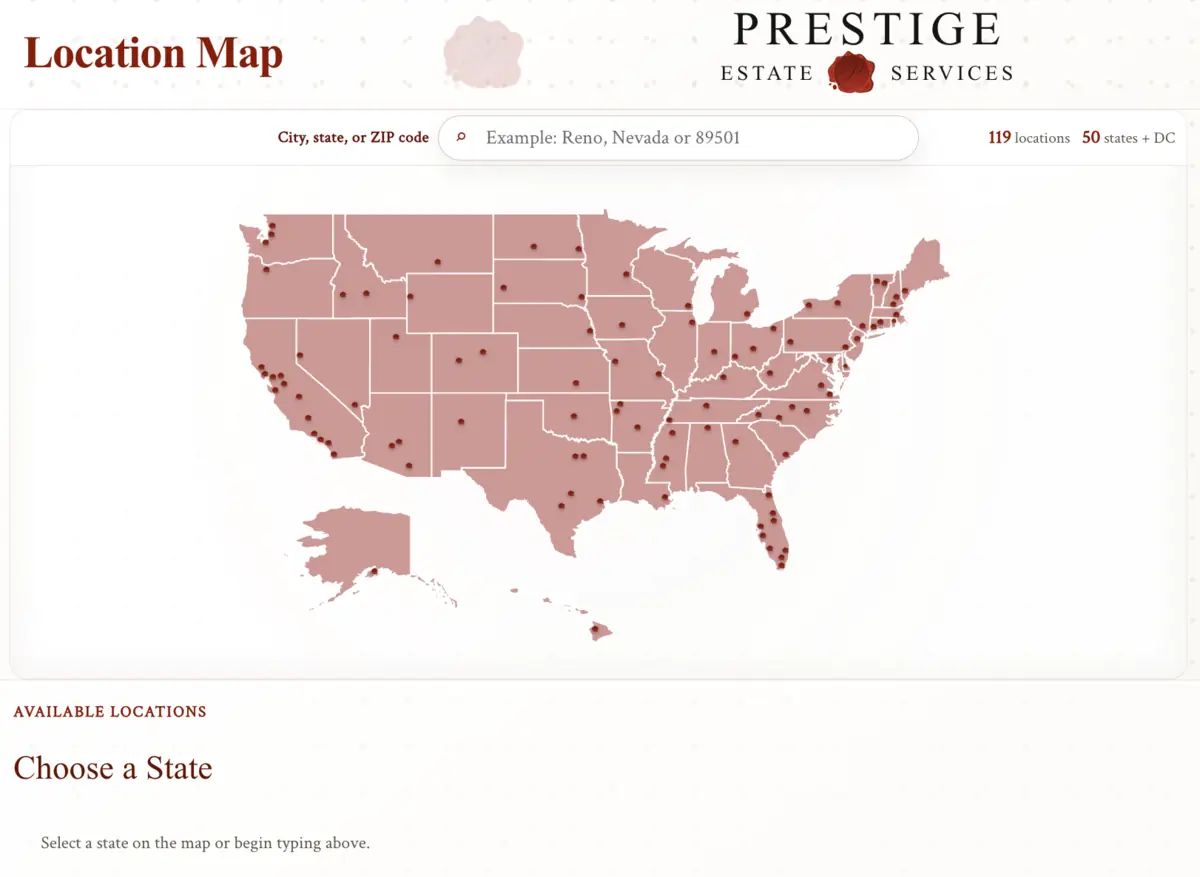
Prestige Estate Services provides personal property appraisal review support across the United States. Describe the locations of the records, property and any planned proceedings when discussing the assignment. The locations overview can help identify a regional contact; the review scope and scheduling are confirmed separately.