Probate and estate administration
Probate Personal Property Appraisals
Meet Prestige Estate Services
An introduction to Prestige Estate Services and our nationwide personal property appraisal services.
Our Appraisers. Our Standards. Our Name on Every Report.
Our in-house appraisers are W-2 employees and dedicated members of the Prestige Estate Services team. Every appraisal carries our name and our reputation.
Probate personal property appraisals document the belongings included in an estate and develop supported opinions of their value. Prestige Estate Services helps executors, personal representatives, attorneys and families obtain written reports for probate inventory support and estate administration. Each engagement identifies the property, purpose, valuation date and report users. The estate’s legal advisors determine which assets and filing requirements apply.
Prestige Estate Services appraises tangible personal property. We do not provide real estate appraisals.
The people behind the appraisal
Meet Our Personal Property Appraisers
An estate can hold ordinary household contents alongside objects that need specialist research. Our appraisal team starts by understanding the belongings and the estate’s documentation needs. Clear communication with the authorized representative helps connect the inventory, inspection records and finished report. The firm’s broader personal property appraisal services cover other intended uses when the estate needs separate work.
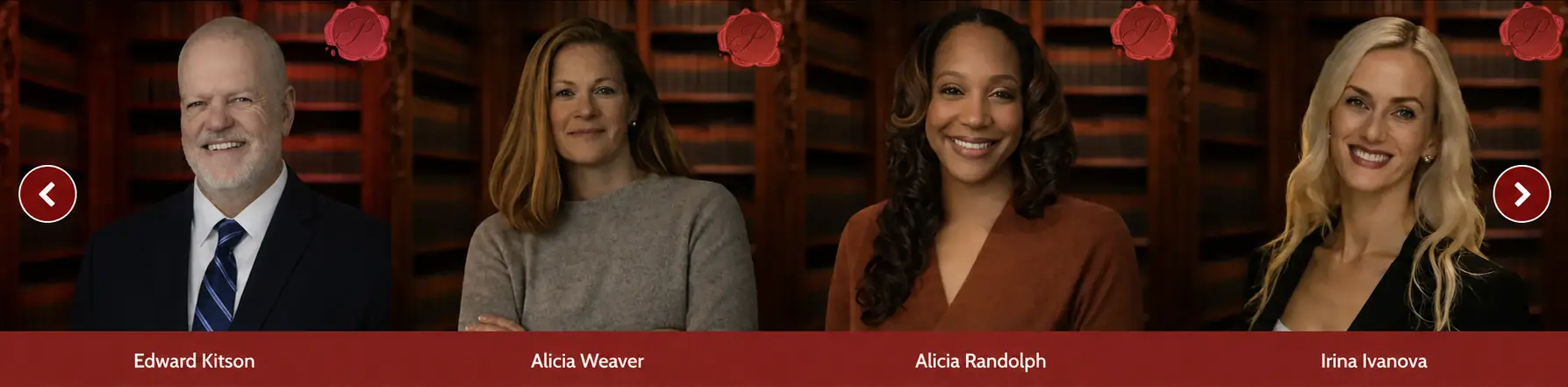
All Prestige Estate Services appraisers are in-house W-2 employees. We do not use contract appraisers as members of our appraisal staff. Each appraiser works directly for Prestige Estate Services and is IRS-qualified and USPAP-compliant.
A record for estate administration
What Is a Probate Personal Property Appraisal?
A probate appraisal combines an identified list of tangible belongings with value conclusions for an agreed date and purpose. It can give the estate representative a documented basis for inventory entries, fiduciary records or decisions involving beneficiaries. The report explains the work performed so its authorized readers can follow how the values were developed.
Inventory support
An appraisal can support a required estate inventory with descriptions and researched values. Counsel identifies the filing format and any court requirements for the matter.
Fiduciary records
The written record links belongings to the work performed and the conclusions reached. It helps the representative explain which objects were included in the engagement.
Beneficiary decisions
Documented values can inform discussions about selected belongings and proposed exchanges. The appraisal supplies financial information; the estate’s advisors determine entitlement and the distribution process.
Unusual property
A rare object or disputed collection may need closer identification and research. The scope should distinguish these items from contents that can be grouped appropriately.
A formal appraisal is not automatically required for every estate or every object. Probate procedures differ, and counsel should confirm whether a privately retained appraisal fits the applicable process. The North Carolina courts’ estate-administration guidance illustrates how inventory duties form part of a jurisdiction’s broader estate procedure. It is not a nationwide filing rule.
Tangible estate assets
What Personal Property Can Be Included?
The appraisal may address a full residence, several storage locations, one collection or a short list of important objects. The initial review separates the property to be valued from belongings outside the engagement. Category, condition, available records and the report’s purpose help determine how much identification and research each group needs.

Art and furnishings
Paintings, sculpture, antiques, rugs and furniture may be included. Maker, materials, age, condition and documented history help identify the relevant market and research needs.
Jewelry and silver
Watches, jewelry, flatware and other precious-metal objects need suitable identification. Materials, marks, condition and available records help establish the expertise and inspection required for each group.
Other assets
Books, memorabilia, instruments, vehicles and selected equipment can be considered during scope review. The appraiser must have suitable knowledge or identify any additional specialist needs.
Household contents
Ordinary belongings may be organized by room or category when appropriate. Separate descriptions may be needed for unusual, disputed or independently marketable objects within the group.
Ownership questions should be raised before the inventory is finalized. An object found in the residence may belong to a surviving spouse, relative or another party. The appraisal identifies the property covered; the estate’s attorney determines what belongs in the probate estate.
Items already moved, sold, given away or placed in storage should remain traceable in the records. Dated photographs, item numbers and transfer notes help the appraiser assess what evidence is available. A reported object is not treated as personally inspected when access was unavailable.
Choose the correct intended use
Which Estate Appraisal Assignment Is Needed?
Probate, estate tax and other estate assignments can concern the same objects while answering different questions. The representative should explain what the report must support before work begins. The purpose, authorized readers, date and value definition help determine whether one engagement is suitable or whether separate work is needed.
An insurance schedule, purchase receipt or earlier appraisal can provide background information. It should not be adopted as the probate value without reviewing its purpose, date and methods. A change in the intended use may require a new engagement even when the property list has not changed.
Keep the basis of value clear
Which Date and Value Definition Should the Report Use?
The effective date is the date described by the value opinion. It may be the date of death when the assignment calls for that date, and it can differ from the inspection or report date. The estate’s advisor should confirm the required date and value definition before the appraiser develops the conclusions.
A later inspection does not by itself show the condition of an object at an earlier date. Older photographs, repair records, receipts and inventory notes can help establish that history. Damage, restoration, missing components or a change in location may affect the evidence needed.
Market value, insurance replacement value and expected net sale proceeds answer different questions. The report should identify the applicable definition rather than use the terms interchangeably. Costs of a future sale also should not be assumed to be included in an appraised value.
The significance of an heirloom to a family may exceed its market value. An appraisal documents a supported financial opinion; the beneficiaries and estate advisors can consider personal significance separately when discussing the belongings.
From scope to report
How Is a Probate Appraisal Completed?
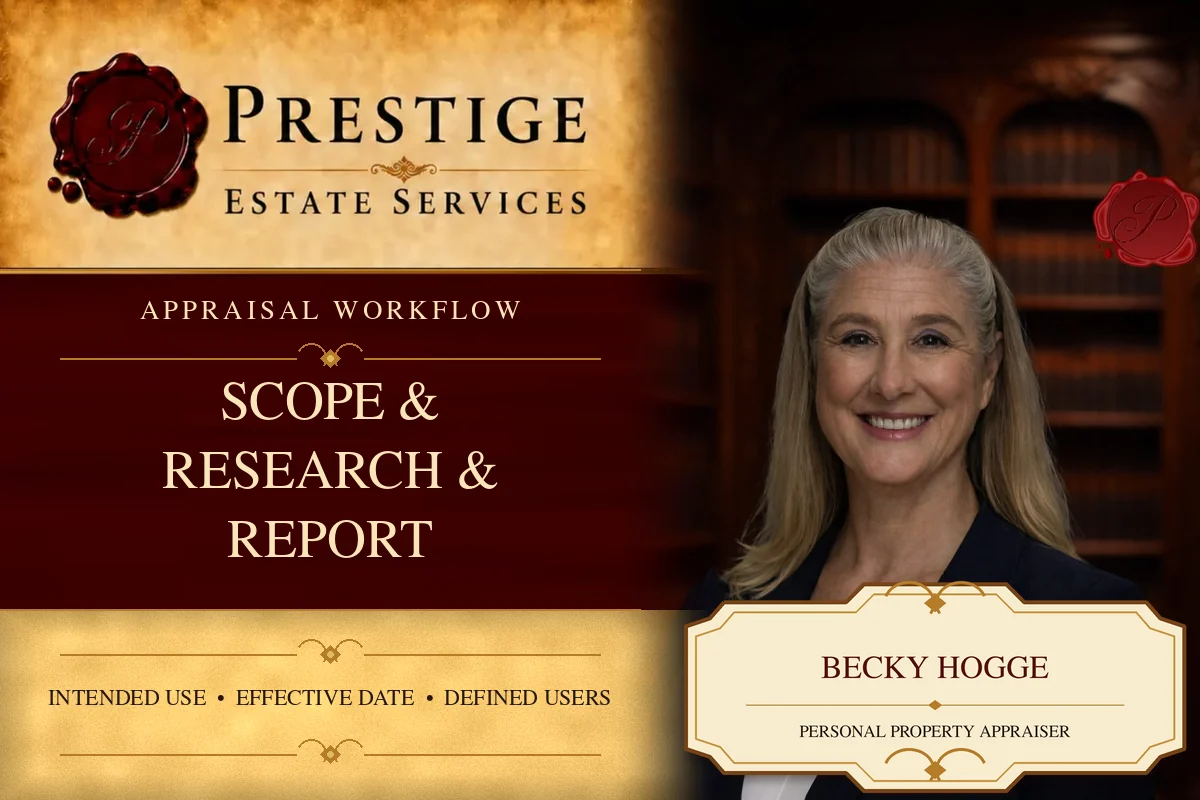
The process begins with the estate’s purpose and available property information. Inspection, research and reporting then follow a defined scope. Access, documentation and the nature of the objects determine whether an on-site inspection, remote review or a combination can support the work. No single inspection method suits every estate.
Define the assignment
Identify the representative, report users, purpose, date and belongings. The appraiser reviews access, deadlines and other instructions before confirming the work and terms of engagement.
Review the records
Match inventories, photographs, receipts and earlier reports to the belongings. Note missing records, unclear descriptions and items that need further identification.
Document the property
Record photographs, identifying details and condition for the agreed scope. Explain which objects were inspected and disclose any important limits on the available evidence.
Research and report
Analyze relevant market evidence and explain the value conclusions. The written report connects the results to the property list, agreed purpose and conditions of the work.
A stable item-number system helps prevent confusion when belongings are packed or moved during administration. The estate representative should tell the appraiser about changes to the inventory or access plan. New property discovered after the report may require additional work rather than an unexplained addition to the original totals.
Prepare a useful starting point
What Information Should Be Sent Before Work Begins?
A completed inventory is not needed for the first conversation. Start with the estate’s purpose, the property locations and a general description of the belongings. A small, organized photo set helps the team assess the categories involved. The following records can then be gathered as the scope becomes clearer.
- The authorized estate contact and attorney or fiduciary instructions
- The requested purpose, report users, effective date and deadline
- An approximate item count, room list or existing inventory
- Photographs of complete objects, identifying marks and visible condition
- Receipts, prior reports, collection records and ownership history
- Details of storage, packed items, access restrictions or multiple residences
- A record of belongings already transferred, sold or reported missing
Keep documents with the objects they identify, and avoid discarding labels, boxes or provenance records before the review. Provenance is an object’s documented ownership history. It can be useful when researching art, antiques and collections.
Timing and fees depend on the contents, research needs, available records, inspection plan and report detail. Our personal property appraisal fee schedule explains the billing framework. The defined scope determines the estimate; a household’s floor area alone does not describe the work required.
Access arrangements should identify who can admit the appraiser and whether photography, handling or building access has limits. A deadline should be discussed before belongings are cleared or inspection access is lost.
Clear written documentation
What Does the Probate Appraisal Report Include?
A useful report lets an authorized reader connect the inventory to the research and value conclusions. The level of detail depends on the assignment, but the report should explain what was valued and the basis for the opinions. Its scope and limits should be clear enough that the results are not mistaken for a different service.
- Identification of the client, intended users and appraisal purpose
- The effective date, value definition and property included
- Item or group descriptions and supporting photographs as appropriate
- Relevant research, market evidence and analysis of the objects
- Value conclusions linked to the identified property
- Scope, assumptions, access limits and other required disclosures
- Appraiser qualifications and certification appropriate to the report
Prestige Estate Services develops appraisal assignments in accordance with the Uniform Standards of Professional Appraisal Practice (USPAP). These standards address ethical conduct and appraisal development and reporting. A USPAP-compliant report does not guarantee court acceptance or decide a legal dispute.
The appraisal report and a court inventory form are separate documents. Counsel or the representative should confirm who will transfer the required information into the filing. If the estate needs a particular attachment or format, identify it during the initial scope discussion.
Practical questions
Probate Personal Property Appraisals: Additional Questions
Does every probate estate need a formal appraisal?
Requirements vary with the estate and the applicable process. Counsel should confirm the required inventory, value basis and whether a privately retained report is suitable before work begins.
Can the date of death be used as the effective date?
Yes, when that date fits the assignment and sufficient evidence is available. The appraiser reviews the property records and historical market information, with relevant limitations disclosed in the report.
Can household belongings be grouped together?
Grouping may suit some ordinary contents. Unusual, disputed or separately marketable objects may need their own descriptions and research, depending on the report’s intended use.
Can a probate appraisal be completed from photographs?
Clear images and supporting records may allow remote work. The appraiser assesses the evidence and may require an inspection to support the requested report.
Can the same report support probate and estate tax?
Possibly, if both uses are identified and compatible from the outset. Different dates, users or reporting requirements may call for separate work; counsel and the tax advisor should clarify their needs.
What if property has already been distributed?
Provide the best available item list, photographs and transfer records. The appraiser will assess whether those materials support the requested conclusions and explain any additional evidence or access needed.
Does this service include appraising the home or land?
We do not provide real estate appraisals. This service covers tangible belongings. Estate advisors arrange any separate valuation of land, buildings or business interests.
Choosing the right appraisal service
Searching for Probate Personal Property Appraisers Near Me?
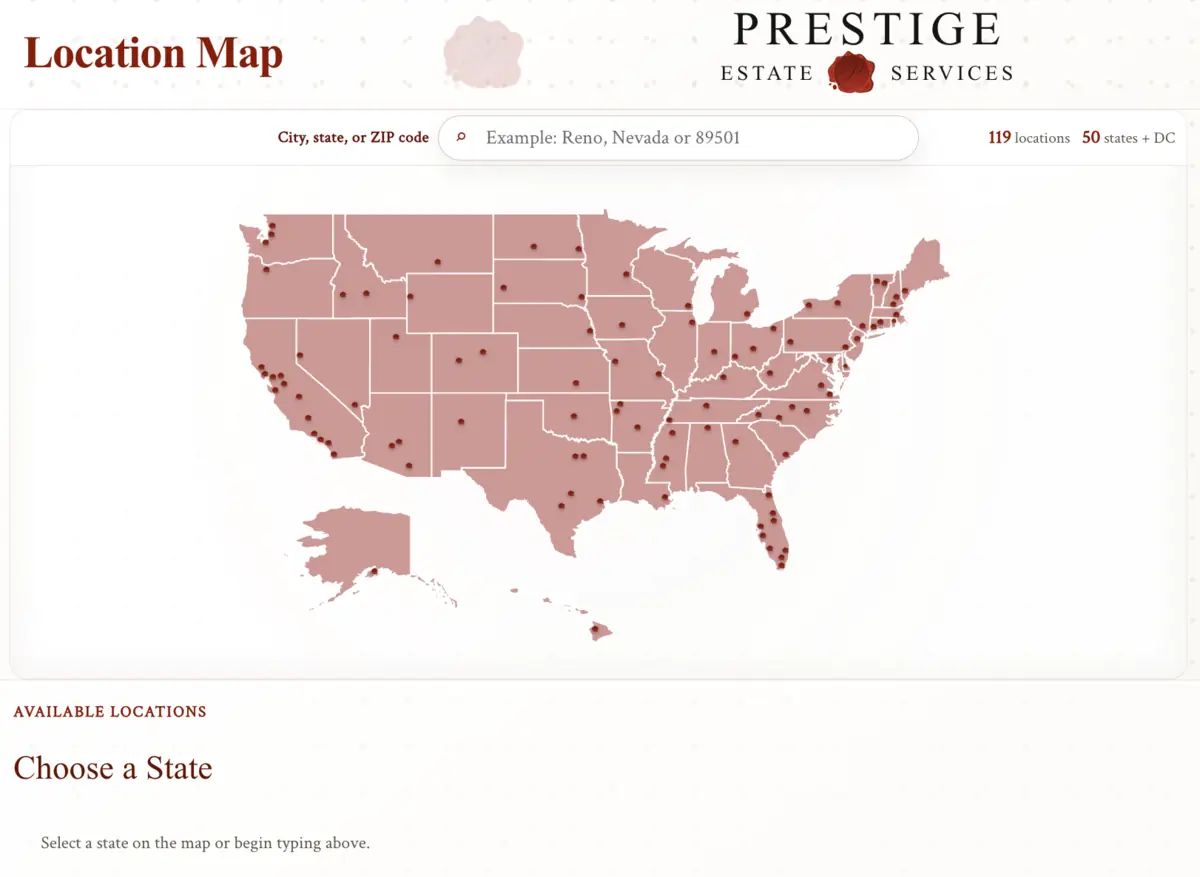
An estate representative may live far from the belongings being administered. A search for appraisal help nearby should therefore consider both access to the property and the report the estate needs. Prestige Estate Services coordinates probate personal property appraisal work nationwide, with the locations and scope reviewed before an engagement is confirmed.
Personal Property Appraisers for Probate Estates
The provider’s experience should match the estate’s contents. Paintings, silver, antique furnishings and ordinary household goods can call for different research. Representatives can ask how the appraiser identifies objects, handles grouped contents and records uncertain information. The proposed report should explain those decisions rather than offer only a single total for the residence.
Probate Appraisers Near Me: Purpose and Access
Distance alone does not establish whether a provider is suitable. The firm needs to understand the probate purpose, effective date, expected readers and available access. If belongings are stored in several places, the representative should describe each location. Any court instructions or special reporting needs should be shared before comparing proposals.
What Executors and Attorneys Should Confirm
A clear proposal identifies the work included, the records required and how the report will be delivered. Executors and attorneys should also confirm who can authorize inspection and answer inventory questions. Independence and relevant property knowledge matter alongside scheduling and fees. These checks help connect the selected service to the estate’s actual administration needs.
Start with a scope discussion
Discuss a Probate Personal Property Appraisal
Tell us about the estate contents, where they are located and what the report needs to support. Include the estate’s deadline and any instructions from counsel. We will review the information and explain the next steps for a possible engagement.
Nationwide personal property appraisal support
Find a Personal Property Appraiser by Location
An estate’s belongings may be held in a residence, storage facility or several family homes. Share each location during the initial review so the appraisal scope accounts for the property to be addressed. The locations overview provides regional contact information for Prestige Estate Services across the United States.